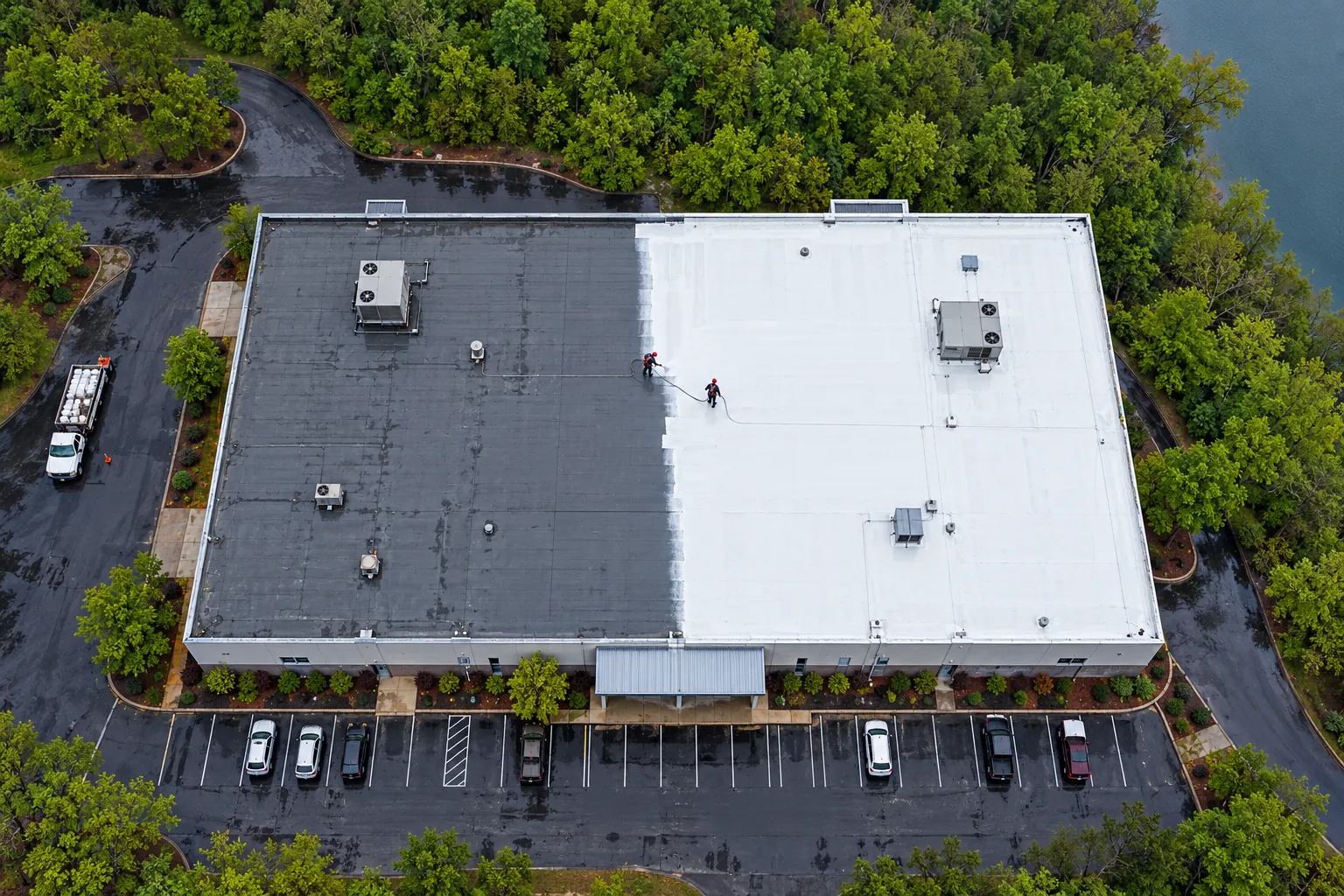
Silicone Topcoat
Silicone over foam handles any water left on the surface and is a common choice on low slopes.
Silicone Roof Coating details
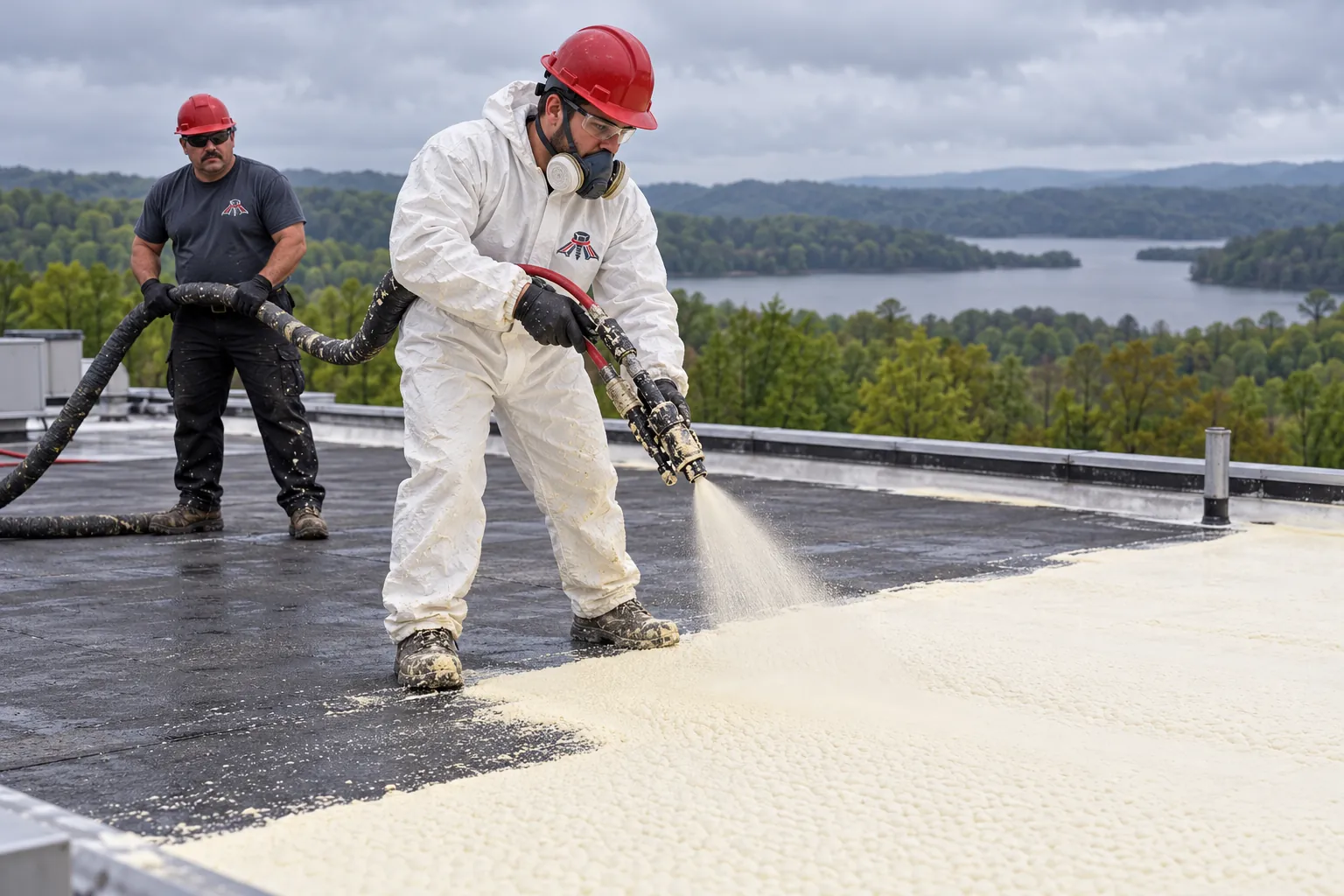
Spray foam roofing in Somerset fills the flats of uninsulated metal roofs, buries every screw, and adds insulation before a coating seals the foam from the sun.
Foam fits metal roofs that need insulation or a smoother, better-draining surface. Compare it with coating alone and with a new insulated roof.
Bare metal roofs show their problems inside before they leak. These pairs tie those signs to what foam changes on the roof.
Drips fall from the steel on cold mornings with no storm in the forecast.
Uninsulated steel cools overnight, and warm indoor air condenses on its underside.
Workers below a bare roof feel the heat by late morning.
Unprotected panels heat up fast, and foam plus a light coating cuts the heat coming through.
Spots appear under several fastener lines at once after a single storm.
Foam buries the screws under a continuous layer instead of sealing each head separately.
Puddles sit between ribs on low-slope sections after rain.
Foam fills those flats and builds a smoother surface that drains toward the gutters.
Foam is one part of a roof system. These options cover the topcoat over it and the details that come with it.
Silicone over foam handles any water left on the surface and is a common choice on low slopes.
Silicone Roof Coating details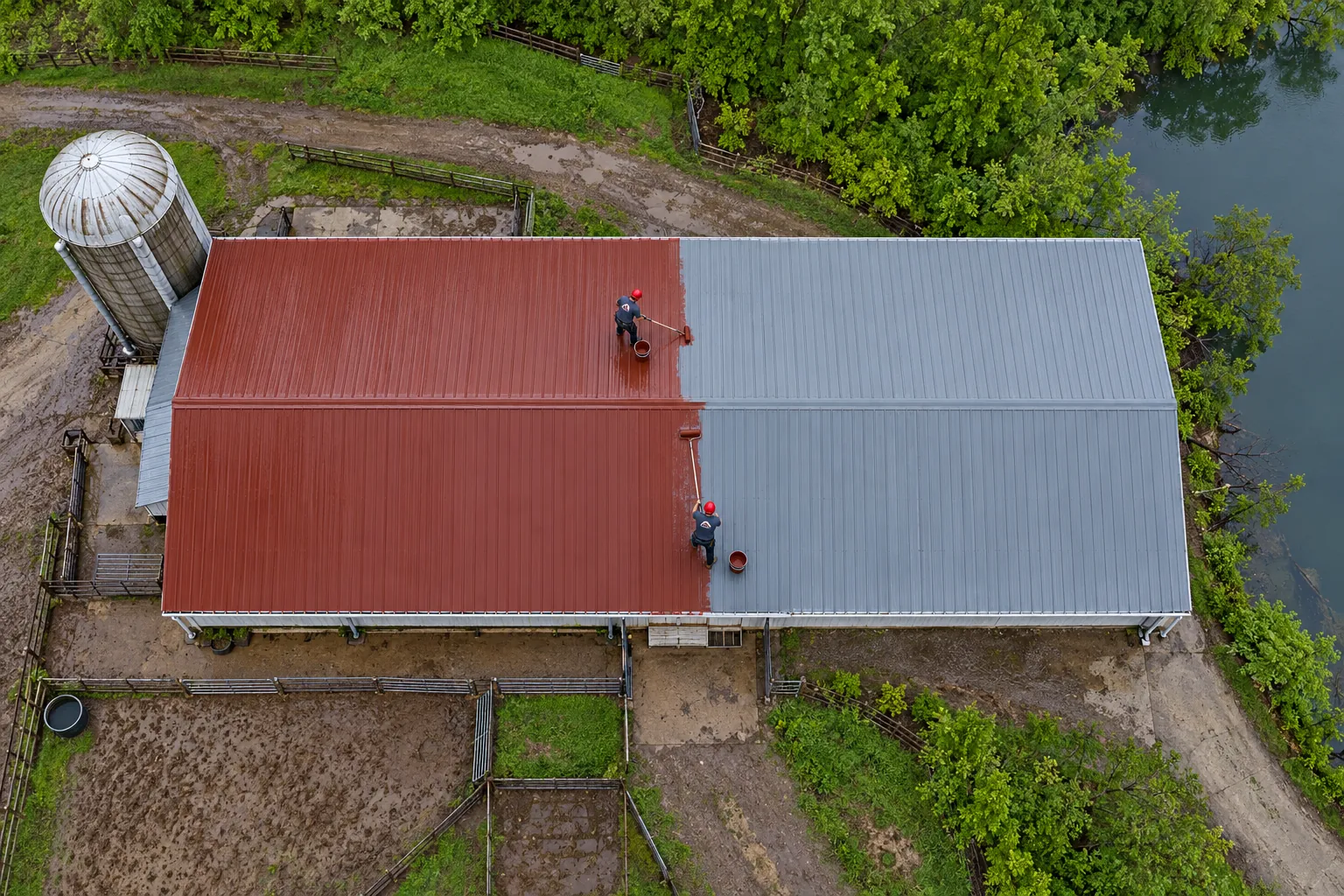
Acrylic over foam on pitched sections stays bright and recoats easily later.
Acrylic Roof Coating detailsPaths to rooftop units get a tougher urethane layer so boots and tools stay off the foam itself.
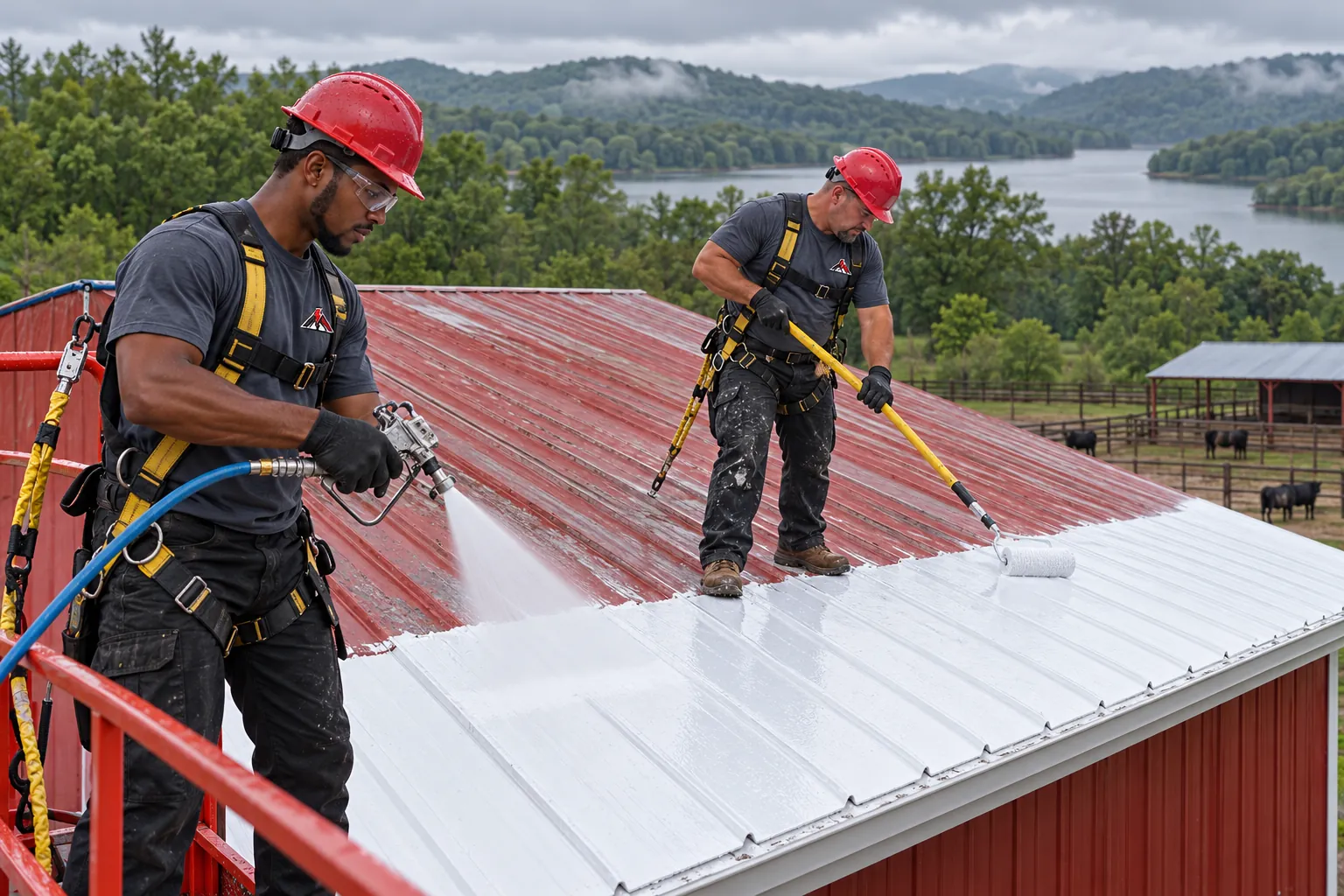
Buildings that need waterproofing alone get the standard screw, lap, and coating work instead.
Metal Roof Coating detailsWhat foam adds on a metal building beyond what coating alone does.
Foam adds R-value across the whole panel field.
A warmer panel underside helps limit condensation dripping on stock or equipment.
Every fastener ends up under foam, which takes away hundreds of separate leak points.
Existing steel stays on the building, so the budget skips tear-off and a new panel order.
Call and describe when the drips happen. Drips on clear, cold mornings point to condensation, which foam addresses.
Foam work adds masking and thickness checks to the usual metal roof prep.
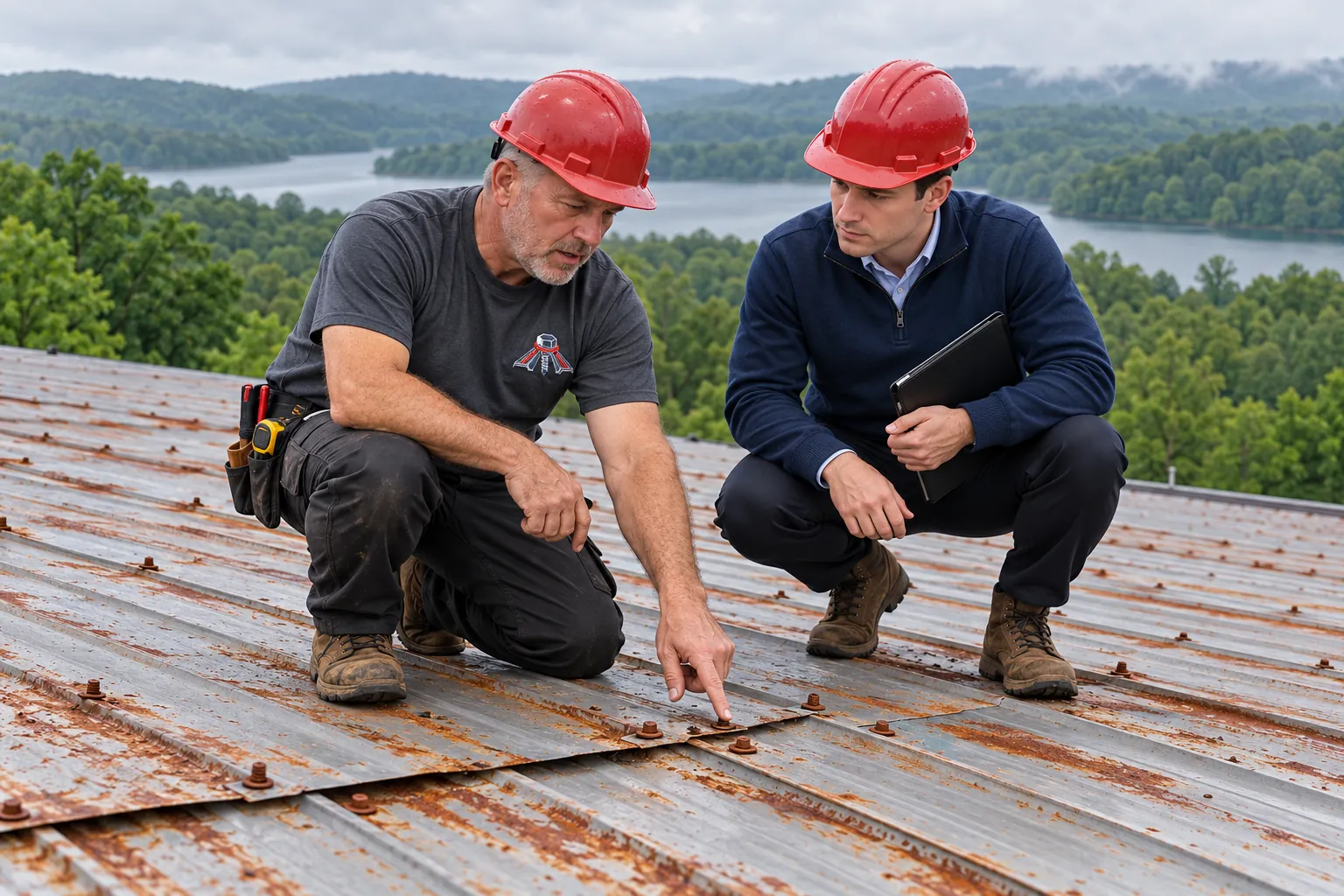
We check panel gauge, roof pitch, and whether the roof is R-panel or standing seam, then probe rust, look at purlins from inside, and confirm the panels are dry.
Panels are washed and dried, loose screws are replaced, and rusted steel is primed, because foam needs a clean, dry surface to bond.
Air intakes get shut down or covered, parked cars move away from the eaves, and edges and units are masked against overspray drift.
Foam goes on in passes to the planned thickness, filling the flats between ribs first, while the crew checks depth across the field.
A silicone or acrylic topcoat covers the foam shortly after it is sprayed, since foam left bare breaks down in sunlight.
These systems work alongside foam, or take its place when insulation is beside the point.
Silicone is a common topcoat over foam on low-slope roofs that still hold some water.
See silicone roof coatingAcrylic tops foam on pitched sections and keeps the surface bright and easy to recoat.
See acrylic roof coatingMetal roof coating alone fits buildings that need waterproofing without the added insulation.
See metal roof coatingFoam versus coating, panel types, utilities, and rooftop units.
Foam Or Coating
Coating alone fits a roof that only needs waterproofing. Foam fits a roof that also needs insulation or a smoother surface, such as an uninsulated shop, plant, or storage building where summer heat or dripping condensation bothers the people inside. Foam brings more masking and a bit more weight.
Over exposed-fastener R-panel, foam goes on readily: it fills the flats, buries the screws, and builds one continuous surface. Standing seam panels float on clips, and foam stuck across the seams locks them together. Crews check gauge, clips, and pitch first, and many standing seam roofs get coating with reinforced seams instead.
Utilities And Units
South Kentucky RECC, based in Somerset, serves Pulaski and Wayne counties and part of Russell County, and Taylor County RECC serves another part of Russell. Both buy power from East Kentucky Power Cooperative. Ask your co-op whether commercial efficiency programs are open, since offerings change from year to year.
Electrical inspections for Somerset jobs go through inspectors contracted by Pulaski County, separate from the city building department. That matters when units go onto taller curbs for foam thickness, conduit moves off the panels, or disconnects get relocated. Bring an electrician in early and confirm that step before reconnecting.
Heat And Reflectance
ENERGY STAR notes that a white roof reflecting 80% of sunlight can run about 50°F cooler on a summer afternoon than a gray roof reflecting 20%. Foam under that white surface also slows heat moving through the steel, which owners notice most in shops that have no insulation.
The Cool Roof Rating Council keeps a directory of rated roof products, listing solar reflectance and thermal emittance for coatings. Those ratings help compare topcoats for foam. They describe the product surface when new, and dirt pickup lowers reflectance over time, especially on silicone.
Get a ballpark range now, or call to talk about drips, heat, and insulation.
Leave your name and number and we will call you.
Or call (606) 221-5206