Shingle-Rated Coating
Flat shingles with intact granules get cleaned, loose tabs secured, flashings sealed, and a coating rated for shingles.

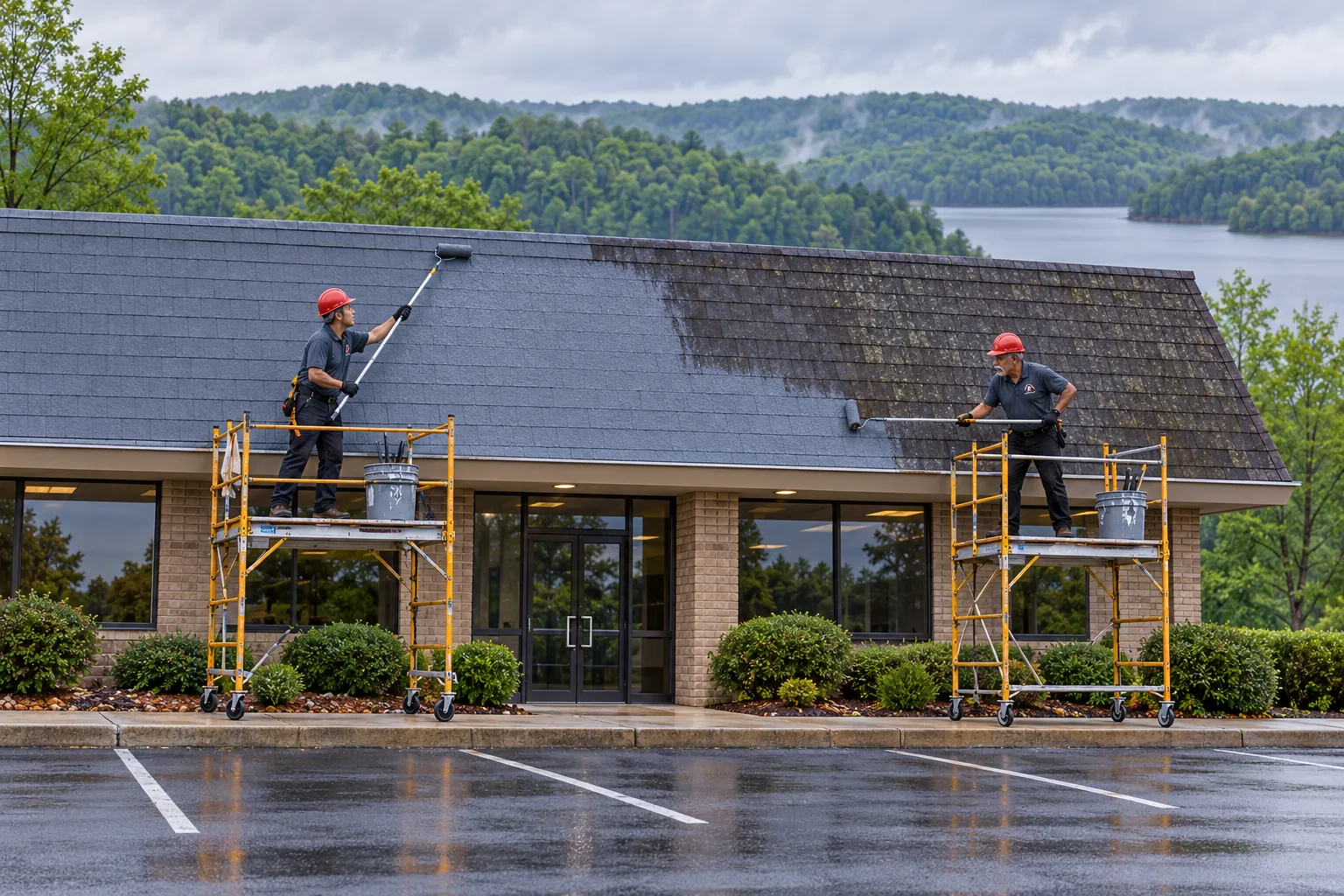
Shingle roof coating in Somerset fits commercial shingles that still lie flat and hold their granules, after the shingle maker and coating maker both allow it.
Coating a shingle roof passes only a narrow test. Compare it with spot repairs and with full replacement.
Shingle roofs show their age from the ground and from inside. These pairs match inside signs with the shingle conditions behind them.
A stain shows where a shingled section meets a taller wall.
Flashing at the wall pulls away, letting water slip behind the shingles.
Water appears around a plumbing vent or exhaust pipe that runs through the roof.
Rubber boots around pipes split with sun and age.
Downspouts wash out piles of dark granules after storms.
Shingles losing granules quickly are near the end, and coating has little left to grip.
Leaks show up where the metal shop joins the shingled office.
The transition between systems needs flashing work and compatible products on both sides.
Shingle sections around Somerset sit on strip centers, offices, and churches, often beside metal. These options cover each case.
Flat shingles with intact granules get cleaned, loose tabs secured, flashings sealed, and a coating rated for shingles.
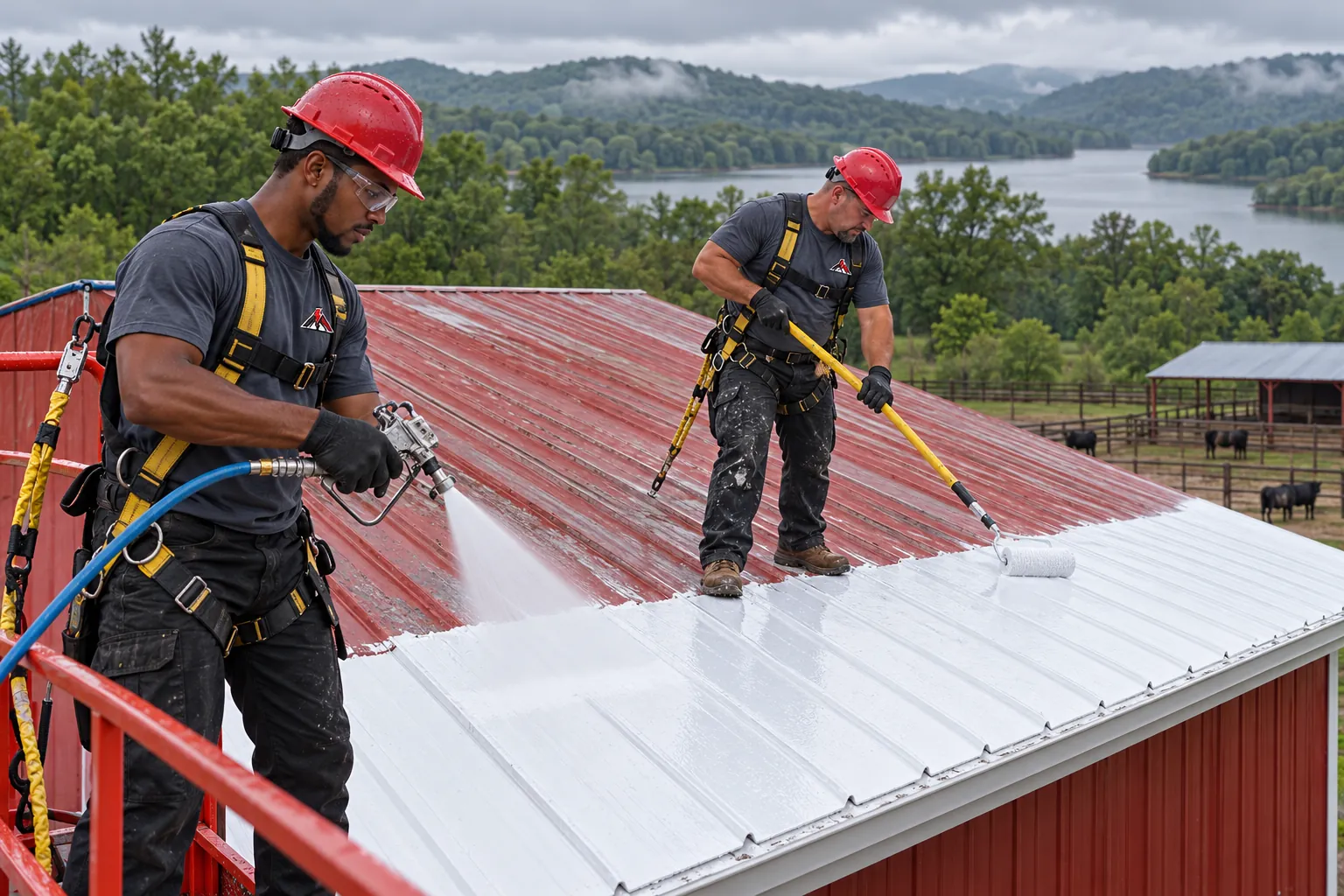
The metal part of a mixed building gets screw, lap, and rust work, then a compatible coating.
Metal Roof Coating details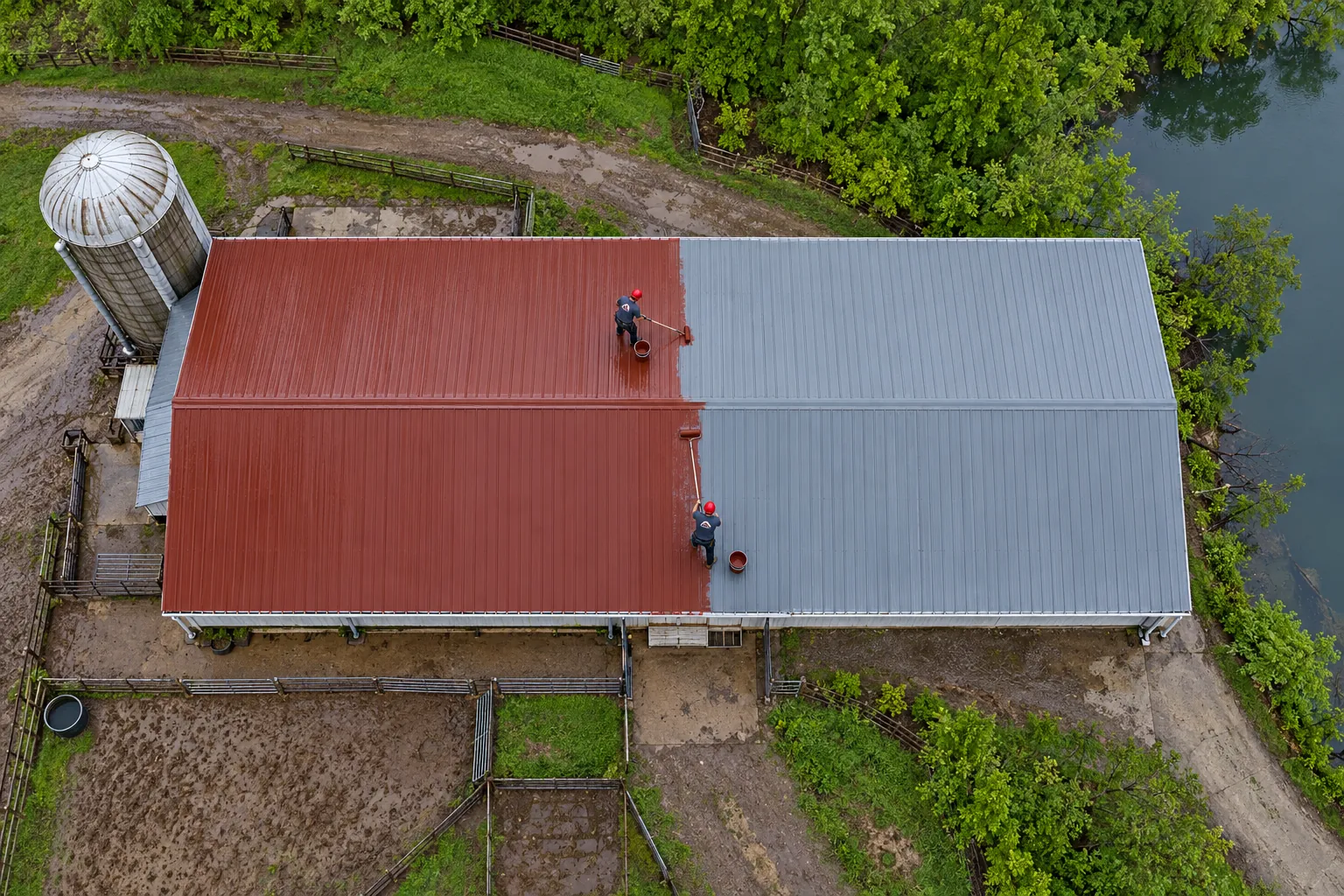
Pitched steel next to the shingles often takes acrylic, matched to the shingle product.
Acrylic Roof Coating details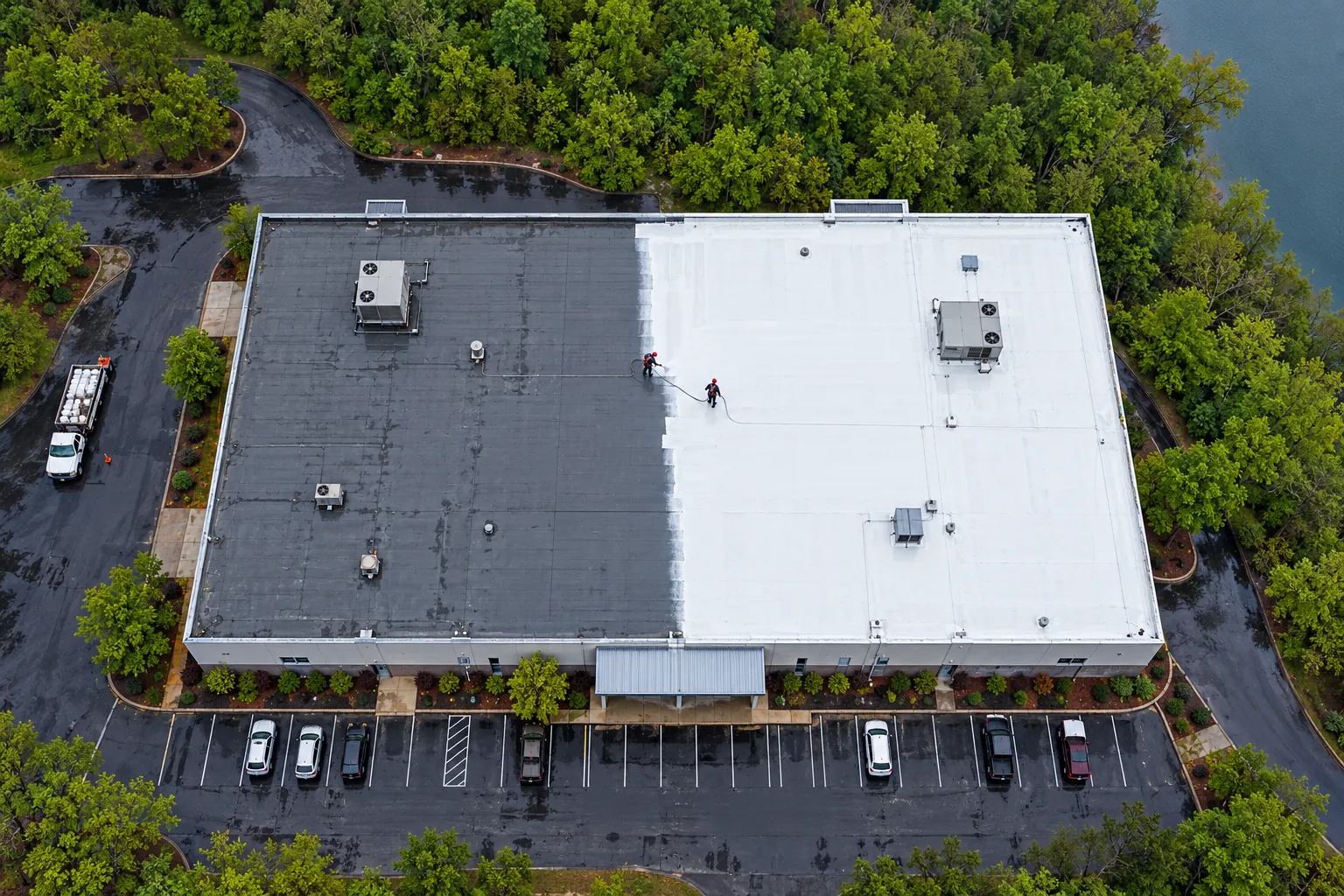
Low-slope parts of the same building get silicone where water sits after rain.
Silicone Roof Coating detailsWhat a coating does for shingles that pass the inspection.
A qualifying shingle roof stays on the building instead of being torn off now.
Asphalt shingles kept in service on the roof stay out of the landfill for years longer.
Light-colored coating over the shingles reflects more summer sun than dark granules do.
Tenants and staff keep working, with the deck covered the whole time.
Granules in the gutters tell part of the story. Schedule an inspection, and we check whether the shingles pass the coating test.
Shingle coating starts with a gate, and only roofs that pass it go on to the rest of the steps.
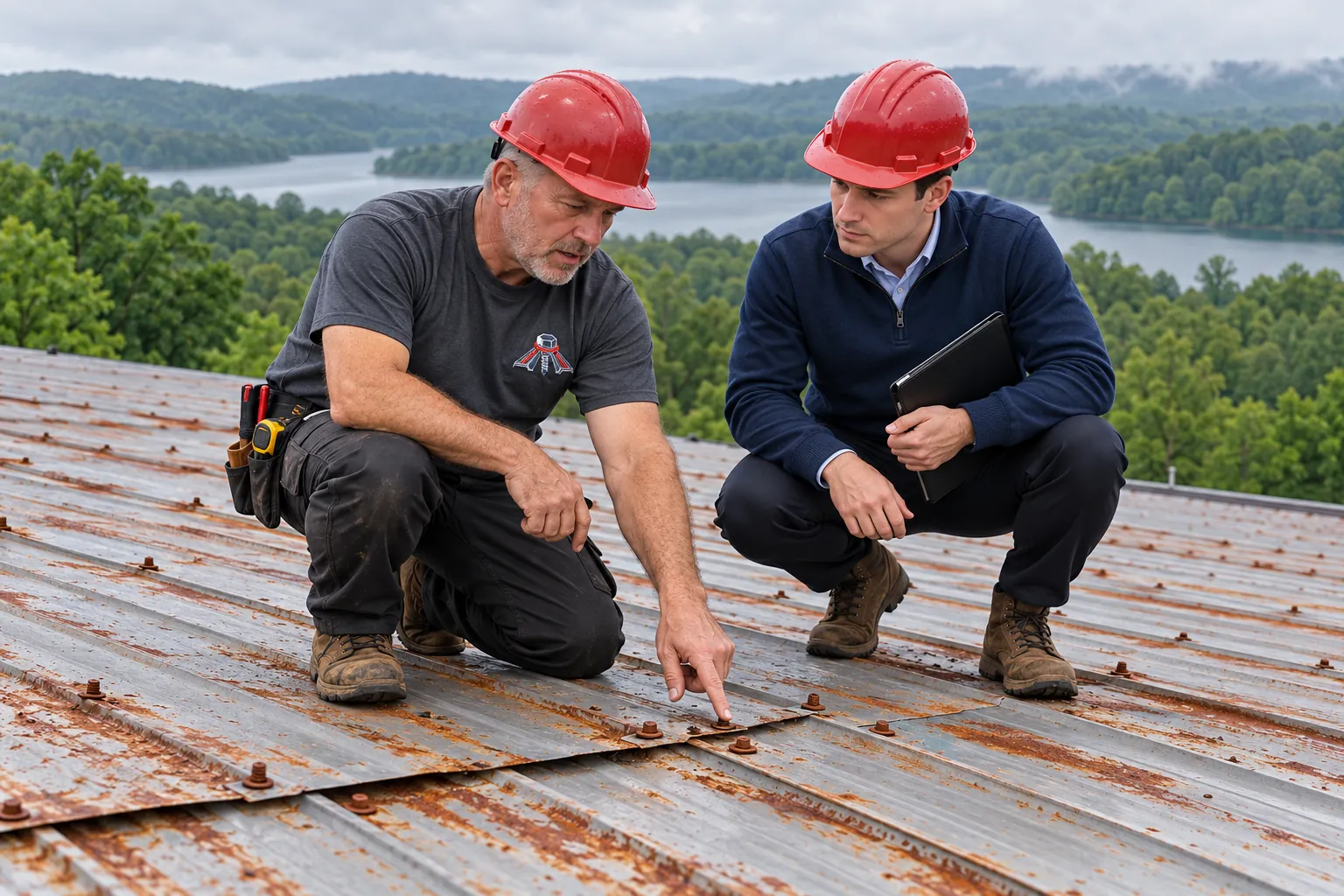
We check tabs for curl, cracks, and missing pieces, look at granule loss, check flashings at walls and vents, and confirm the shingle maker allows coating.
Gentle washing removes dirt, moss, and loose granules while leaving the tabs intact, and the roof dries before any work continues.
Lifted tabs are sealed back down, damaged pieces are replaced, and vent boots and pipe collars are swapped where they have split.
Flashings at walls, vents, and any metal-to-shingle joint get reinforced so water stops at the edges before the coating goes on.
A coating rated for shingles goes on at the specified thickness, with compatible products used on any metal section of the same building.
Many shingled offices and stores sit next to metal or flat roofs. These services cover those sections.
Metal roof coating covers the shop or warehouse attached to a shingled office.
See metal roof coatingAcrylic often goes on pitched metal right next to the shingles.
See acrylic roof coatingSilicone handles the flat sections of a building where water sits.
See silicone roof coatingCoating shingles, prep before calling, and the inspection itself.
Shingle Coating
Yes, when the shingles are still flat, attached, and holding most of their granules. Strip centers, offices, and churches with intact steep sections fit best. Some shingle and coating makers restrict coatings over shingles, and curled, cracked, or missing tabs mean the shingles are near the end.
Buildings with a metal section and a shingle section get compatible products on both, and the joint between them gets flashing work first. The metal side follows the usual screw and lap prep, while the shingle side gets cleaning, tab securing, and a shingle-rated coating.
Before You Call
Note ceiling stains and the roof area above them, rust streaks or loose trim on metal sections, granules in the gutters, and puddles that stay after rain. Photos, the approximate roof age, and the roof type help the inspection go quickly. Stay off any roof you are unsure of.
Stay on the ground and use photos instead. Steep shingle sections get slick with dew, and walking on aging tabs breaks them. Binoculars or a photo from a lift show curled tabs, missing pieces, and flashing gaps well enough for the first call.
The Inspection
A crew walks the roof, measures it, and checks every part a coating has to cover: tabs, flashings, vents, edges, and any metal sections with their fasteners and laps. A look from inside checks the deck. Afterward, Somerset Metal Roof Coating explains what the roof needs, and you choose the next step.
We say so plainly. Curled or cracked tabs leave nothing firm for a coating to grip, so the honest call is replacing that shingle section. Any metal or flat sections on the same building can still be coated on their own schedule.
Start with a ballpark range, or call to find out whether your shingles pass.
Leave your name and number and we will call you.
Or call (606) 221-5206