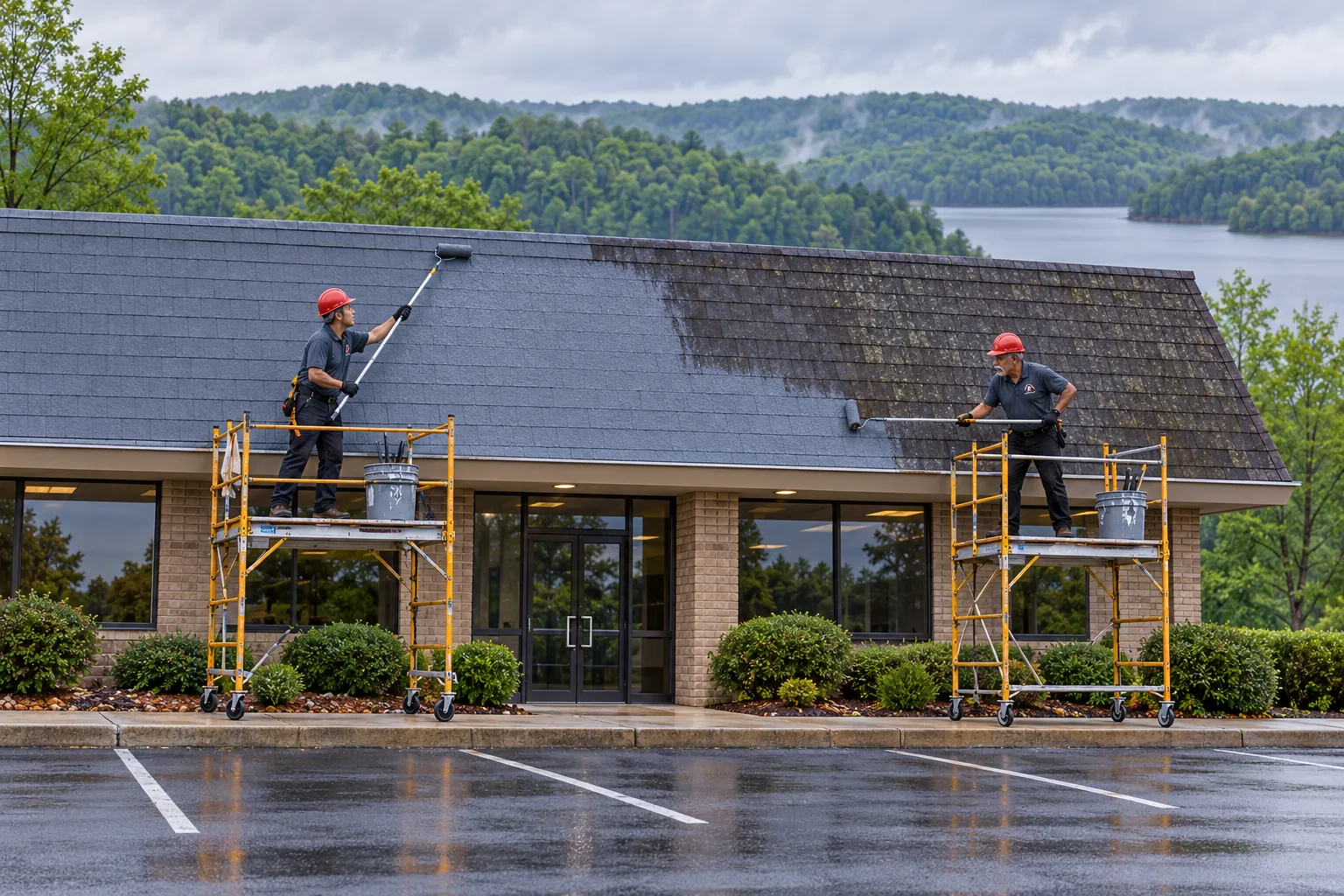
Crew rolling coating across the panels of a commercial metal roof
Commercial Metal Roofs · Somerset, KY

Somerset Metal Roof Coating

We coat commercial metal roofs on plants, warehouses, shops, and storage buildings in Somerset and nearby towns, starting with a walk of every screw line and lap.

  • Inspection before any coating
  • Every fastener line checked
  • Commercial buildings only

Leaks Inside, Causes On The Roof

A drip over a desk or a rust streak down a wall points to one joint on the roof. These pairs show where Somerset metal roof coating work starts.

  • Inside The Building

    Drips Along One Wall

    Water shows up in a line along an outside wall after a hard rain, usually close to the eave.

    On The Roof

    Eave Trim And Gutter Seams

    Rust opens gutter seams and lifts eave trim, so wind-driven rain runs back under the panel edge.

  • Inside The Building

    Spots Under A Screw Line

    Small wet spots appear in a straight row across ceiling tiles or the insulation facing.

    On The Roof

    Backed-Out Screws

    Daily heating and cooling work screws loose in their holes and flatten the rubber washers under them.

  • Inside The Building

    Wet Insulation In A Band

    Facing sags or stains in a stripe that runs across the building from one side wall to the other.

    On The Roof

    Open End Laps

    Where one panel overlaps the next one downslope, water runs straight across the joint on its way to the gutter.

  • Inside The Building

    Light Around A Skylight

    Daylight or a damp ring shows around a skylight panel, and the drip changes with the wind.

    On The Roof

    Cracked Skylight Panels

    Fiberglass skylight panels yellow, crack, and lose the sealant at their laps with the steel panels.

  • Inside The Building

    Damp High On The Framing

    Moisture collects near the center of the building after storms that blow from one direction.

    On The Roof

    Shifted Ridge Caps

    Ridge caps and closure strips move over the years, leaving gaps where wind pushes rain under the cap.

Coat, Restore, Or Re-Panel First?

A screwdriver pushed into rusty spots at the eaves, laps, and gutters shows how much solid steel is left. That answer decides which column fits your roof.

What We Install

Coat The Roof

What the steel shows
Surface rust and leaks at a few screws
Work before coating
Wash, prime bare steel, seal every screw head
Panels replaced
None
Building during the job
Open; work stays on the roof
How it starts
Roof walk, then a price
Also Coated

Restore The Roof

What the steel shows
Leaks at many fasteners and laps, firm panels
Work before coating
Full screw replacement plus fabric at every lap
Panels replaced
None or a handful
Building during the job
Open; sections are staged
How it starts
Screw and lap count on the walk
Also Coated

Re-Panel, Then Coat

What the steel shows
Rust-through on scattered panels
Work before coating
New steel where the old panel is gone
Panels replaced
Only the rusted-through ones
Building during the job
Open; covered bays during swaps
How it starts
Panel count from the screwdriver test

Rust-through across most of the roof, or purlins that sag, calls for a new roof system, and we tell you that after the inspection.

How A Metal Roof Coating Job Runs

Every job follows the same order, and the first step is a walk of the whole roof.

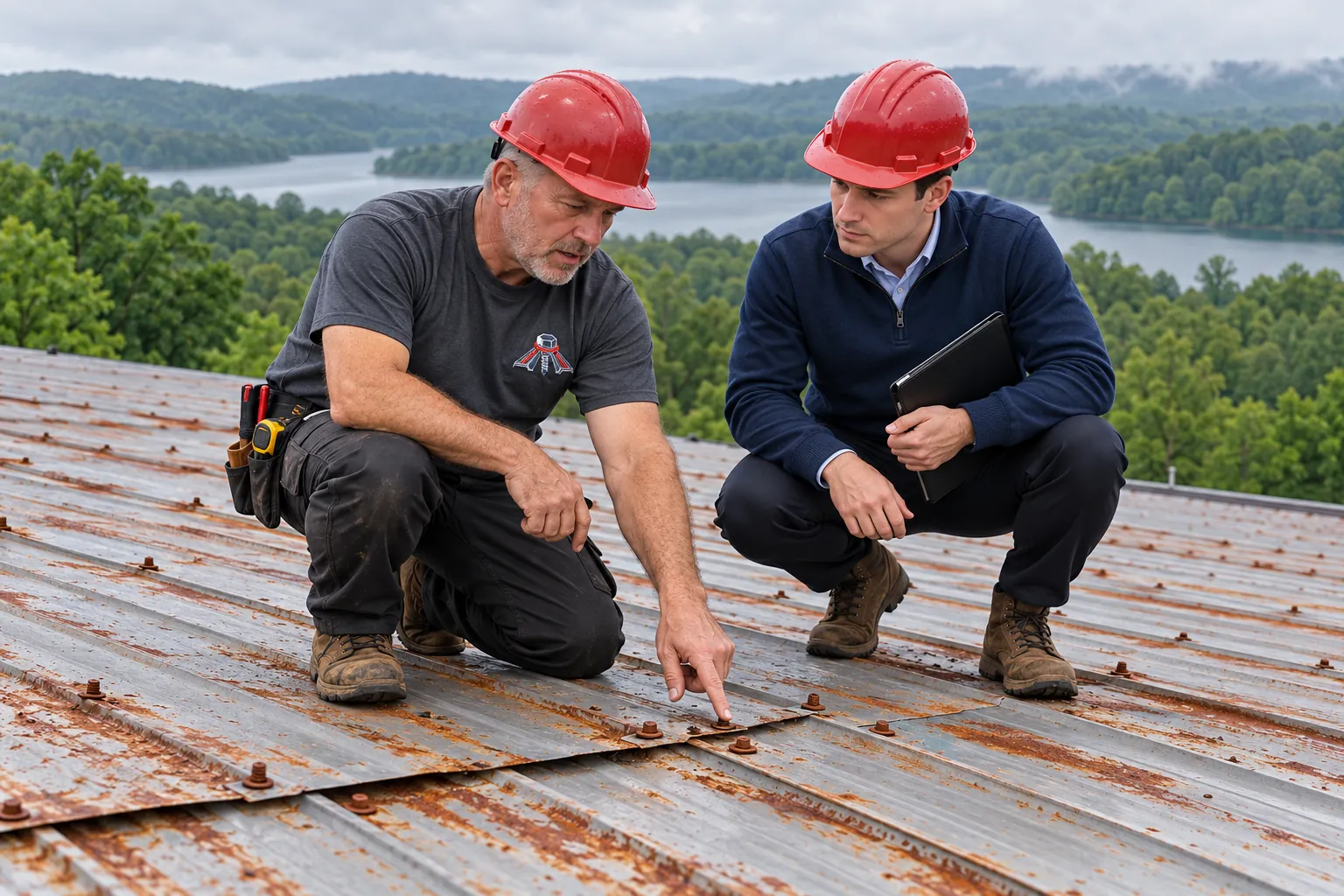
Roofer checking screws and panel laps on a commercial metal roof
  1. Inspect Your Roof INSPECT

    We walk every fastener line, end lap, ridge cap, skylight, and gutter, and push a screwdriver into rusty spots to find perforated steel. A look from inside checks purlins and insulation.

  2. Wash And Treat Rust WASH

    Power washing takes off dirt, chalking, and loose paint. Rusted areas are ground or wire-brushed back to firm steel and primed, so the coating bonds to clean metal instead of scale.

  3. Replace Failed Screws FASTEN

    Backed-out, stripped, or rusted screws come out and slightly larger ones bite fresh steel. Ridge caps and trim get reset, and rust holes are patched with new metal.

  4. Seal Laps And Details SEAL

    End laps, side laps, skylight edges, and curbs get a base coat with polyester fabric pressed in, then a second pass. Each screw head gets its own dab of sealant.

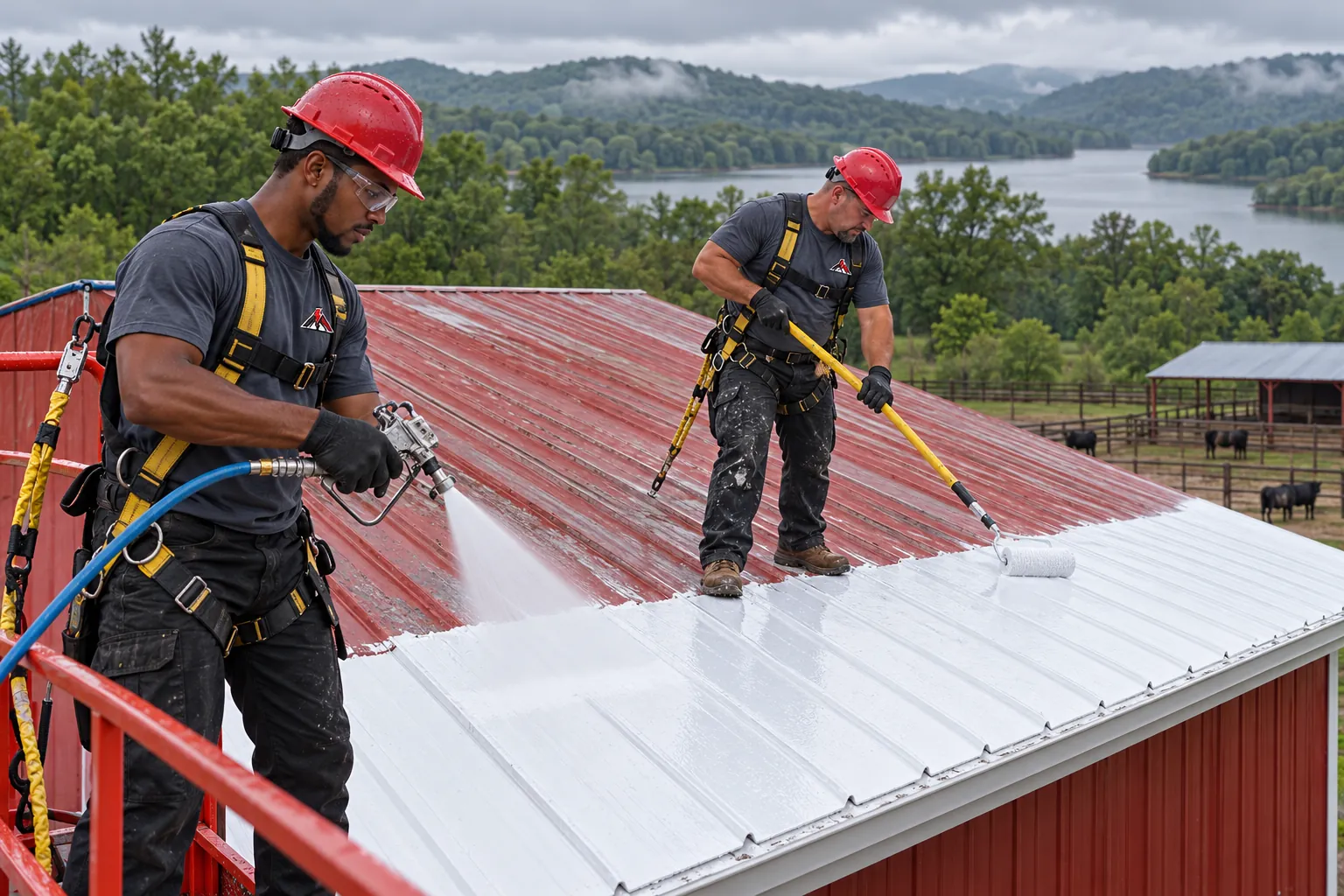
  5. Apply Base And Topcoat COAT

    Full coats go across the panel field, and the crew measures wet film thickness as it works. Spots that need another look are marked for the final walk.

Water Coming In At The Screws?

Call and tell us where the drip shows inside and roughly which part of the roof sits above it. The crew starts the inspection at that fastener line.

Somerset Metal Roof Coating Systems

Five systems cover the commercial roofs we see around Somerset. Each card shows the roof it fits and what that system asks of the steel.

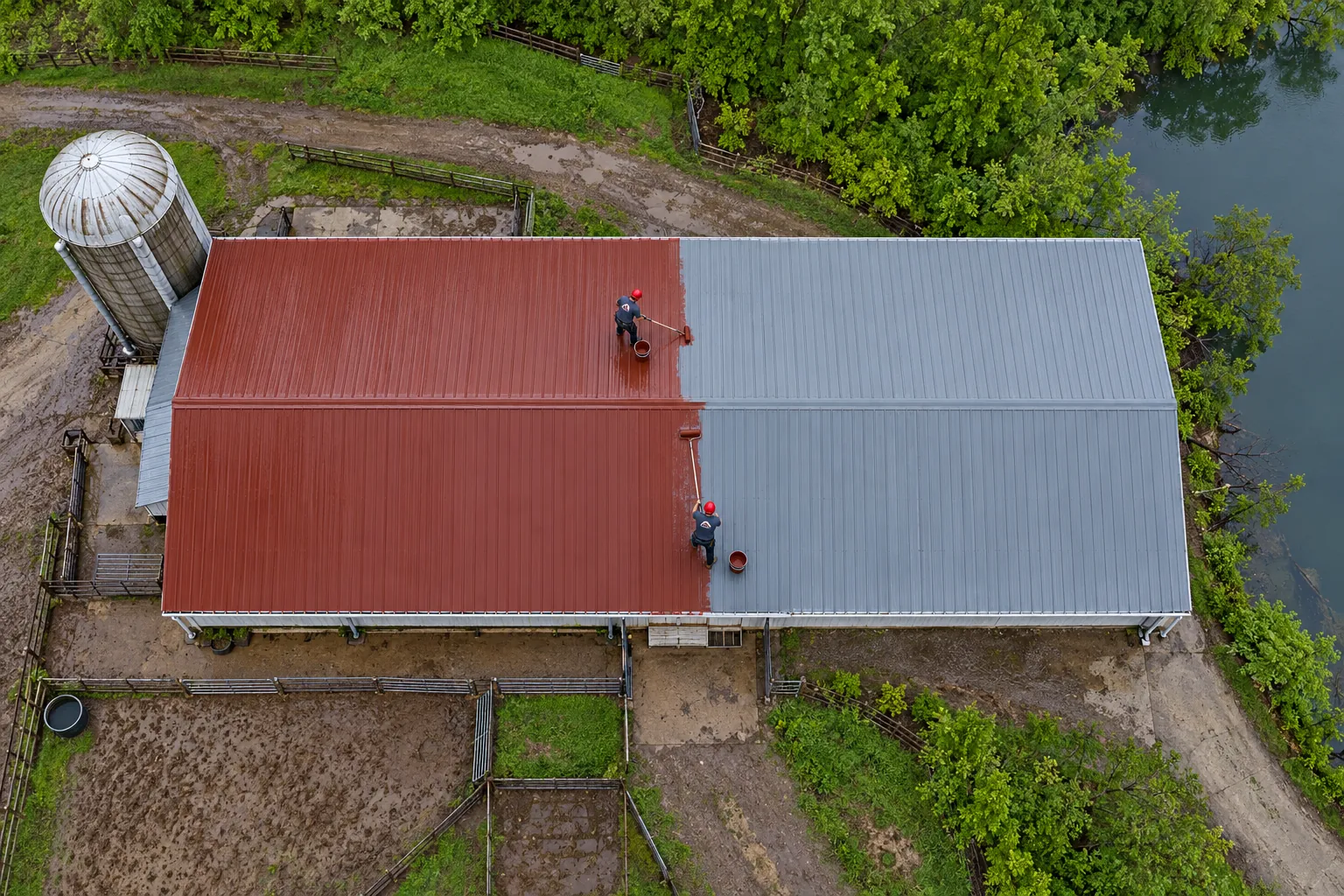
  • Aerial view of a large metal barn roof

    Metal Roof Coating

    Roof Slope
    Low pitch to steep
    Seams Or Attachment
    Exposed screws or standing seam
    Common Building
    Plants, shops, storage rows

    Rust treatment, new screws where needed, and fabric-reinforced laps go down before full coats seal the panel field. Most metal buildings around Somerset start here.

    Commercial metal roof coating
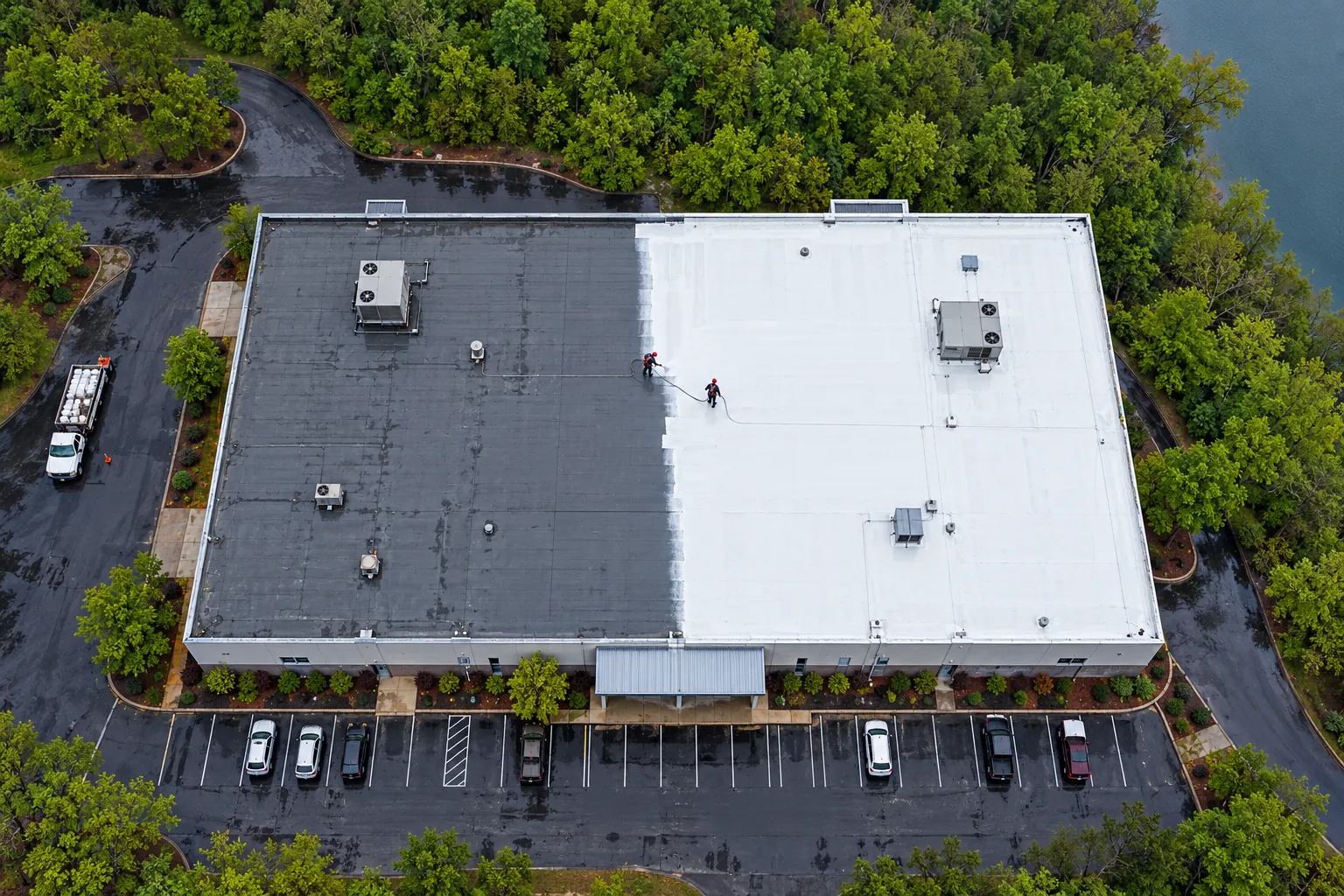
  • Aerial view of silicone coating on a low-slope commercial roof

    Silicone Roof Coating

    Roof Slope
    Low slope with flat spots
    Seams Or Attachment
    Screwed panels, long runs
    Common Building
    Large plants and warehouses

    Silicone holds up where water sits after a rain, such as the low ends of long panel runs. Later recoats use silicone again, because other coatings grip poorly on it.

    Silicone roof coating
  • Acrylic Roof Coating

    Roof Slope
    Pitched panels that shed water
    Seams Or Attachment
    Exposed fasteners or seams
    Common Building
    Shops, churches, offices

    Water-based acrylic stays bright, picks up less dirt, and recoats with acrylic or silicone. Each coat needs warm, dry hours to cure before rain reaches it.

    Acrylic roof coating
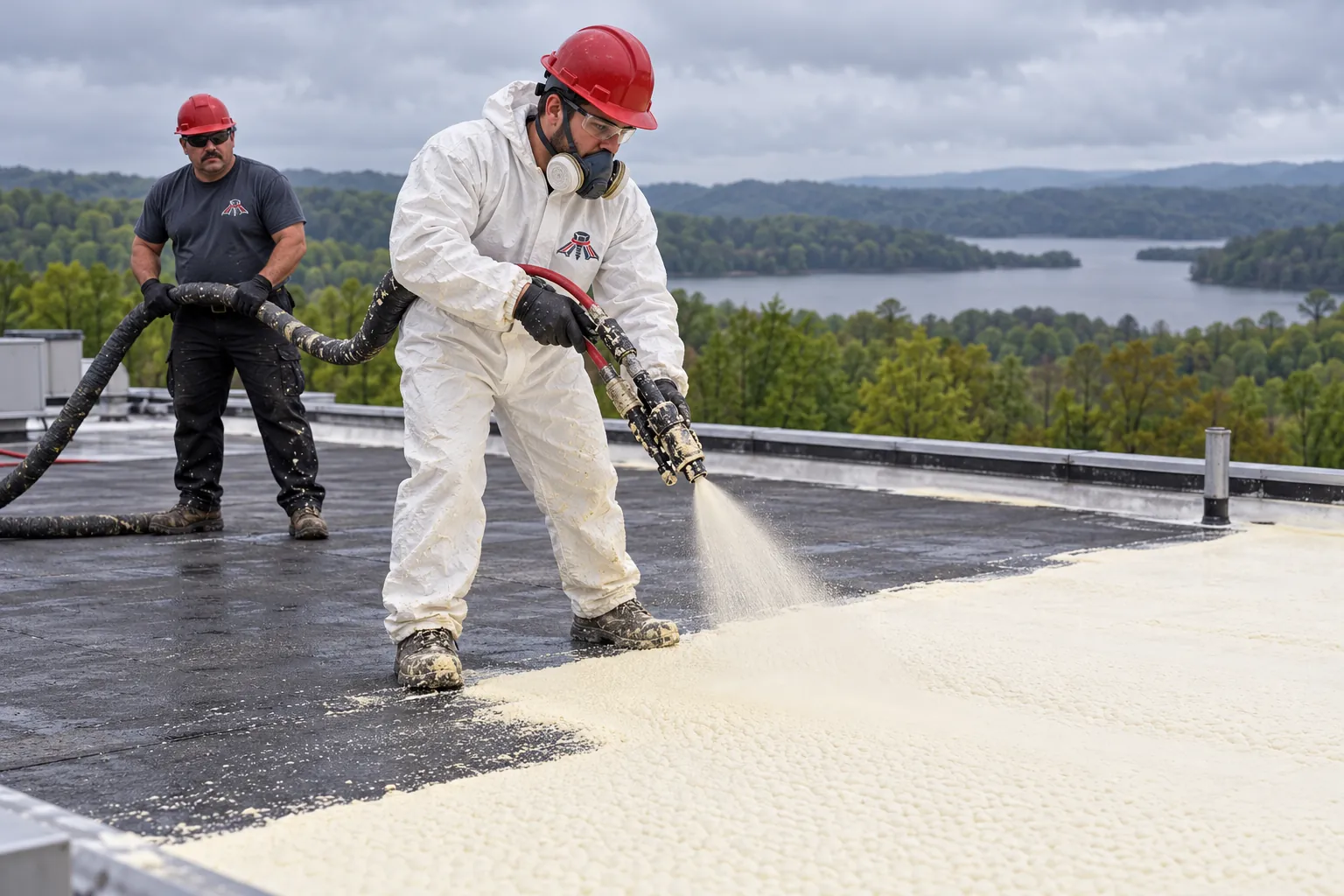
  • Crew applying spray foam on a commercial roof

    Spray Foam Roofing

    Roof Slope
    Low slope, R-panel flats
    Seams Or Attachment
    Screws buried under foam
    Common Building
    Uninsulated shops and storage

    Foam fills the flats between ribs, covers every fastener, and adds insulation, then a coating shields it from the sun. Shops that bake in summer or drip in winter benefit most.

    Spray foam roofing
  • Crew coating an asphalt shingle section of a commercial building

    Shingle Roof Coating

    Roof Slope
    Steep sections
    Seams Or Attachment
    Nailed asphalt tabs
    Common Building
    Strip centers, offices, churches

    Coating fits shingles that still lie flat and hold most of their granules, with the shingle maker on board. Curled or missing tabs mean replacement is the better call.

    Shingle roof coating

What Coating Does For A Metal Building

Four results owners notice once the screws, laps, and panel field are coated.

  • Keep The Panels

    Coating leaves the panels, purlins, and insulation in place, so the money goes into screws, seams, and coats instead of tear-off.

  • Stay Open

    Crews work on top of the roof, so the shop floor, offices, and storage below keep running through the job.

  • Less Waste

    Old steel stays on the building instead of riding to a landfill, and only rusted-through panels come off.

  • Recoat Later

    A coating that gets cleaned and checked can be recoated when it wears, using a product that bonds to the first layer.

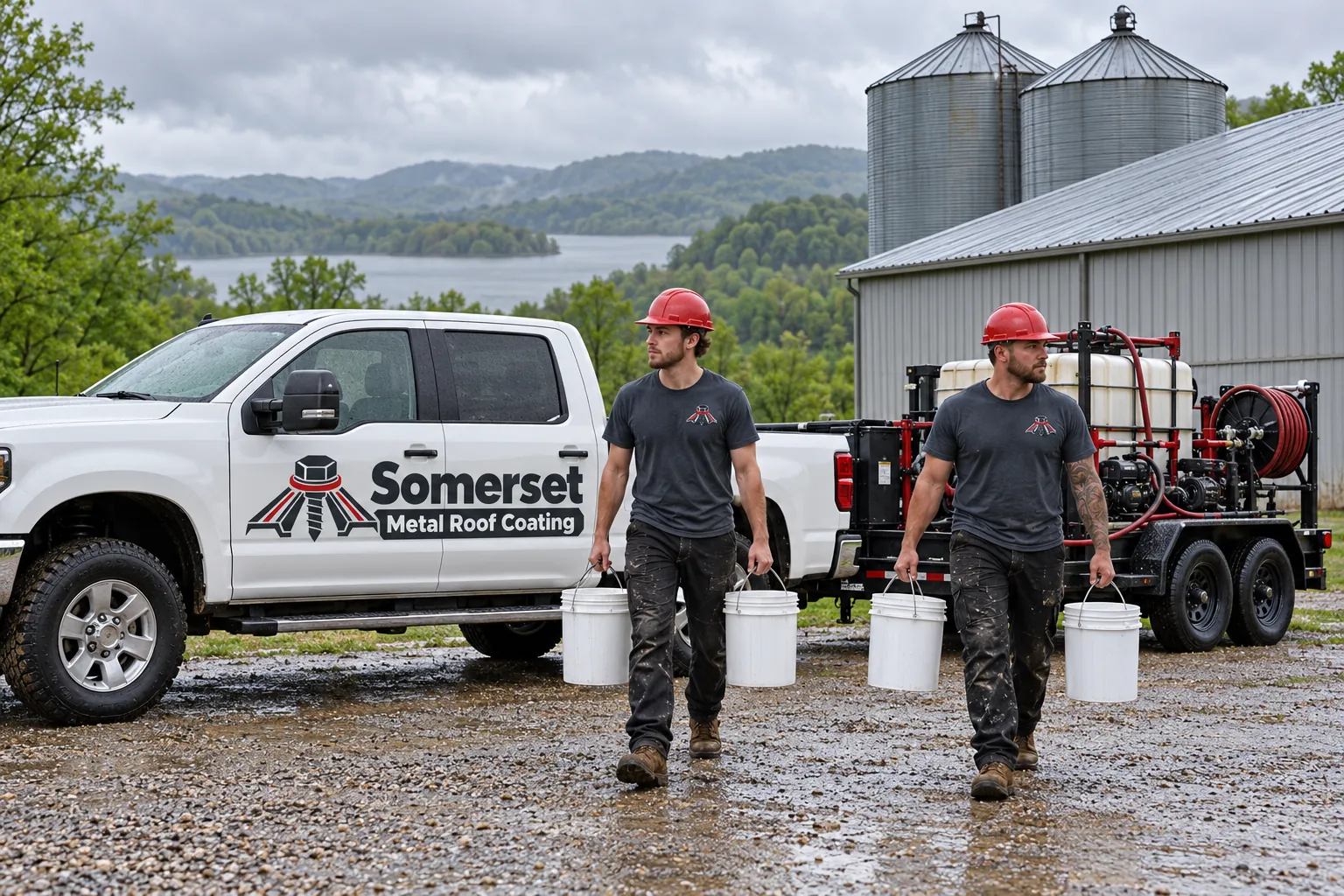
Roof coating truck and materials staged beside a commercial metal building
Lifts and coating are staged before the first coat goes on.

Our Metal Roof Coating Service Area

Is your building near Somerset? We coat commercial metal roofs in the towns below, and for anywhere else, call us or send us a message.

  • Home BaseSomerset

    Plants, warehouses, and self-storage rows inside city limits, where the City of Somerset building department reviews commercial work.

  • Open-bay shops and farm equipment buildings in Wayne County, where eave trim and ridge caps take the wind.

  • Galvanized shop and storage roofs that stay damp and grow white rust along the ribs.

  • Marina service buildings and boat storage roofs with long panel runs in damp lake air.

  • Warehouse and distribution roofs coated section by section around dock and delivery schedules.

  • Properties with a main building plus sheds and canopies, coated in phases with products that match.

  • Small plants and shops whose exhaust fans, curbs, and pipes pass straight through the metal panels.

  • Church halls, school gyms, and community buildings scheduled around services, classes, and events.

  • Shops and storage buildings coated in the spring and fall stretches, once the steel dries off each morning.

  • Multi-tenant shop and storage rows where every tenant hears the work hours before crews start.

  • Metal roofs that already carry an old coating or patch layers, which get an adhesion test first.

  • Buildings on small lots, where lift placement and material drops take planning before work day.

Questions Somerset Owners Ask

Short answers on coating, candidate buildings, running the business, and taxes. The full metal roof coating FAQ covers more.

Coating Basics

What Is A Metal Roof Coating?

It is a liquid layer rolled or sprayed over steel panels that cures into a flexible, watertight skin. Crews prime bare steel, reinforce laps and screw heads with mastic or fabric, then coat the whole field. That skin bridges the small gaps where most metal roof leaks begin.


Which Buildings Make Good Candidates?

Steel-roofed warehouses, plants, equipment shops, self-storage rows, churches, and marina buildings all qualify when the panels hold their shape underfoot and the purlins show no sag. Surface rust is fine. Panels rusted through at an eave or skylight get replaced first, then coated with the rest.

Running The Business

Can We Stay Open During The Job?

Most businesses stay open, since the work happens on top of the roof and nothing gets torn off. Crews shut down or cover rooftop air intakes near spraying, move parked trucks away from the eaves, and keep docks and entrances clear with marked staging areas.


Can You Coat Over An Older Coating?

Usually yes, once a test patch shows how well the new coat sticks. Silicone bonds only to silicone, so an old silicone roof gets silicone again. Acrylic takes acrylic or silicone after a wash. Peeling or chalky layers are scraped or washed back before anything new goes on.

Cost And Taxes

Can A Coated Roof Qualify For Section 179?

Roofs on existing nonresidential buildings can qualify under IRS Publication 946. For tax years beginning in 2026, the maximum deduction is $2,560,000, and the phase-out begins above $4,090,000 of qualifying property. Whether your coating is booked as an improvement or a repair is a question for your CPA.


What Happens After The Roof Walk?

We explain what the roof needs, whether that is coating only, panel repairs first, spray foam, or replacement. Pricing comes after that walk, once every fastener line and lap has been counted. You choose the next step, and nothing goes on the calendar until you do.

Get A Price On Your Metal Roof

Start with a ballpark number online, or call and talk through the leaks you are seeing.

Call Us (606) 221-5206