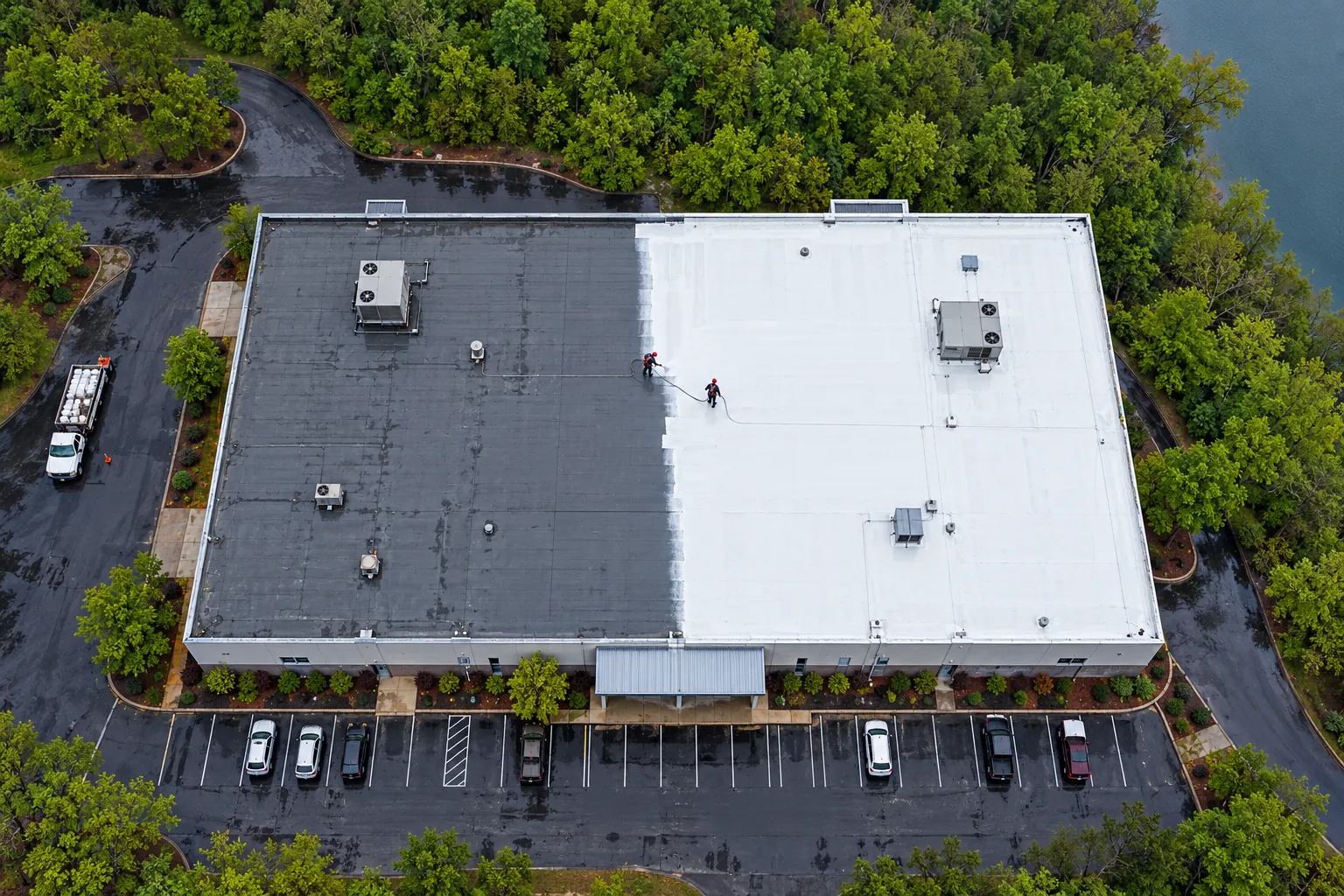
Aerial view of silicone coating on a low-slope commercial roof
Five Coating Systems · Somerset, KY

Somerset Commercial Roof Coating Services

Our commercial roof coating services in Somerset cover metal, silicone, acrylic, spray foam, and shingle systems, each matched to the roof slope and the steel underneath.

Commercial Roof Coating Services In Somerset

Every system below goes on after the same roof walk. The fit line on each card names the roof where that system earns its place.

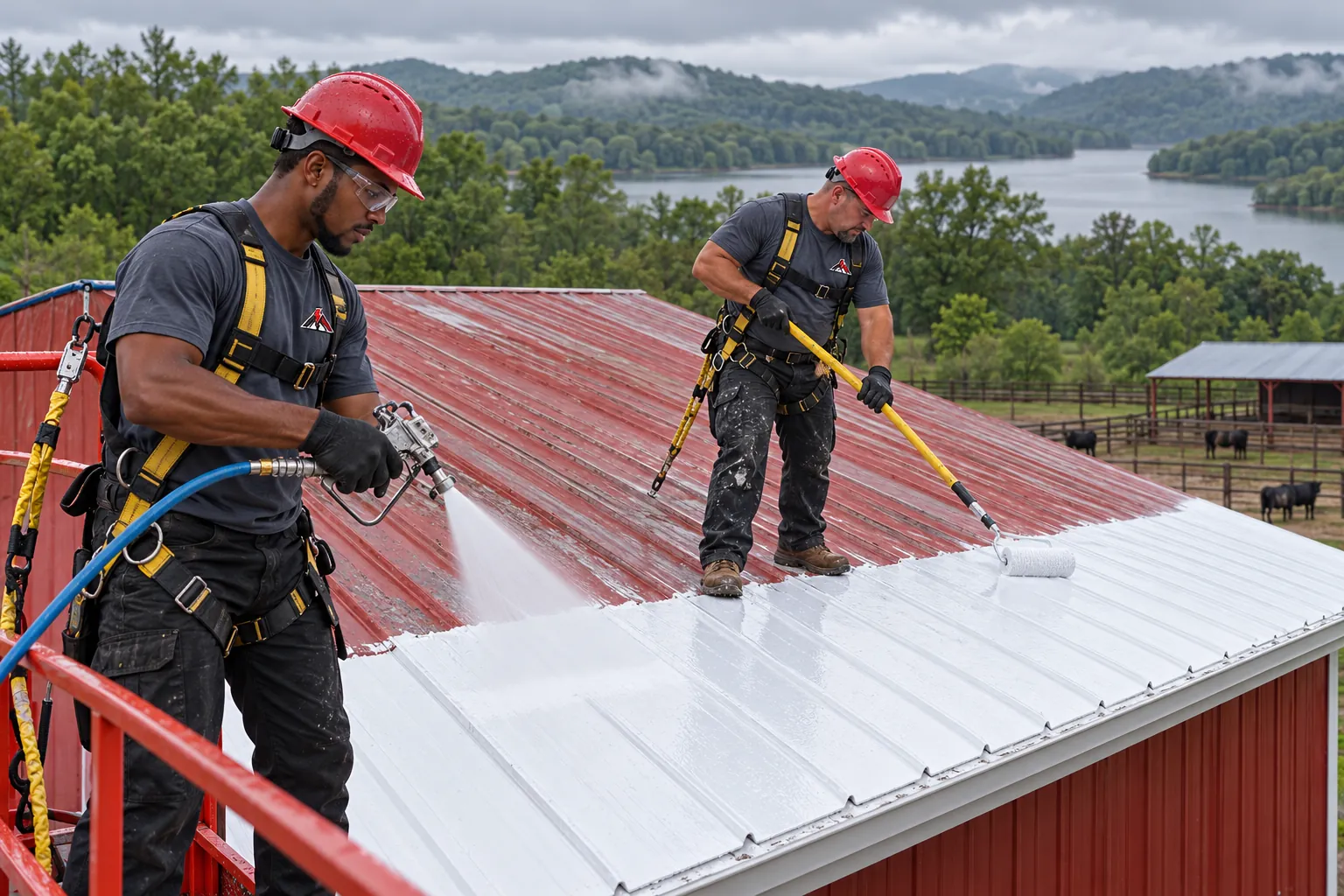
  • Crew rolling coating across a commercial metal roof

    Metal Roof Coating

    Built for exposed-fastener and standing seam steel: rust gets primed, failed screws get replaced, laps get fabric, and full coats cover the field.

    • Best for plants, shops, and storage rows
    • Check first: rust-through at eaves and gutters
    Commercial metal roof coating
  • Silicone Roof Coating

    Chosen for low-slope panels where water lingers near the gutters, since silicone resists ponding and sun. Any future recoat stays silicone.

    • Best for long, low runs on big buildings
    • Check first: wet insulation under flat spots
    Silicone roof coating
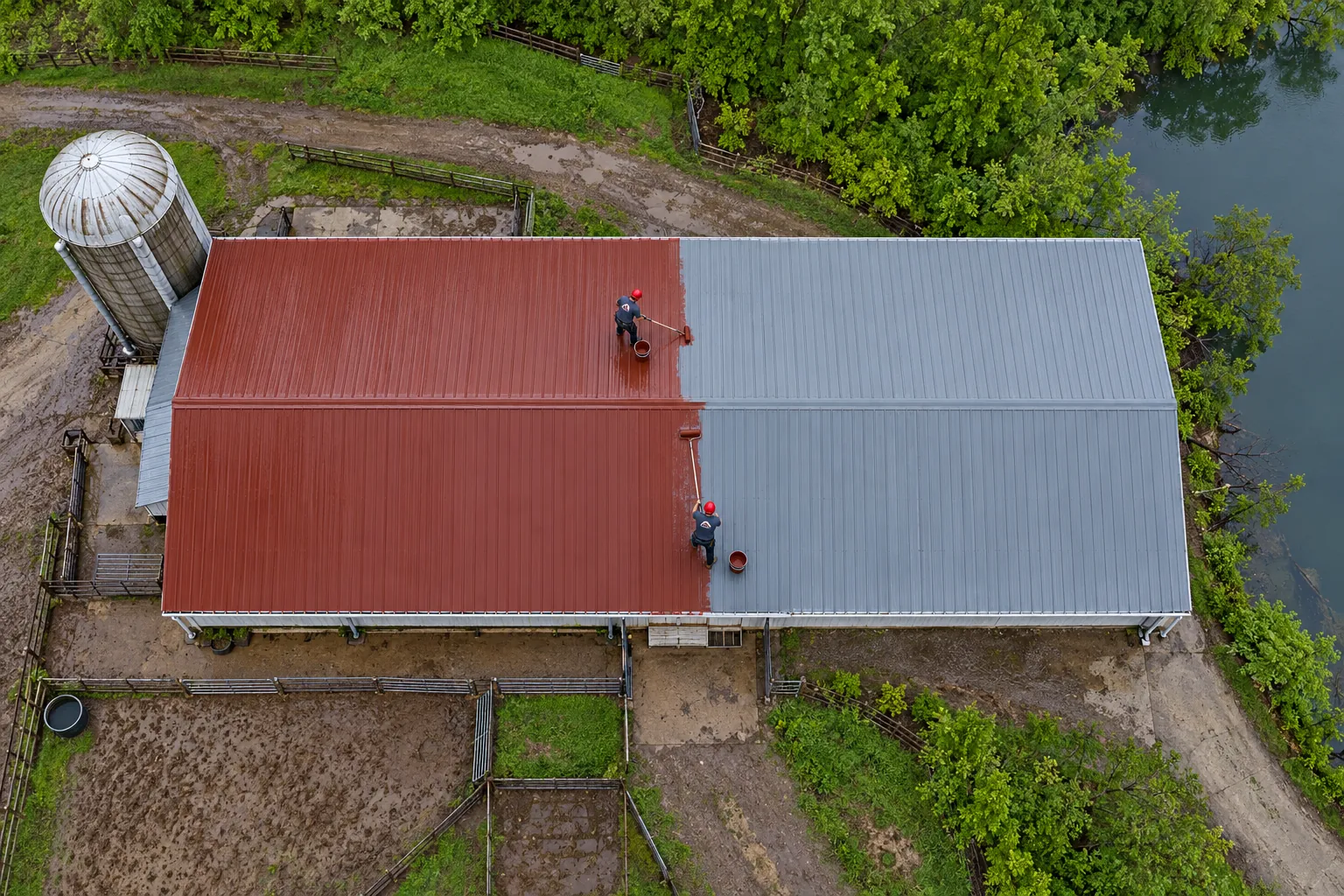
  • Aerial view of a large metal barn roof

    Acrylic Roof Coating

    Picked for pitched metal that drains quickly. Acrylic stays clean and bright and accepts acrylic or silicone recoats, though it needs warm, dry cure days.

    • Best for barns, shops, and church roofs
    • Check first: the forecast for the cure window
    Acrylic roof coating
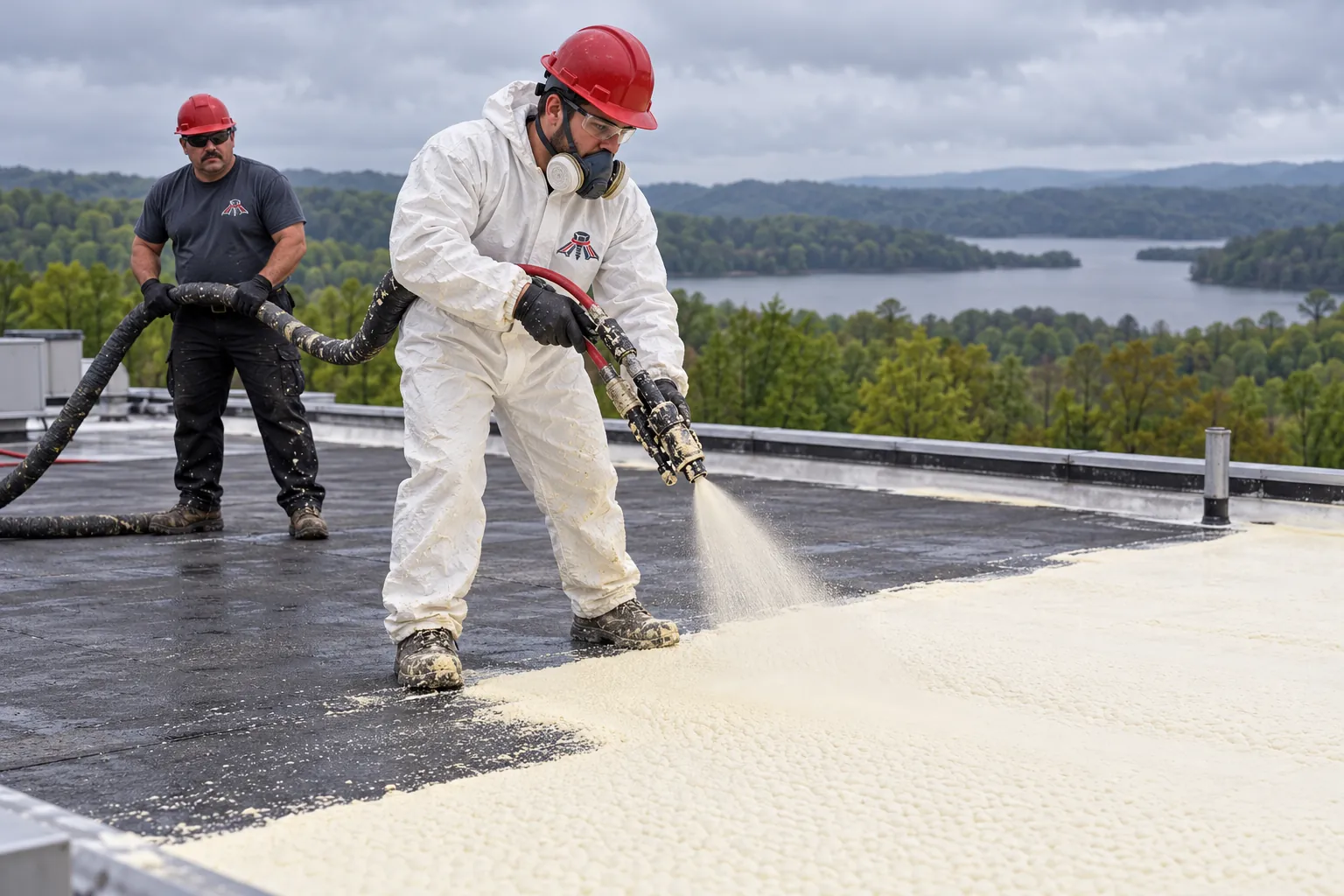
  • Crew applying spray foam on a commercial roof

    Spray Foam Roofing

    Installed where a building also needs insulation. Foam fills R-panel flats and buries the screws, then a coating protects it from sunlight.

    • Best for uninsulated shops that drip or bake
    • Check first: standing seam clips and panel gauge
    Spray foam roofing
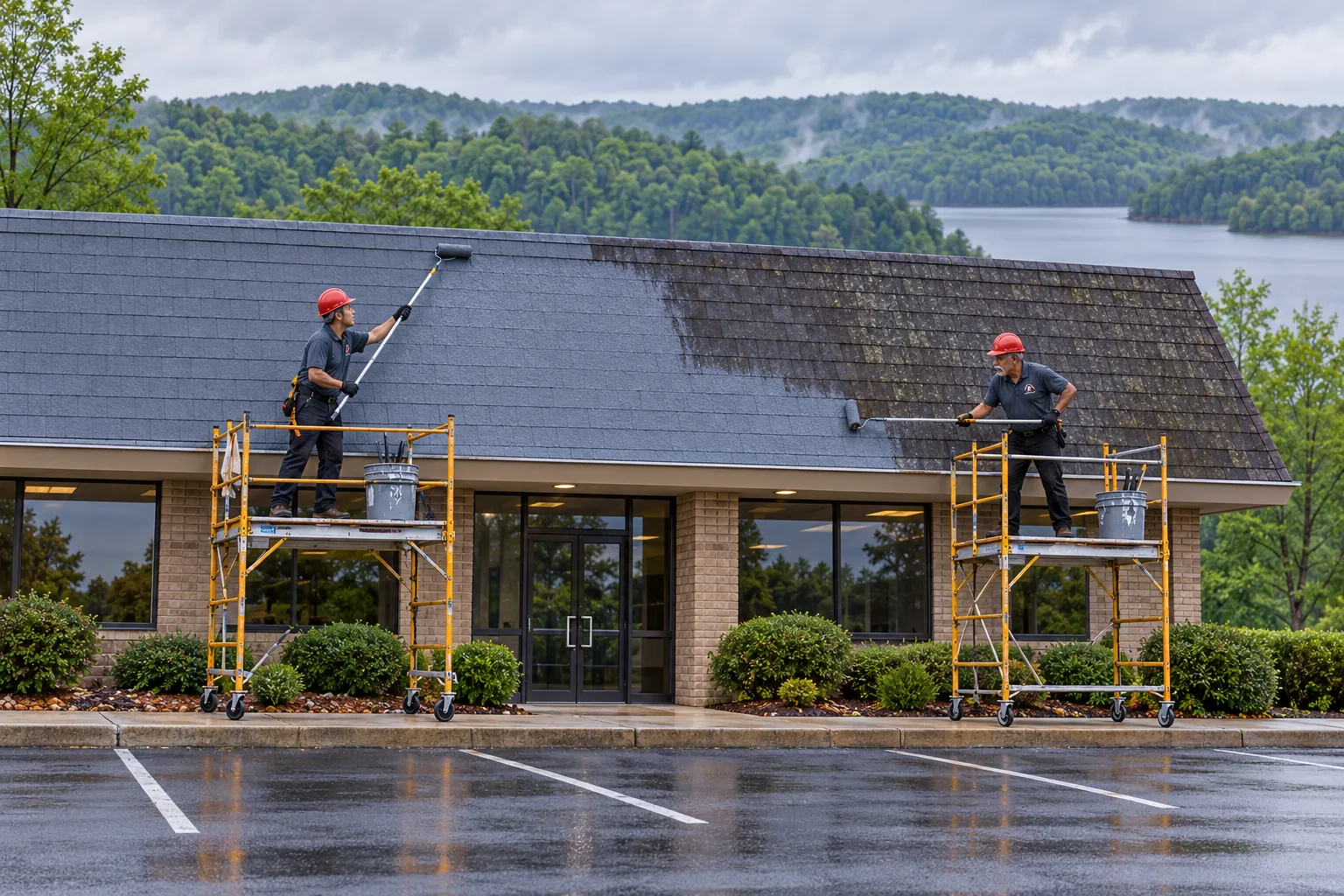
  • Crew coating an asphalt shingle section of a commercial building

    Shingle Roof Coating

    Reserved for commercial shingle sections whose tabs lie flat and keep their granules, with approval from the shingle and coating makers.

    • Best for strip centers, offices, and churches
    • Check first: curled, cracked, or missing tabs
    Shingle roof coating

Which System Fits Which Roof

Most metal roofs need a coating system. Some also need insulation, and a few have too little solid steel left to coat.

What We Install

Coating Over The Panels

Roof it fits
Leaking screws and laps, rust on the surface
Insulation added
None; a white topcoat reflects sun
Steel it needs
Firm panels and straight purlins
Building during work
Open; little masking needed
Weight on the roof
Very light
Later upkeep
Clean, inspect, recoat when worn
Also Installed

Spray Foam Plus Coating

Roof it fits
Uninsulated buildings that bake or drip
Insulation added
Foam across every panel
Steel it needs
Firm panels; clips checked on standing seam
Building during work
Open; more masking and overspray control
Weight on the roof
Light, more than coating alone
Later upkeep
Recoat the topcoat to protect the foam
When Steel Is Gone

New Roof System

Roof it fits
Rust-through across much of the roof
Insulation added
Chosen with the new system
Steel it needs
Failed purlins or framing get rebuilt
Building during work
Bays under open sections get covered
Weight on the roof
Set by the new system
Later upkeep
Per the new system maker

The roof walk decides the column. A building can also mix them, such as coating the main roof and replacing a few panels at the eaves first.

Not Sure Which Coating Fits?

A ballpark number based on roof size takes a few minutes. The system choice comes from the inspection that follows.

The Work Behind Every Coating System

Whichever system goes on, these five steps come first and in this order.

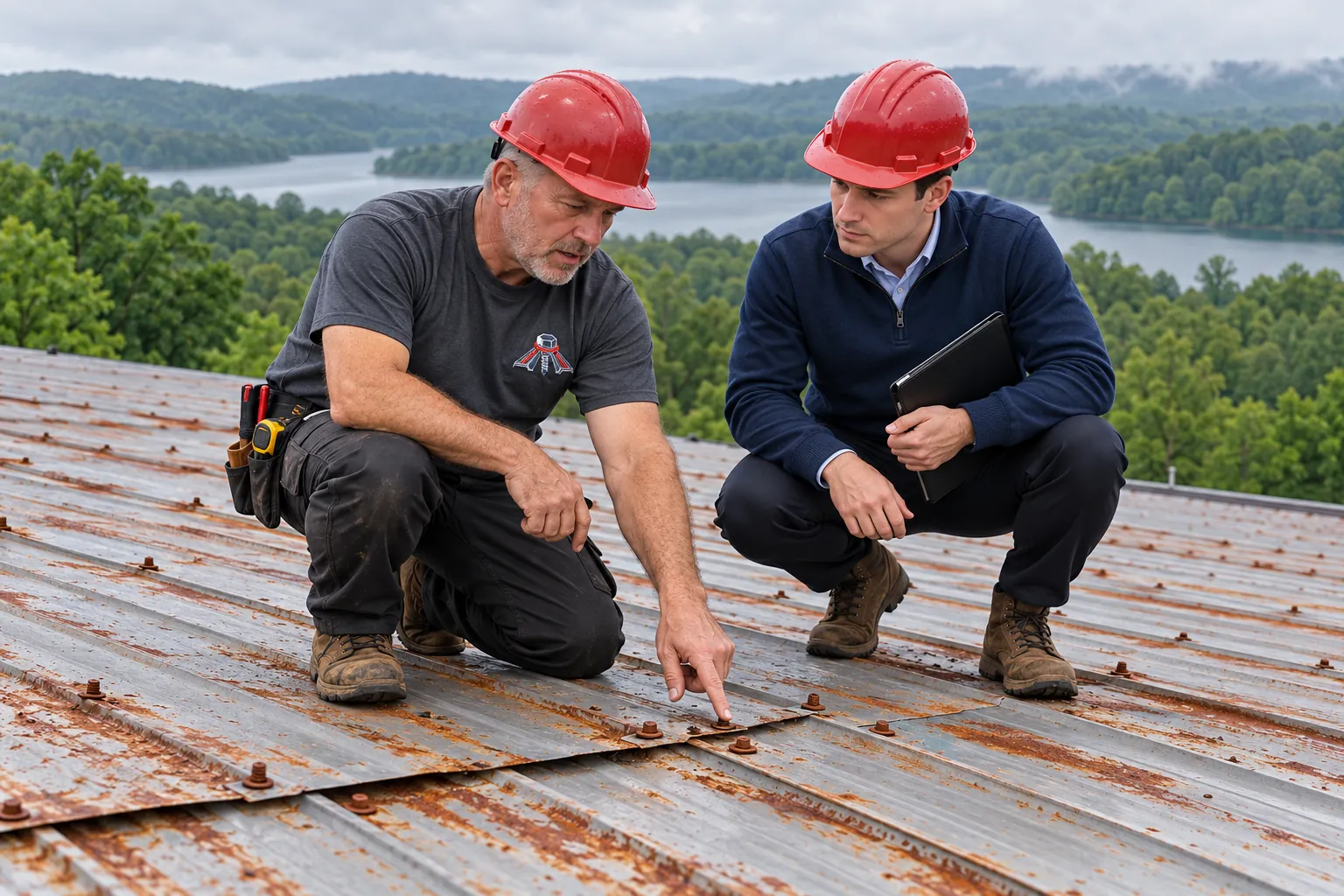
Roofer kneeling to check fasteners on a metal roof
  1. Inspect Your Roof INSPECT

    Panels, fasteners, laps, skylights, gutters, and curbs are checked, and a look from inside shows purlins, insulation, and any stains that point to leaks.

  2. Match The System MATCH

    Slope, ponding, insulation, and the coating already on the roof decide between acrylic, silicone, foam, or repair work before coating.

  3. Clean And Repair PREP

    Washing, rust priming, new screws, and new metal where panels failed get the surface ready, and a test patch confirms the coating bonds.

  4. Reinforce The Joints DETAIL

    Laps, seams, skylight edges, curbs, and penetrations receive fabric or seam tape set in a base coat, so joints can flex with the steel.

  5. Coat And Walk COAT

    Field coats build to the specified thickness, checked with a wet film gauge, and a final walk marks anything that needs another pass.

Coating System Questions

Owners ask these before choosing between coating, foam, and new panels.

System Choice

Does A Coating Replace The Metal Roof?

A coating adds a waterproof surface on top of the existing roof, and the panels keep carrying the load. Panels, purlins, and insulation stay put. That keeps the building dry during work, and it means loose panels, bent ridge caps, and rust holes are fixed before coating.


Silicone Or Acrylic On Metal?

Pitch and drainage usually decide. Silicone resists ponding and holds up to sun but collects dirt, and only silicone bonds to it later. Acrylic softens where water sits, stays cleaner, and recoats with acrylic or silicone. Urethane is a third choice for roofs with heavy foot traffic.

Cost

What Drives The Price Of Coating?

Roof size and the repair work before coating set most of the price. Fastener count, rust coverage, the coating type and number of coats, skylights, curbs, gutters, lift access, and any foam thickness all add up. Two roofs of equal size can land far apart once screws are counted.


Coat, Restore, Re-Panel, Or Replace?

It comes down to how much steel is still solid. Surface rust with a few leaking screws gets coated. Widespread fastener and lap leaks on firm panels get restored. Scattered rust-through gets new panels before coating, and rust-through across most of the roof means a new system.

Getting Started

Do Different Systems Need Different Prep?

The core prep stays the same: wash, prime rust, replace failed screws, and reinforce joints. Foam adds masking and overspray control and a dry, clean substrate. Silicone over old silicone needs a cleaner wash, and shingles need loose tabs secured and flashings sealed.


Can One Building Get Two Systems?

Yes. A plant might get silicone on a low addition and acrylic on the pitched main roof, or foam over the heated shop and coating over the storage side. Products are chosen so they stay compatible where the two areas meet.

Find The Right Coating For Your Building

Start with a ballpark range, then let the roof walk pick the system.

Call Us (606) 221-5206