Silicone On Long Low Runs
Low-slope warehouse panels hold water at the low end of each run, and silicone holds up under that ponding.
Silicone roof coating for warehouses
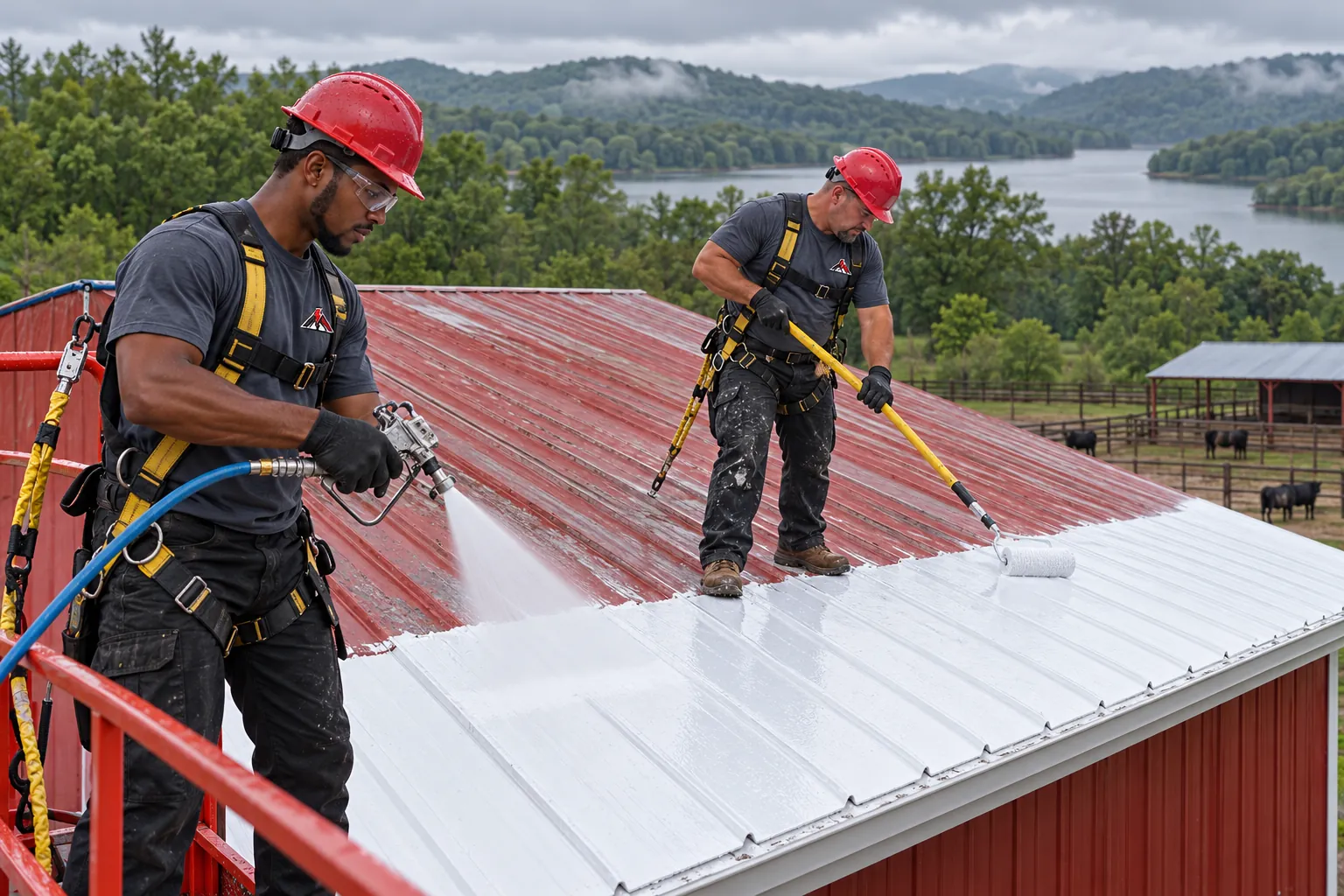
We coat metal roofs on London warehouses and distribution buildings, working section by section so docks and deliveries keep moving below.
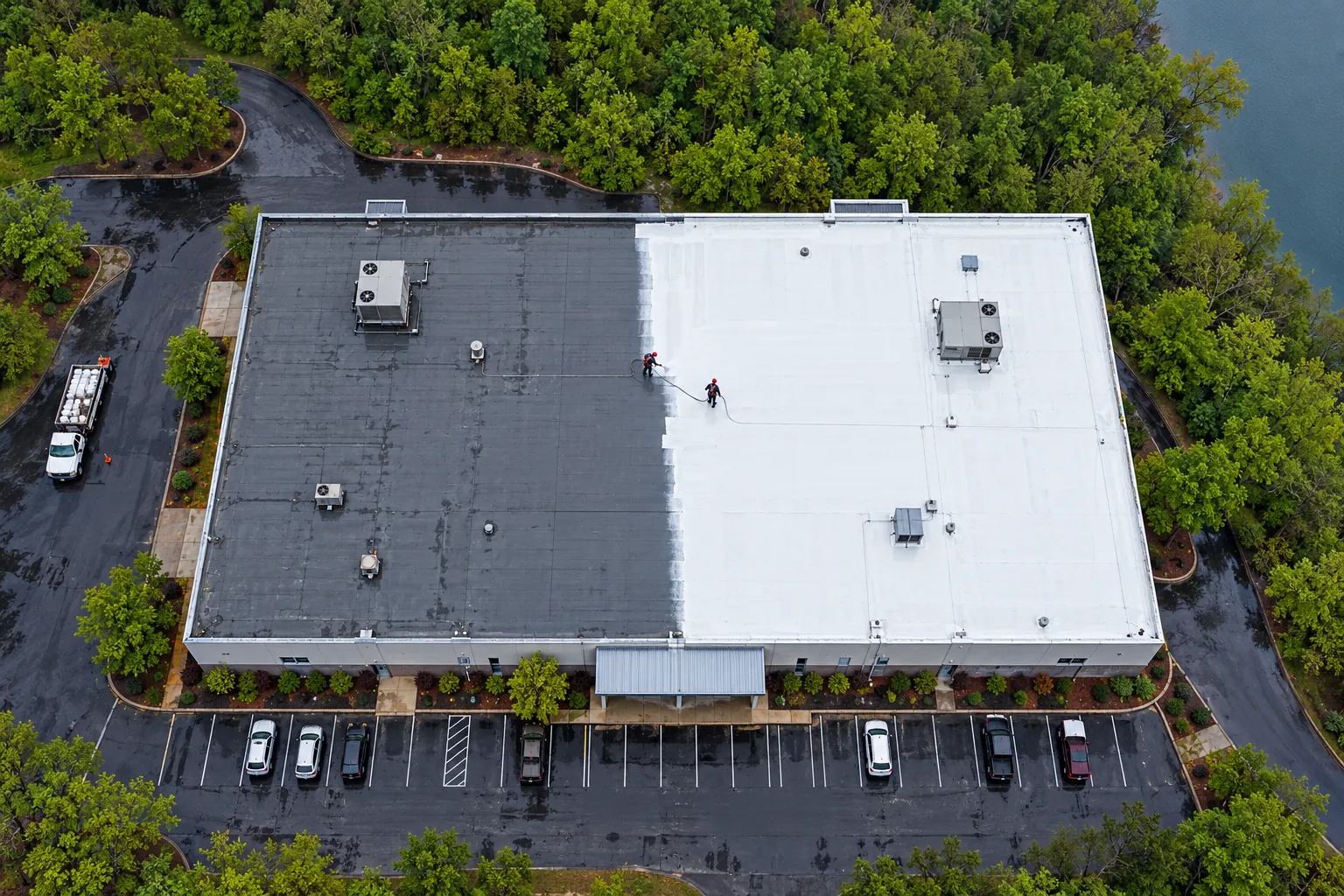
London metal roof coating work on warehouses is planned around the dock schedule below the roof.
A warehouse roof can run hundreds of feet, with dock doors, truck traffic, and stored product underneath. Coating the whole roof at once would mean shutting docks for spray work and staging lifts across the truck court.
Instead, the roof is split into sections that match the building below. Crews finish one section, from screws to topcoat, before moving to the next, and the sections over busy docks go on quiet shifts.
On a big building, where the water lands inside narrows down which part of the roof needs work.
Puddles form just inside the doors, where trucks back in and pallets wait.
Long roof runs dump a lot of water into the gutters above the docks, and rusted seams let it spill back.
Product in the middle of the racking gets wet, far from any wall.
Every panel joint down a long run is a chance for water to cross, and the laps near the low end leak first.
Water shows under the line of skylights that light the aisles.
Fiberglass skylight panels crack and lose sealant where they lap with the steel panels.
Ceiling tiles stain in the office or break room under the rooftop units.
Curb flashing loosens, and conduit lying on the panels traps water against the steel.
What coating a warehouse roof in sections does for the business below.
Keeping the existing panels and insulation puts the budget into laps, screws, and coats instead of a full tear-off.
Coating the roof section by section keeps most doors open, and roof work over the busiest ones happens on slow shifts.
The warehouse keeps its steel, so very little roofing goes into dumpsters in the truck court.
Worn areas, such as the low end of a long run, can be recoated later without redoing the whole roof.
London warehouses and distribution buildings carry large metal roofs. These systems match the conditions on them.
Low-slope warehouse panels hold water at the low end of each run, and silicone holds up under that ponding.
Silicone roof coating for warehousesFastener replacement, fabric at every end lap, and skylight sealing come before full coats across the field.
Metal roof coating for large roofs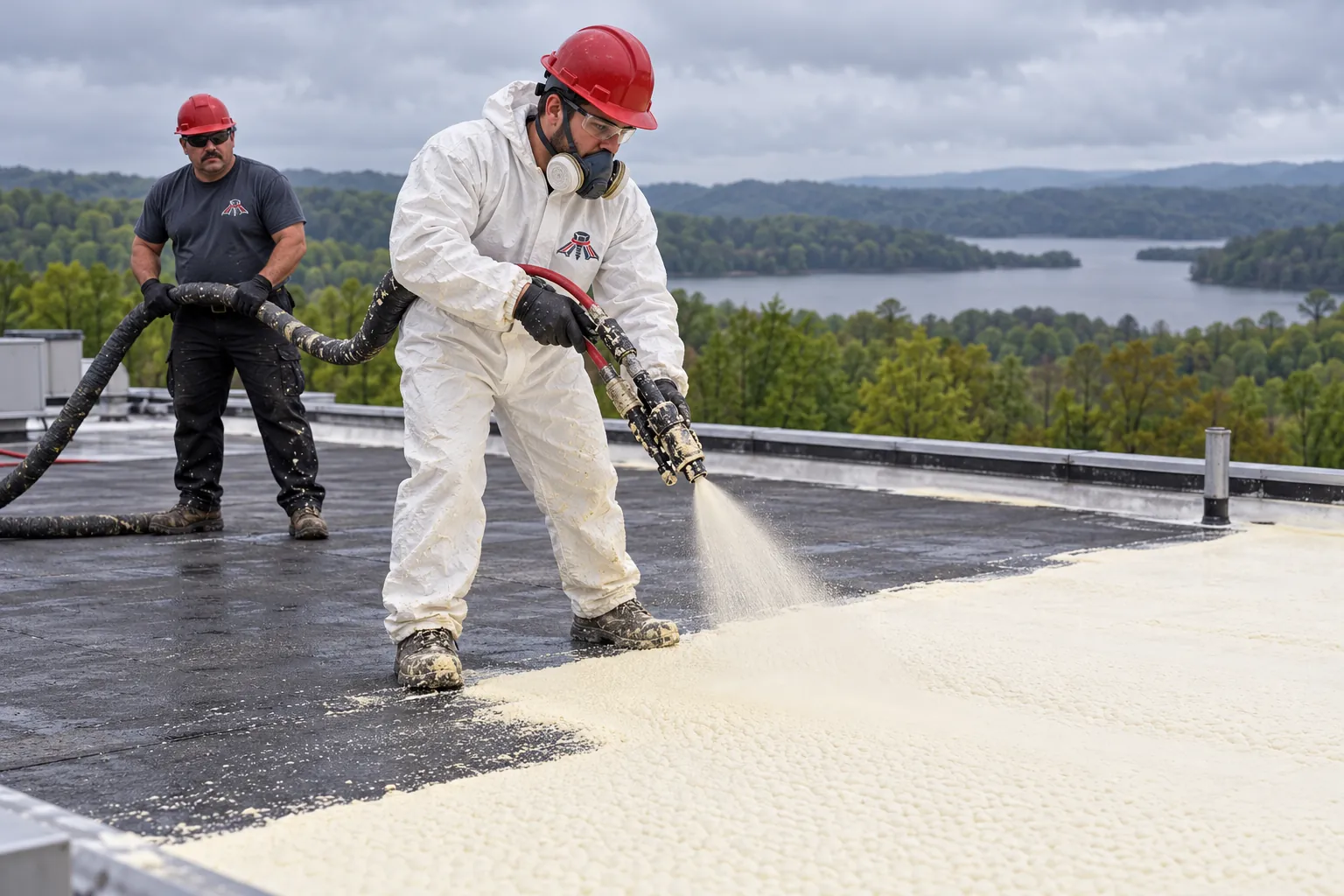
Foam adds insulation over bays that bake in summer and buries the screws under a smooth surface.
Spray foam roofing for warehouses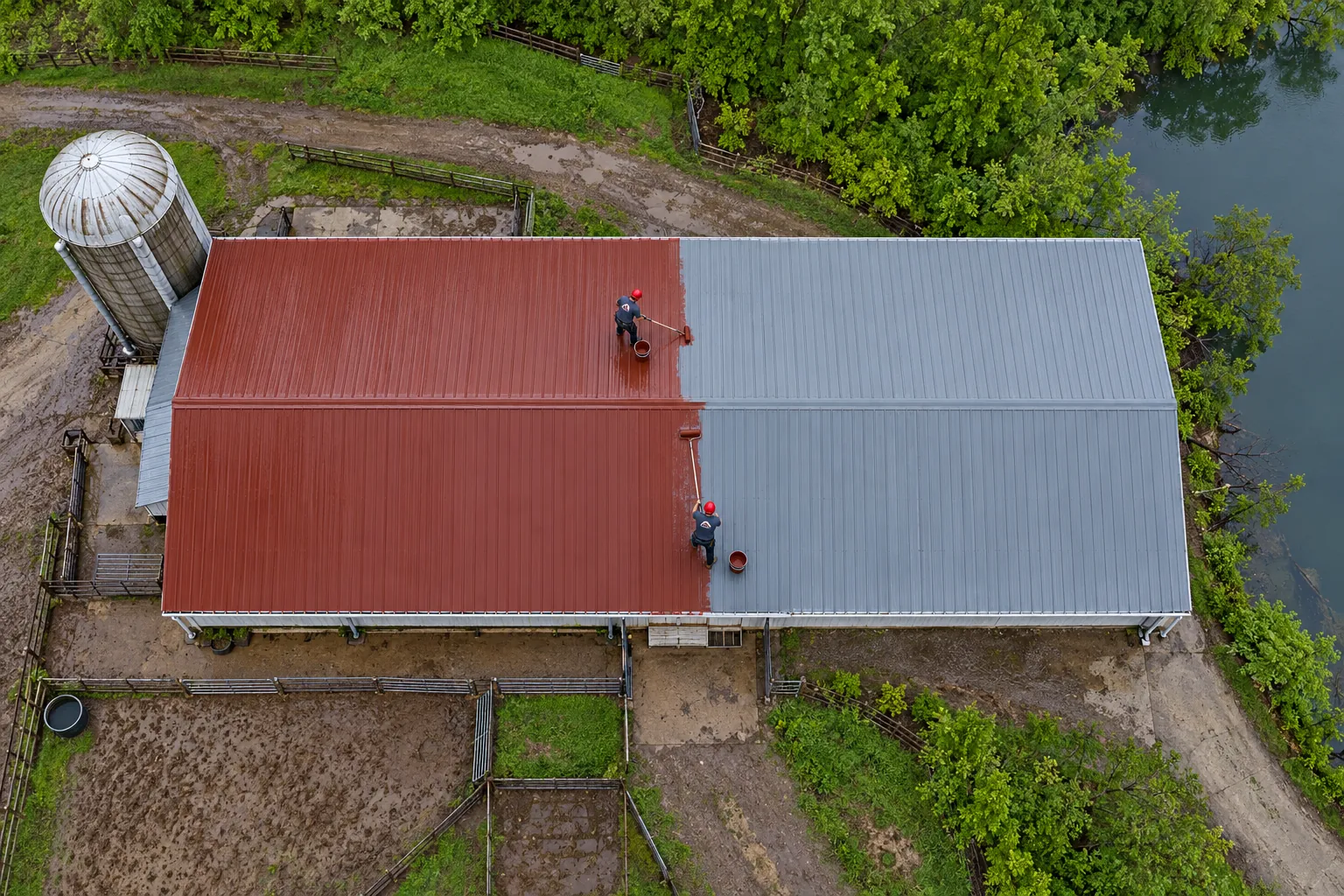
Office wings or pitched sections that shed water fast take a bright acrylic that recoats easily.
Acrylic roof coating for pitched sections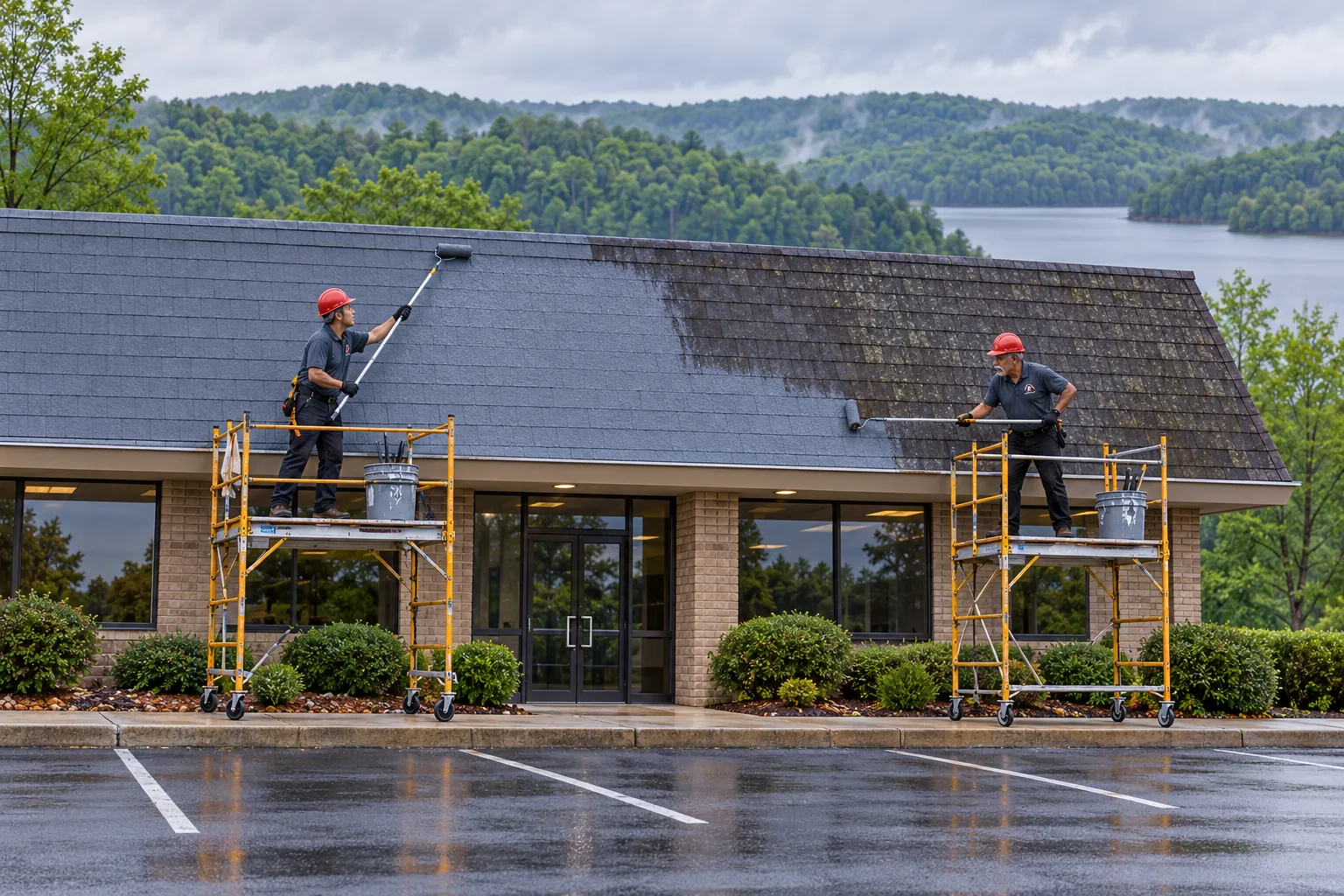
A front office with flat, intact shingles can be coated with a product rated for asphalt shingles.
Shingle roof coating for officesCall and tell us which aisle or dock the water reaches. The inspection starts on the roof section right above it.
Each section of the roof goes through the full order of work before the next one starts.
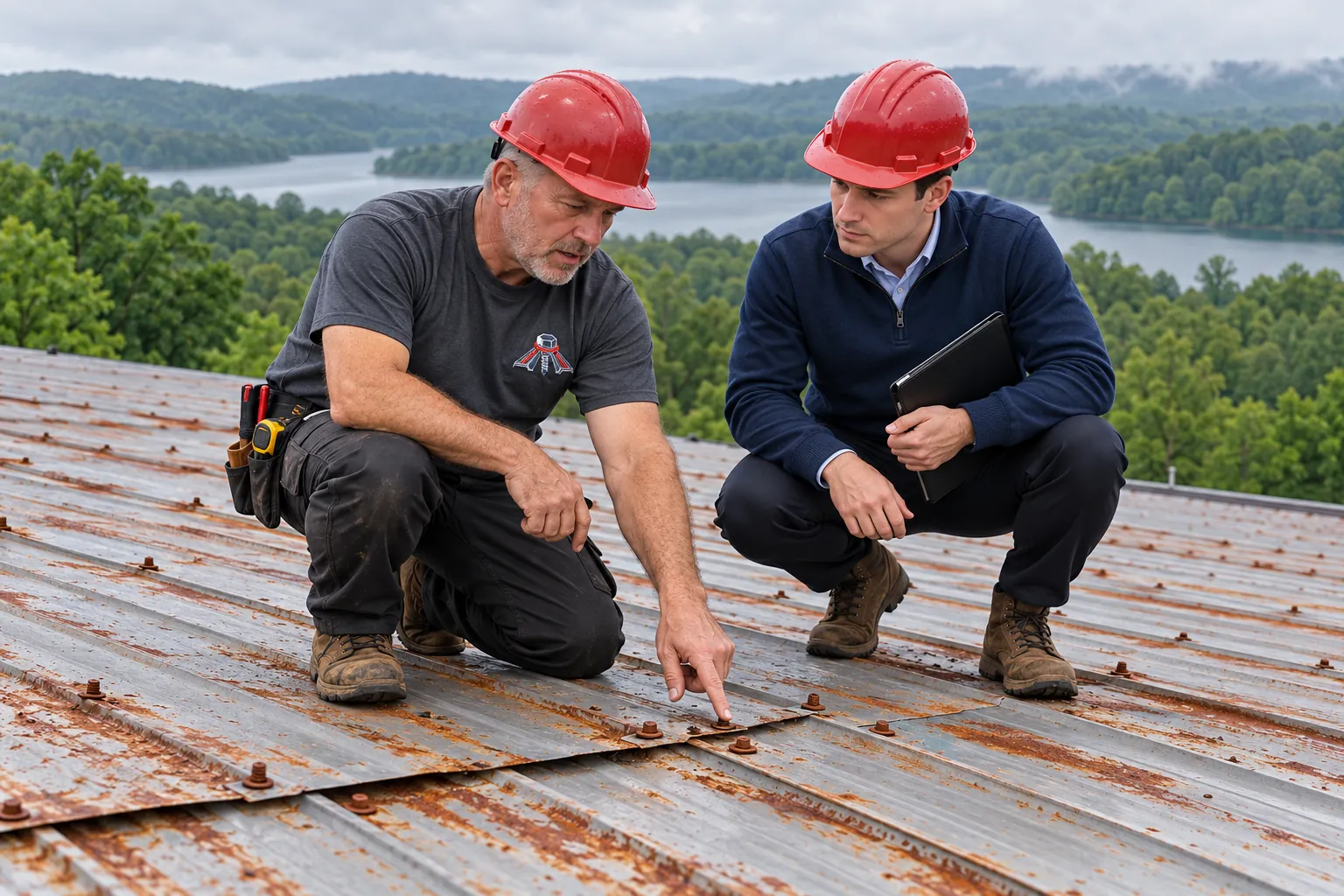
We walk the whole roof, count failed screws and open laps per section, check skylights and curbs, and match each section to the docks and aisles below.
Roof sections are ordered around delivery schedules, with lift positions placed away from truck lanes and the busiest docks saved for quiet shifts.
Washing, screw replacement, and rust priming happen in the active section only, so the rest of the roof stays undisturbed.
End laps, side laps, skylight edges, and unit curbs in that section get fabric and base coat before the field coats.
Full coats finish the section, thickness is checked, and the crew moves to the next section on the schedule.
Is your warehouse past London? Call us or send us a message about it. We also take metal roof coating jobs in the towns listed here.
Small plants with fans, curbs, and pipe penetrations
Main buildings with add-on sheds and canopies
Small lots where lift and staging room is tight
Plants, warehouses, and storage rows in the home city
Metal roofs with old coatings or patch layers
Answers for Laurel County warehouse, plant, and distribution building owners.
Permits In Laurel County
The Kentucky contact sheet for Laurel County lists a local building inspector for the city of London and a state building inspector. Call before work that replaces panels, adds rooftop units, or changes framing. Plain coating over existing panels is lighter work.
For electrical work, the Laurel County sheet points to the county judge-executive's office or the city office where the work happens. That matters when rooftop units get raised onto taller curbs or conduit is moved off the panels before coating.
Scheduling Around Docks
Most do. The roof is coated in sections, and lifts are placed away from truck lanes. Spray work near the docks moves to slow shifts, and parked trailers near the eaves get shifted before spraying so overspray stays off them.
Sections follow the building below: dock bays, storage aisles, office areas, and any additions. Each one goes from washing to topcoat before the crew moves on, so a stretch of finished, sealed roof grows across the building.
Power And Weather
Jackson Energy, Cumberland Valley Electric, and South Kentucky RECC all serve parts of Laurel County, so check the name on your bill before asking about business programs. Each co-op sets its own offerings, and those change over time.
The National Weather Service office in Jackson covers Laurel County. Its dated storm reports help tie hail dents or lifted trim on a warehouse roof to one event in your records, which helps with claims and repair planning.
See a ballpark range online, or call to plan sections around your dock schedule.
Leave your name and number and we will call you.
Or call (606) 221-5206