Metal Roof Coating
Eave screws, ridge caps, end laps, and rust spots are fixed first, then full coats seal the whole panel field on the shop or barn.
Metal roof coating details
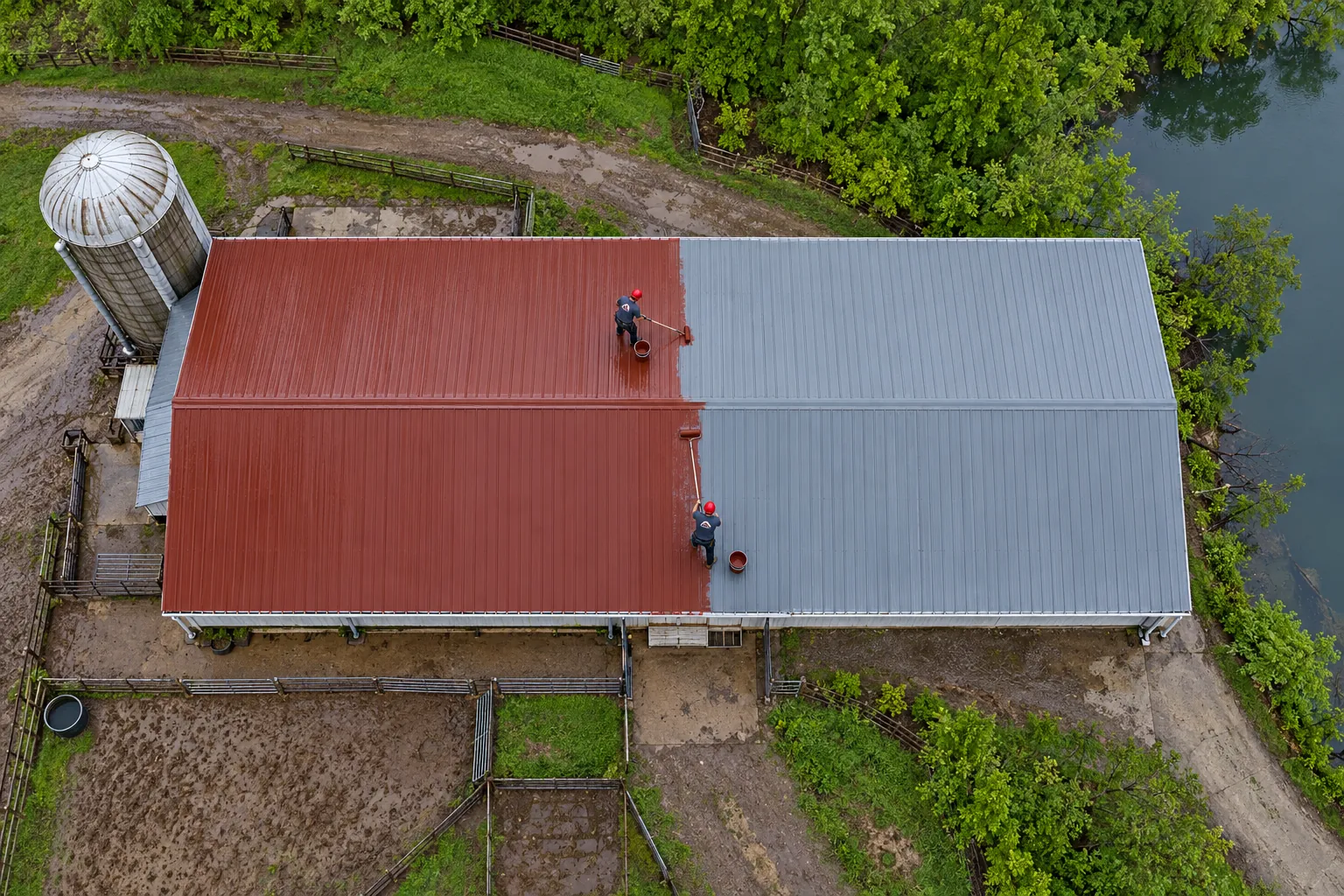
We coat metal roofs on Monticello shops, equipment sheds, and farm buildings, starting at the eaves and ridge caps where wind gets under the trim.
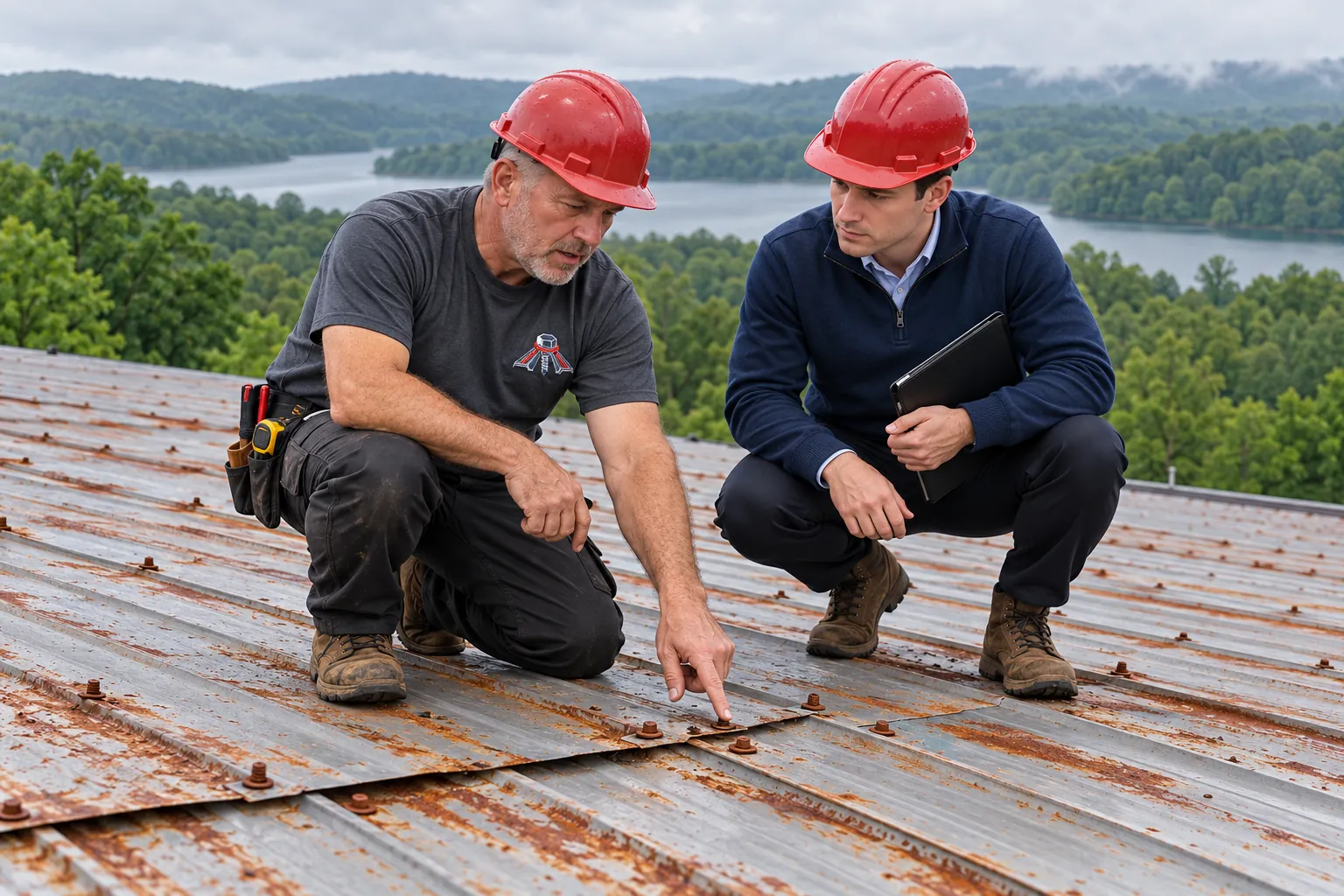
Monticello metal roof coating work usually starts where weather reaches under the roof edge.
Shops and equipment buildings with big open bays or doors that stay up all day let wind push straight under eave trim. Over time that lifts panel edges, works the eave-purlin screws loose, and shifts ridge caps and closure strips.
Before any coat goes on, those edges get fastened down again. Coating over a panel that still flaps in a gust only cracks the new film along the same line.
Wind-driven leaks on open-bay buildings follow the roof edges. Match what you see inside to the roof detail above it.
Water lands just inside the open bay after a storm blows in from that side of the building.
Eave trim bent up by gusts lets rain run under the first row of panels and down the wall girt.
A row of drips forms along the top of the wall, usually right below the first purlin.
Screws on the eave purlin take the most uplift, so they back out and leave open holes first.
Wet marks show high in the center of the shop, above the equipment parked there.
A ridge cap that moved leaves an open strip where blowing rain gets past the closure foam.
Orange flakes and drips land on tractors, feed, or tools stored below one section.
Panels that held hay, mud, or leaves for months rust faster than the clean steel around them.
Four reasons Monticello owners coat a shop or equipment roof instead of replacing it.
Coating saves the panels and purlins that still hold firm, so spending goes into eave screws, ridge caps, and coats.
Equipment, feed, and tools stay inside while crews work on the roof above them.
Only panels rusted through at the eave come off, and the rest of the steel stays on the building.
A coated roof that gets checked after big storms can be cleaned and recoated later with a matching product.
Most Monticello shops and barns carry exposed-fastener panels. These five systems cover what we see on them.
Eave screws, ridge caps, end laps, and rust spots are fixed first, then full coats seal the whole panel field on the shop or barn.
Metal roof coating detailsPitched barn and shop roofs shed water fast, which suits a bright acrylic that recoats easily later.
Acrylic roof coating details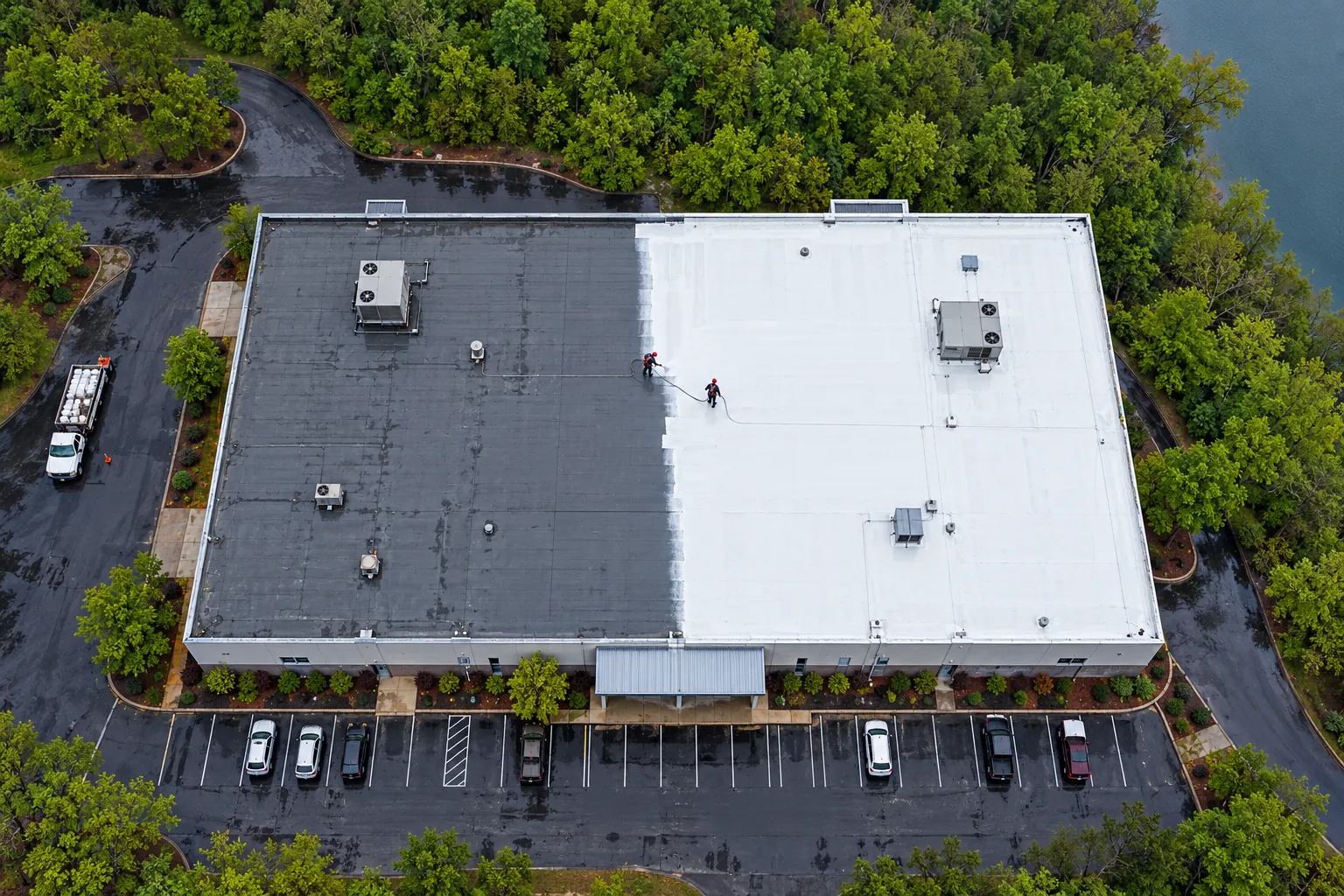
Lean-to additions with a low pitch hold water near the gutter, and silicone handles that standing water.
Silicone roof coating details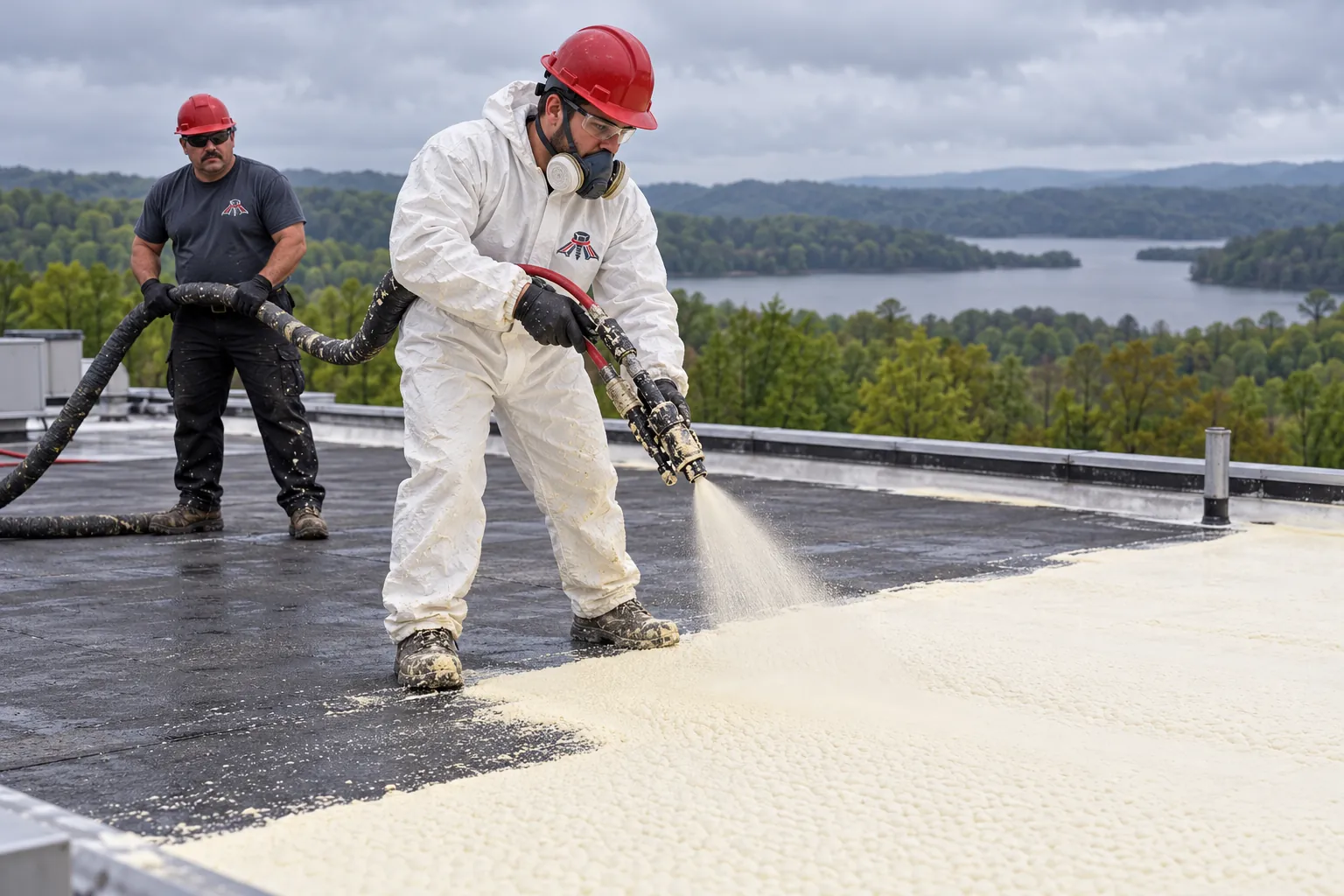
Shops heated in winter drip under bare steel; foam covers the panels, buries the screws, and adds insulation.
Spray foam roofing details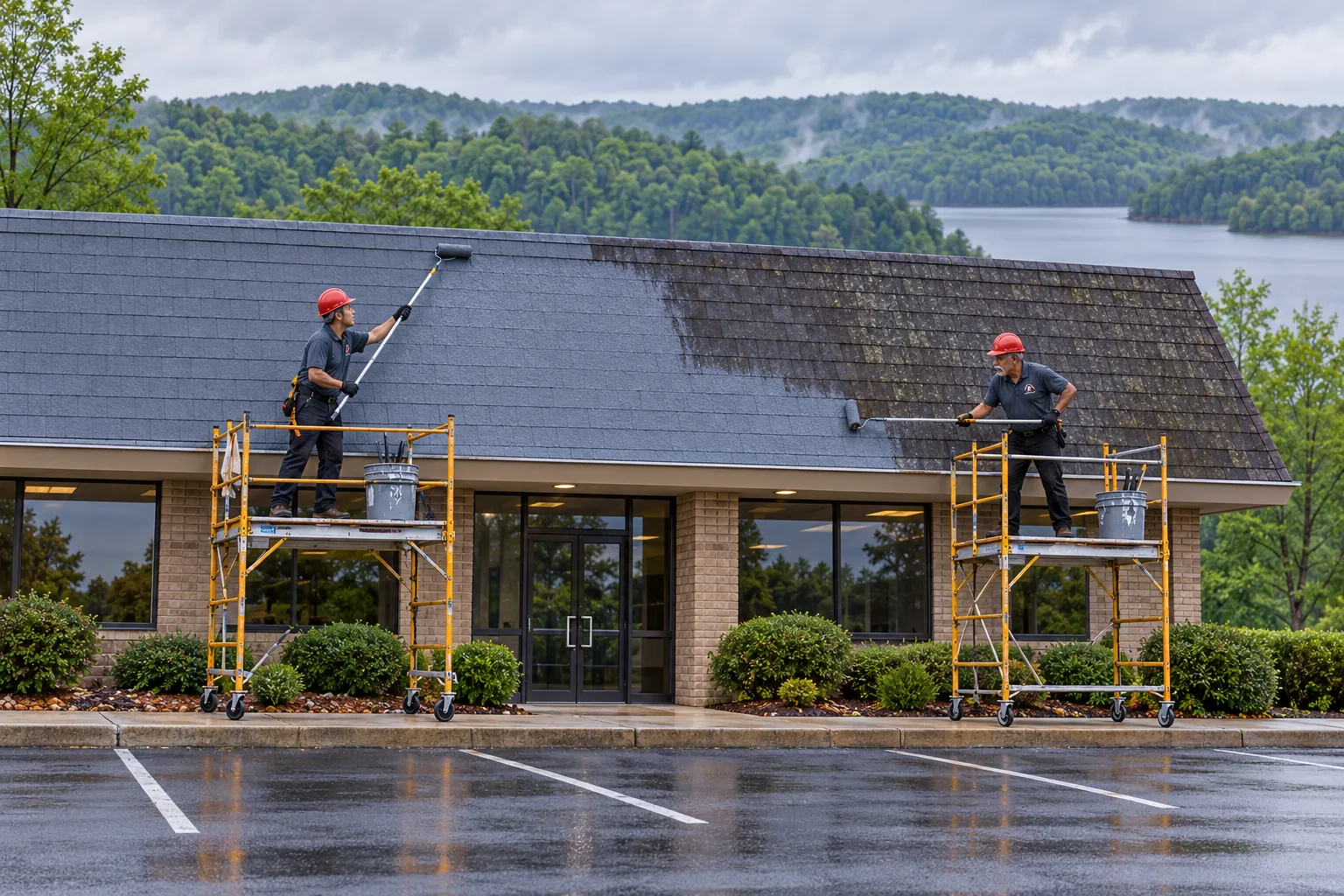
A shingled office or store front on the same property can be coated when its tabs still lie flat.
Shingle roof coating detailsStart a ballpark estimate, and mention which side of the building the wind hits. Crews begin the inspection along that eave.
The order of work on an open-bay building puts the roof edges first.
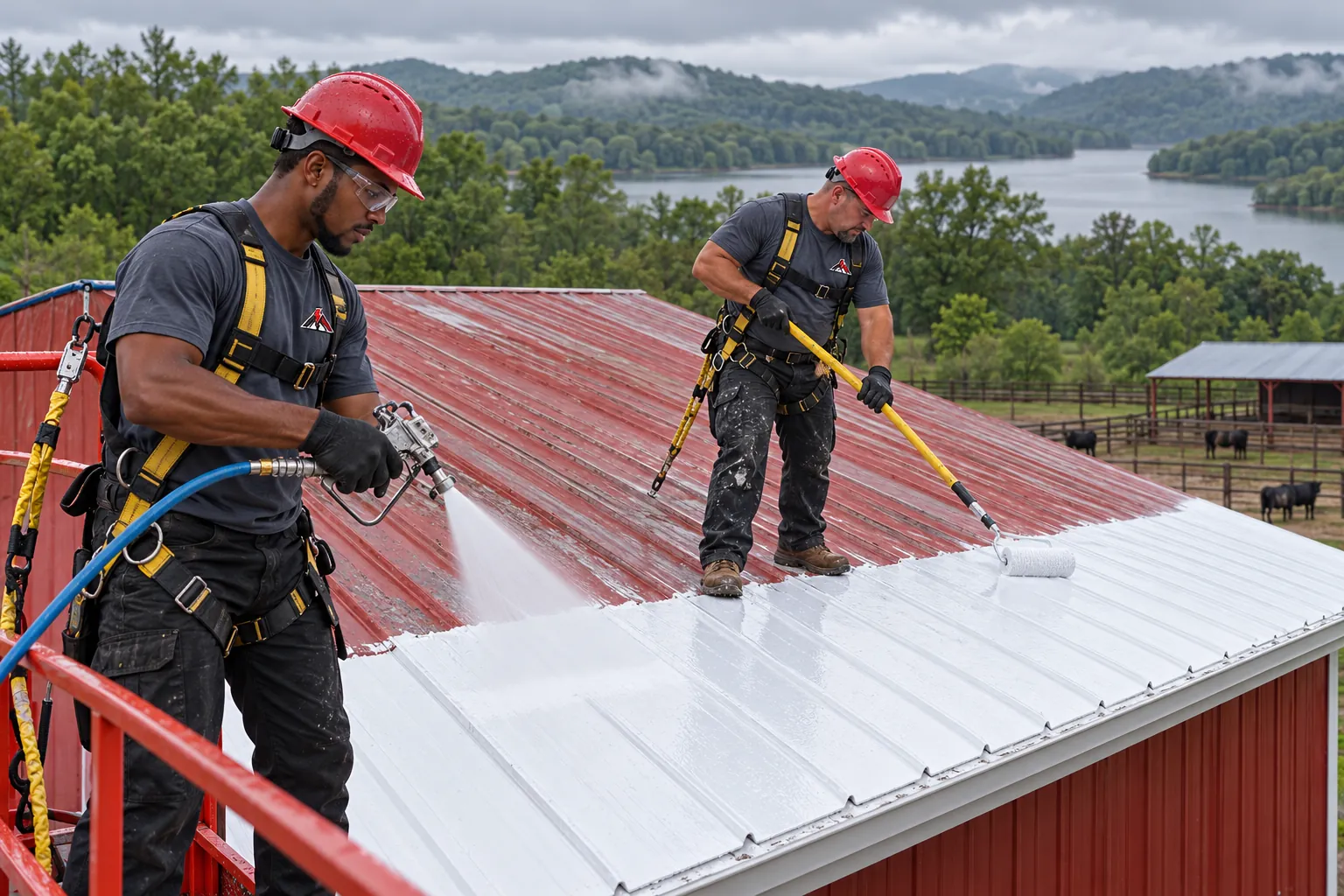
We walk the eaves, ridge, and every screw line, test rusty spots with a screwdriver, and look up from inside the bays for daylight at the trim.
Eave-purlin screws are replaced with slightly larger ones, lifted trim is bent back and refastened, and ridge caps are reset on new closure strips.
Debris comes off the panels, rust under it is ground and primed, and power washing removes dirt and chalky paint from the whole field.
End laps, the joint between wall panels and roof trim, and every screw head get sealant or fabric with a base coat.
Full coats go across the panels while the crew checks thickness, and the final walk looks hardest at the windward eave.
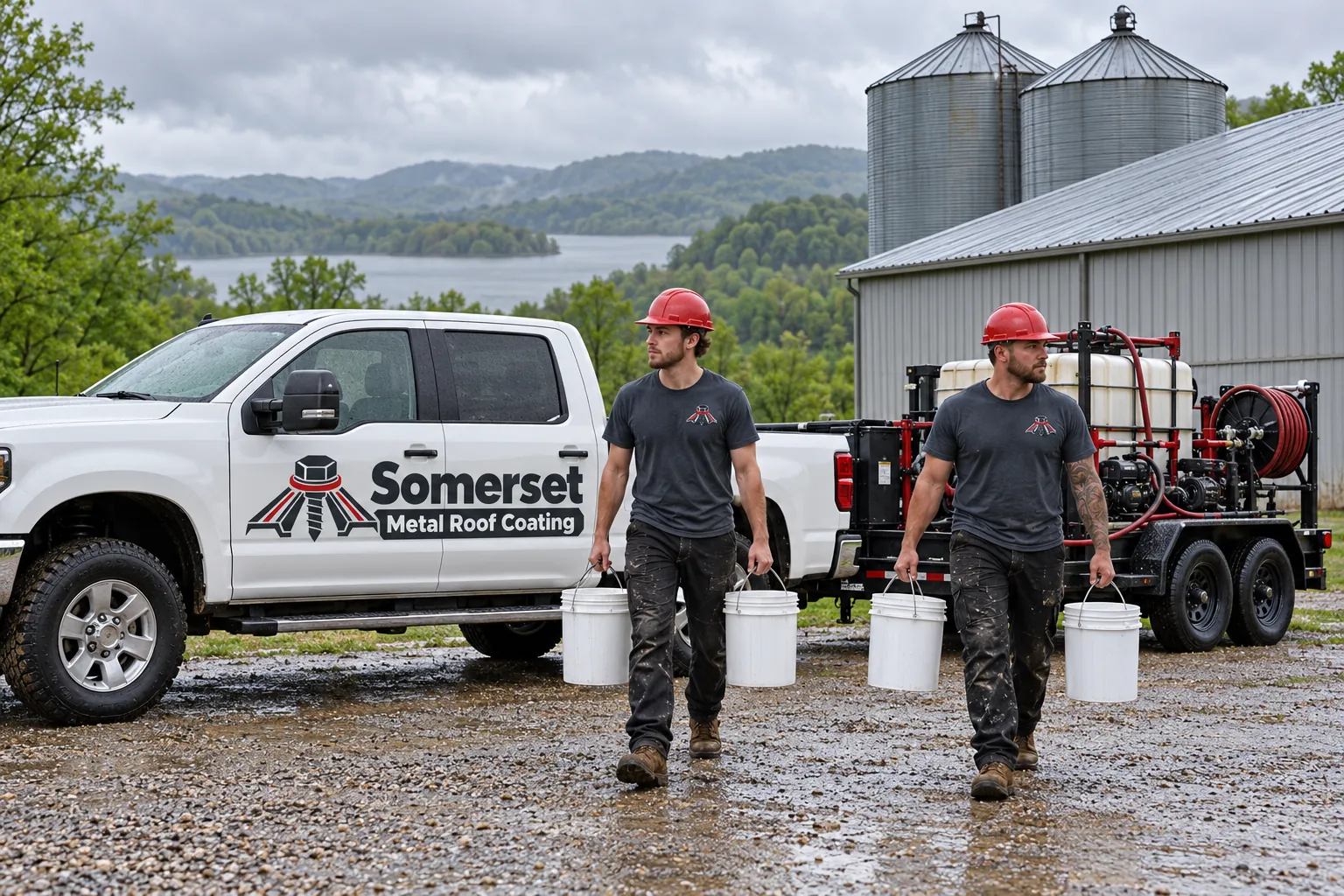
Have a building outside Monticello? Call us or send us a message. We also coat metal roofs in these towns around Wayne County.
Plants, warehouses, and storage rows in the home city
Multi-tenant shop and storage rows
Marina service and boat storage roofs by the lake
Galvanized panels on Russell County shops and storage
Metal roofs with old coatings or patch layers
Answers for Wayne County shop, barn, and storefront owners.
Permits In Wayne County
The Kentucky building contact sheet for Wayne County lists both a local building inspector and a state building inspector. Call them before a job that replaces panels, adds rooftop curbs, or changes framing. Electrical questions go to the county judge-executive's office or the city office for the work site.
Bring photos of rusted eaves, gutter outlets, and ridge caps, since those parts show how much metal is coming off the building. Add the panel type and a rough roof size. Plain coating over existing panels is lighter work than replacing panels or framing.
Wind And Storms
Use storm reports from the National Weather Service office in Jackson, which covers Wayne County. A dated report ties lifted trim or dents to one event in your records, which helps with insurance and with planning the roof repairs before coating.
A coating seals joints; it does not hold metal in place. Lifted trim and loose panels are refastened with new screws first, and the coating then seals over those repairs. Skipping that step lets the next gust crack the film along the old gap.
Farm And Shop Buildings
Yes, with planning around the animals. Water-based acrylic carries little odor, rinse water is directed away from pens, and work moves section by section so one end of the barn stays quiet. Panels rusted near manure or feed areas get extra prep.
South Kentucky RECC serves Wayne County, so ask that co-op whether any business programs are open. Offerings change from year to year. A light-colored coating mainly lowers heat coming through hot steel in summer.
Get a ballpark range online, or call to talk through the eaves and ridge before the roof walk.
Leave your name and number and we will call you.
Or call (606) 221-5206