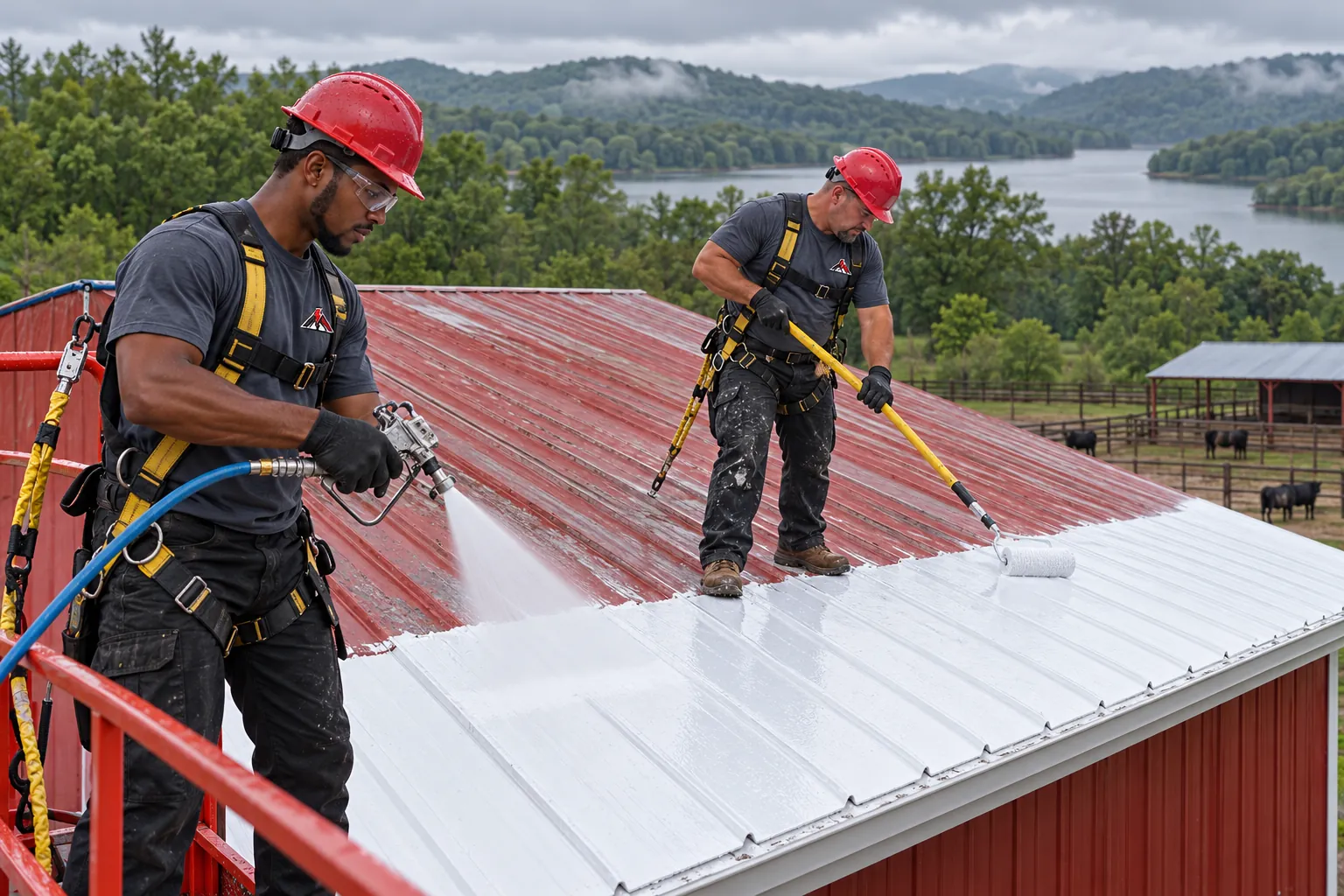
Silicone Over Metal Panels
Exposed-fastener panels on a low pitch get rust treatment, fastener work, and reinforced laps, then silicone across the field.
Metal Roof Coating details
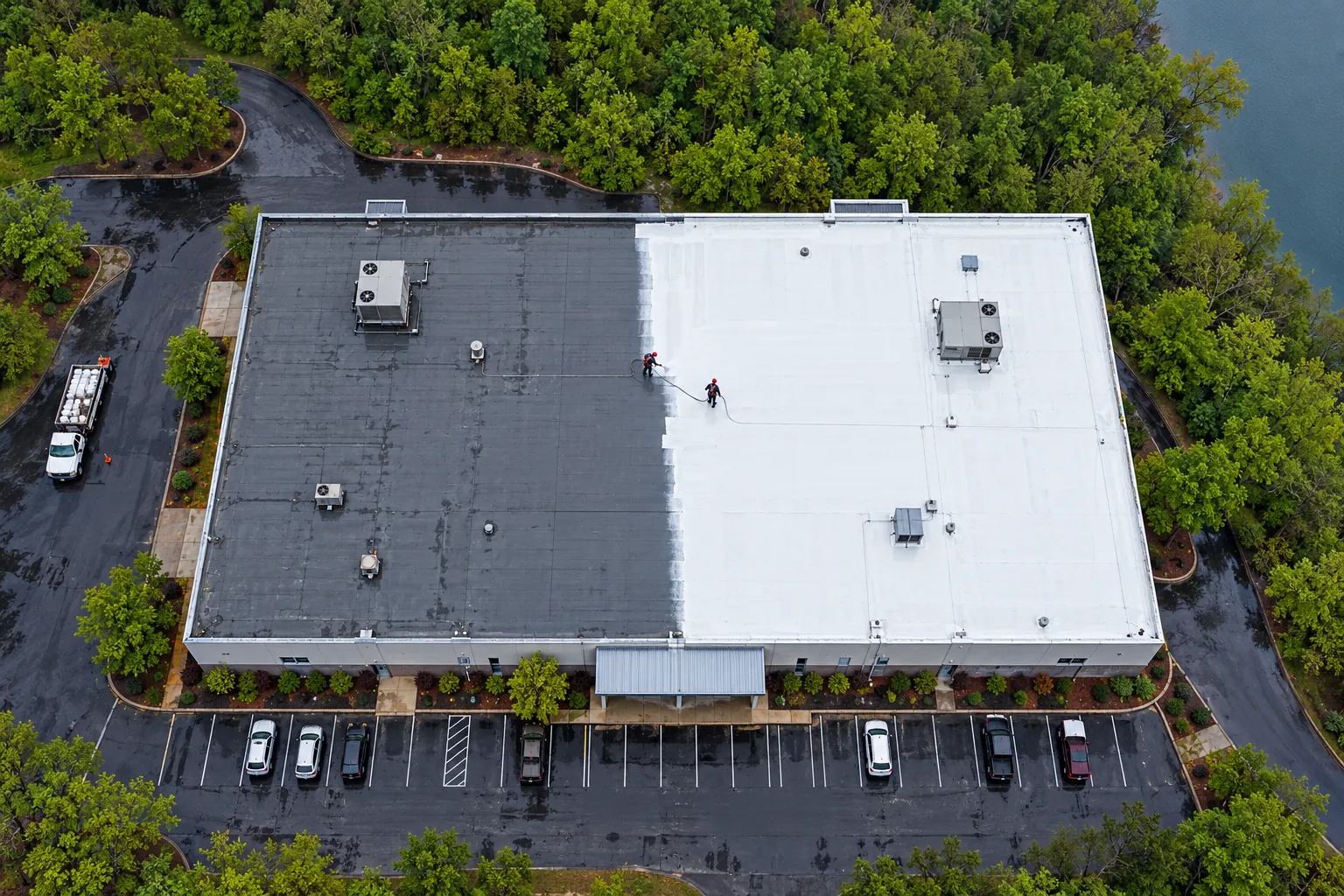
Silicone roof coating in Somerset fits low-slope metal and plant roofs where rain sits near the gutters, with every lap and seam reinforced before coating.
Silicone earns its place on roofs that hold water. Compare it with acrylic and urethane before choosing a system for a flat or low-pitch panel field.
Many low-slope roofs end up with silicone on the field and urethane on the walkways to rooftop units.
Water that lingers on a low-slope roof finds every weak lap. These pairs connect what shows indoors to where the water sits outside.
Tiles stain along the wall where the roof drains, days after the rain has stopped.
Flat spots at the low end of long panel runs keep a puddle against the gutter line.
Water falls in the middle of a bay where no fastener line sits overhead.
Side laps along the ribs stay wet long enough for water to wick through the joint.
Moisture shows on the ceiling next to the supports for rooftop equipment.
Curbs act like small dams, and water backs up on the uphill side of each unit.
Insulation facing sags in round patches instead of long lines.
Brown rings mark where puddles dried, showing exactly where silicone needs to go.
Low-slope roofs around Somerset usually take silicone on the field, with other systems on the parts that see wear or slope.
Exposed-fastener panels on a low pitch get rust treatment, fastener work, and reinforced laps, then silicone across the field.
Metal Roof Coating detailsStrips leading to rooftop units get a urethane base for impact strength, with a UV-stable topcoat over it.
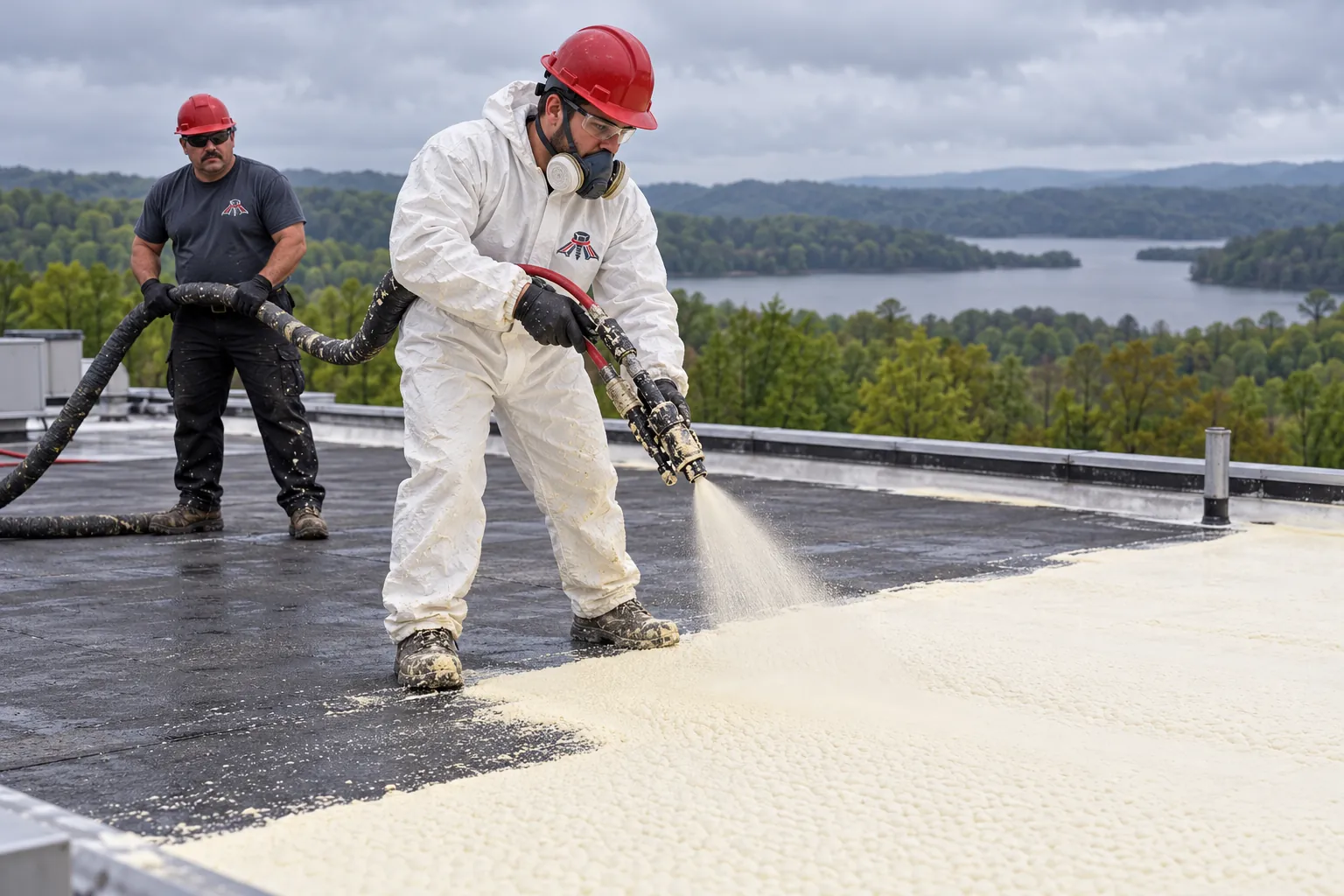
Foam builds slope out of flat spots and adds insulation, and silicone is a common topcoat over it.
Spray Foam Roofing details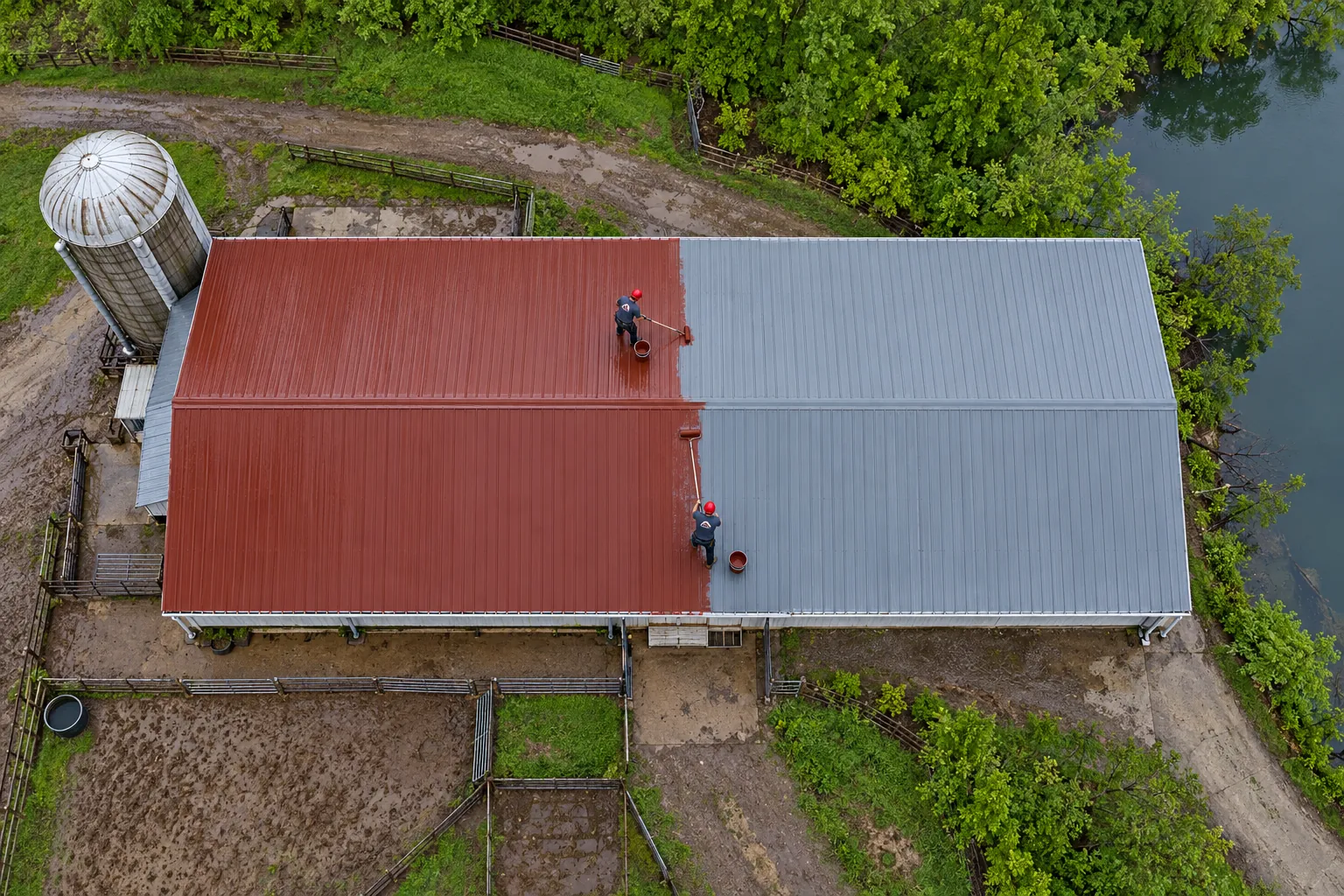
Where part of the building has real pitch, acrylic on that section keeps dirt pickup down.
Acrylic Roof Coating detailsWhat silicone gives a low-slope roof once the seams and fasteners are done.
Silicone keeps sealing where water sits for days near the gutters and behind curbs.
Existing panels and insulation stay, so spending goes into seam fabric and coats.
Sections are coated one at a time while shifts continue under the rest of the roof.
A worn silicone roof gets cleaned and recoated with more silicone, since that is what bonds to it.
Call and describe where water sits after rain. Low spots near gutters and curbs are the first places the inspection checks.
Silicone work on a large roof moves section by section in this order.
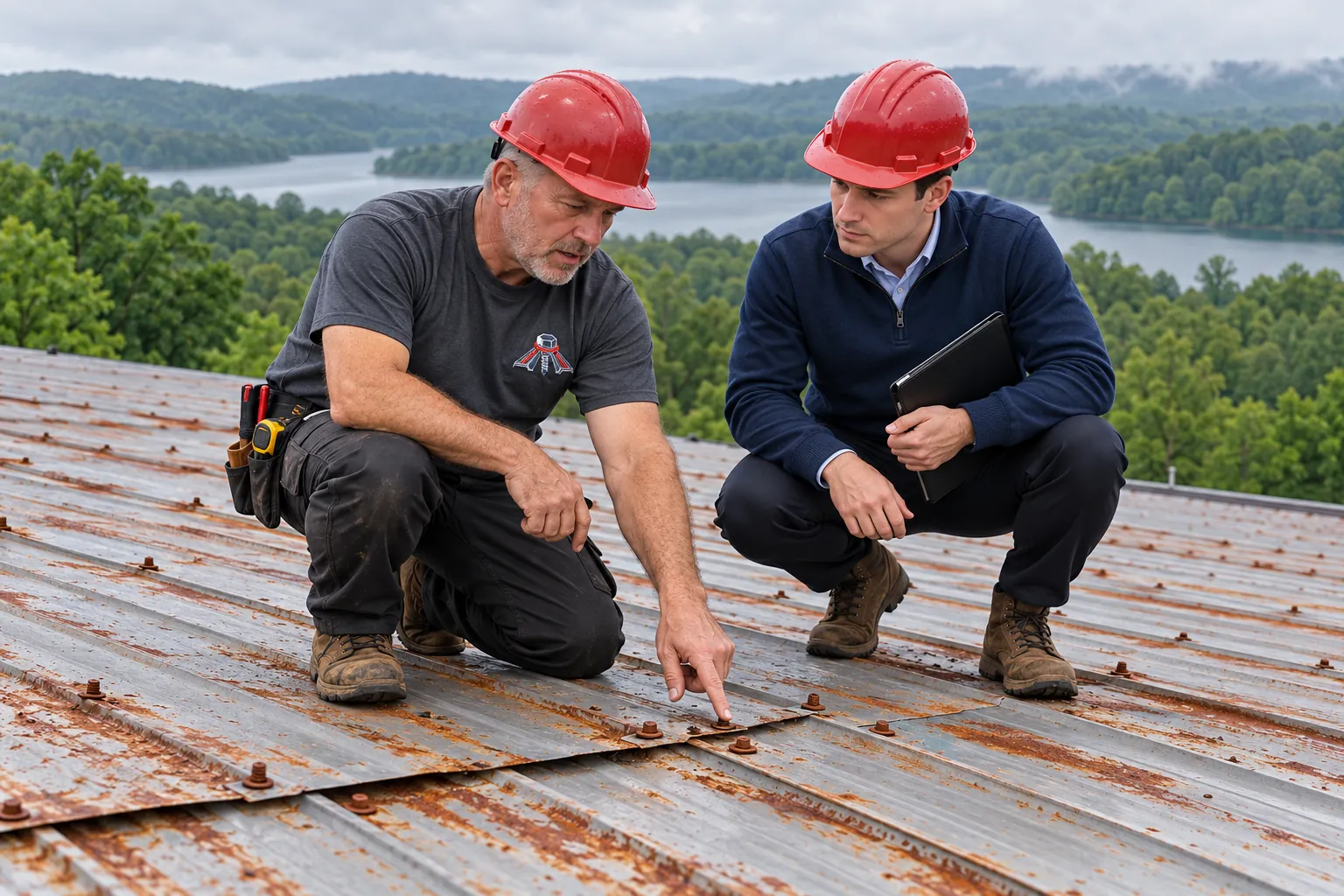
We map where water sits after rain, probe rusty spots, check every lap along the low end, and look at curbs and drains from above and below.
Pressure washing removes dirt and chalking so silicone can bond. Bare or rusted steel gets primer, and any panel a screwdriver goes through is replaced.
End laps and side laps get a band of base coat with polyester fabric pressed into it, then a second pass over the fabric so the joint can flex.
Unit curbs, pipe boots, and gutter outlets get the same fabric treatment, since ponding water reaches those joints first.
Silicone goes across one section at a time at the specified thickness, which keeps rooftop intake shutdowns short and tied to the area being sprayed.
Three other systems often share a roof with silicone or take its place on a different part of the building.
Metal roof coating covers the screw and lap work every panel roof needs before any topcoat.
See metal roof coatingSpray foam fixes flat spots that hold water and adds insulation under the silicone.
See spray foam roofingAcrylic suits pitched sections of the same building, where water runs off before it can sit.
See acrylic roof coatingSeams, urethane, hail, and recoating over older coatings.
Seams And Wear
Each lap gets reinforced seam work: a band of base coat, polyester fabric pressed into it, and a second pass of coating over the fabric. Some systems use butyl or seam tape instead. Horizontal end laps come first, since water crosses them on its way to the gutter.
Urethane belongs where boots and tools hit the roof: walkways to units, panels under exhaust fans, and areas maintenance crews climb often. It cures harder than silicone and costs more per coat, so most roofs use it only on those strips, with a UV-stable topcoat over aromatic grades.
Hail And Storms
Large hail can dent steel and crack a thin coating, though a light dent with the film intact rarely leaks. Watch for star-shaped cracks, bare steel on ribs, split skylight panels, and crushed gutters. Torn spots get cleaned, primed, and recoated, and thicker builds or a urethane base add impact strength.
From the ground, look for lifted ridge caps, bent gutters, and loose trim, and write down the storm date. Inside, check for new drips at screw lines. A walk of the coated field then finds cracked film at dents, which gets patched before water reaches the steel.
Plant Roofs
Plan shutdown windows for exhaust fans and air intakes before crews spray near them. Plants running more than one shift need masking and coating scheduled section by section, and long screw runs take the most prep. Mark which panels sit over production lines or stored product so their laps get extra care.
Yes, after a wash and an adhesion test patch. Silicone bonds to clean, firm acrylic, and the test shows whether the old layer still holds. Going the other direction fails, because only silicone sticks to silicone, so a silicone roof stays silicone for every later recoat.
Get a ballpark range now, or call to talk through where the water sits.
Leave your name and number and we will call you.
Or call (606) 221-5206