Metal Coating With Detail Work
Curbs, pipe boots, and flashing plates get fabric and base coat first, then full coats seal the panels between them.
Metal roof coating details
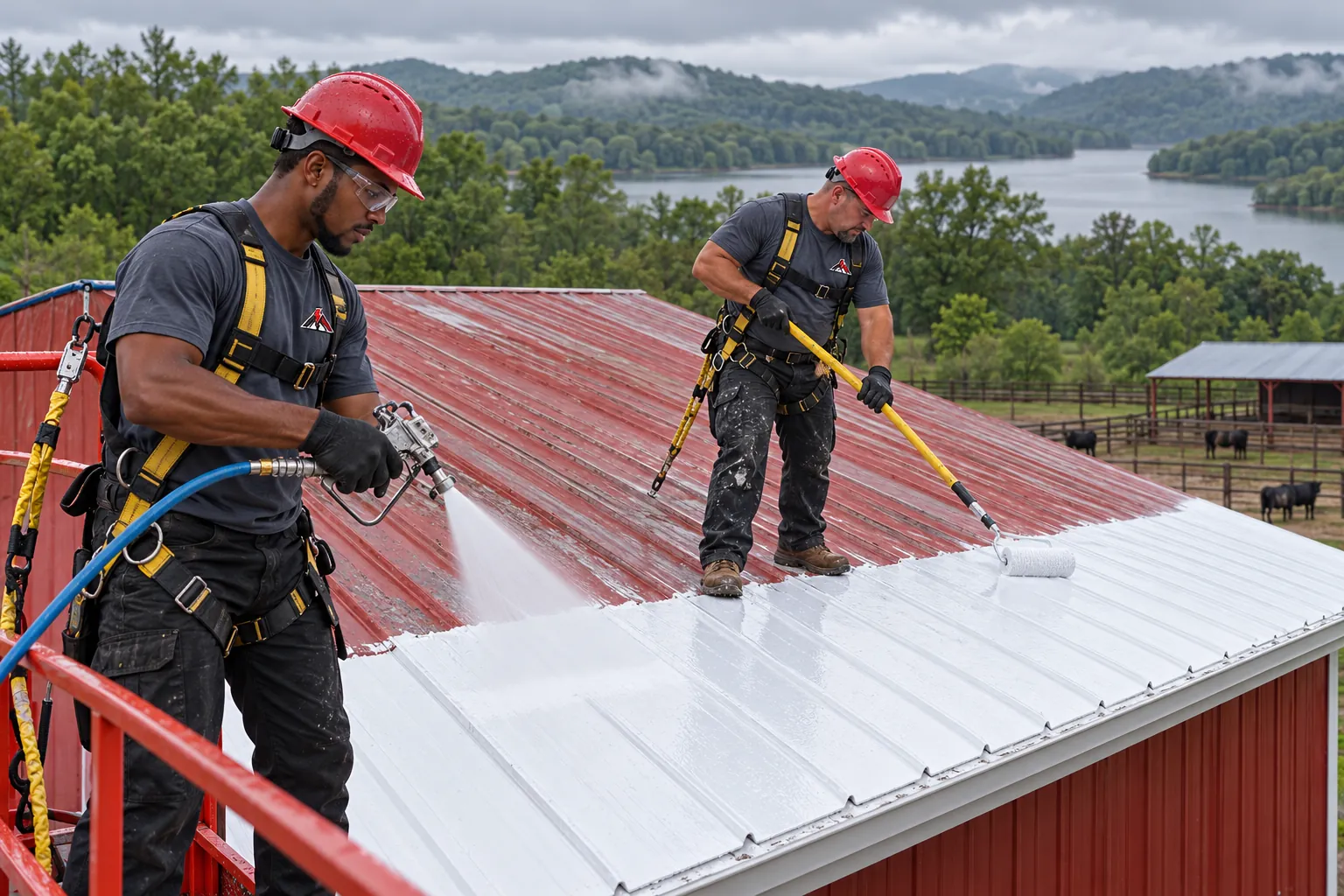
We coat metal roofs on East Bernstadt plants and shops, detailing every curb, exhaust fan, and pipe that passes through the panels before the field coats.
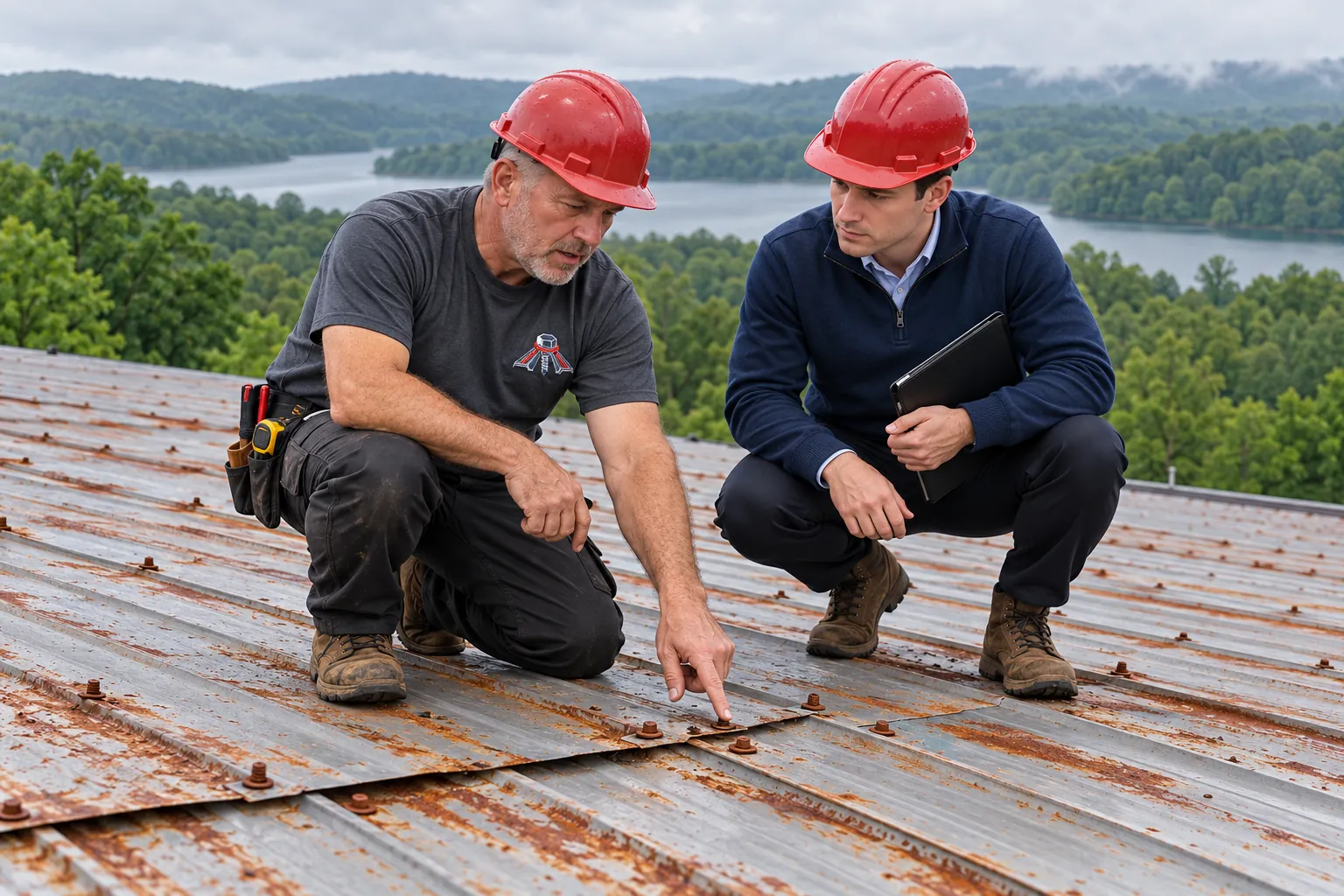
East Bernstadt metal roof coating work on small plants centers on the openings cut through the steel.
Small plants and shops add equipment over the years: an exhaust fan here, a vent stack there, a gas line or conduit run across the roof. Each one means a hole cut through a ribbed panel, sealed with a boot, a flashing plate, or caulk that dries out.
Water finds those openings long before it finds the flat panel. So the crew details every curb and pipe with fabric and base coat before the field coats go down.
Penetration leaks show up close to the machine or vent above them. Use these pairs to point the crew at the right opening.
A stained ceiling tile sits right next to where an exhaust duct comes through the roof.
Water running down the panel hits the high side of the curb and slips under a seam that has opened.
Water runs down the outside of a pipe or stack and drips at the first joint inside.
Rubber boots split from sun and heat, and their clamps loosen as the pipe moves with the building.
A brown ring forms on the floor or machine directly under one roof opening.
Steel trapped under an old flashing plate stays damp and rusts from the edges inward.
Moisture shows inside a junction box or a disconnect mounted under the roof line.
Conduit resting on the steel traps water, rubs through the paint, and pulls on its roof clamps.
Four reasons small plant owners in East Bernstadt coat around their equipment instead of reroofing.
Fans, curbs, and vent stacks remain where they are, so the cost goes into sealing them rather than resetting them.
Production underneath continues while the roof is coated, with short shutdowns only for fans next to the sprayed section.
Steel around each opening stays on the building, and only a rusted-through panel gets swapped out.
Curbs and boots get the heaviest wear, and they can be cleaned and recoated before the rest of the roof needs it.
Plant roofs in East Bernstadt mix flat panel runs with crowded equipment areas. Here is how each system handles that mix.
Curbs, pipe boots, and flashing plates get fabric and base coat first, then full coats seal the panels between them.
Metal roof coating details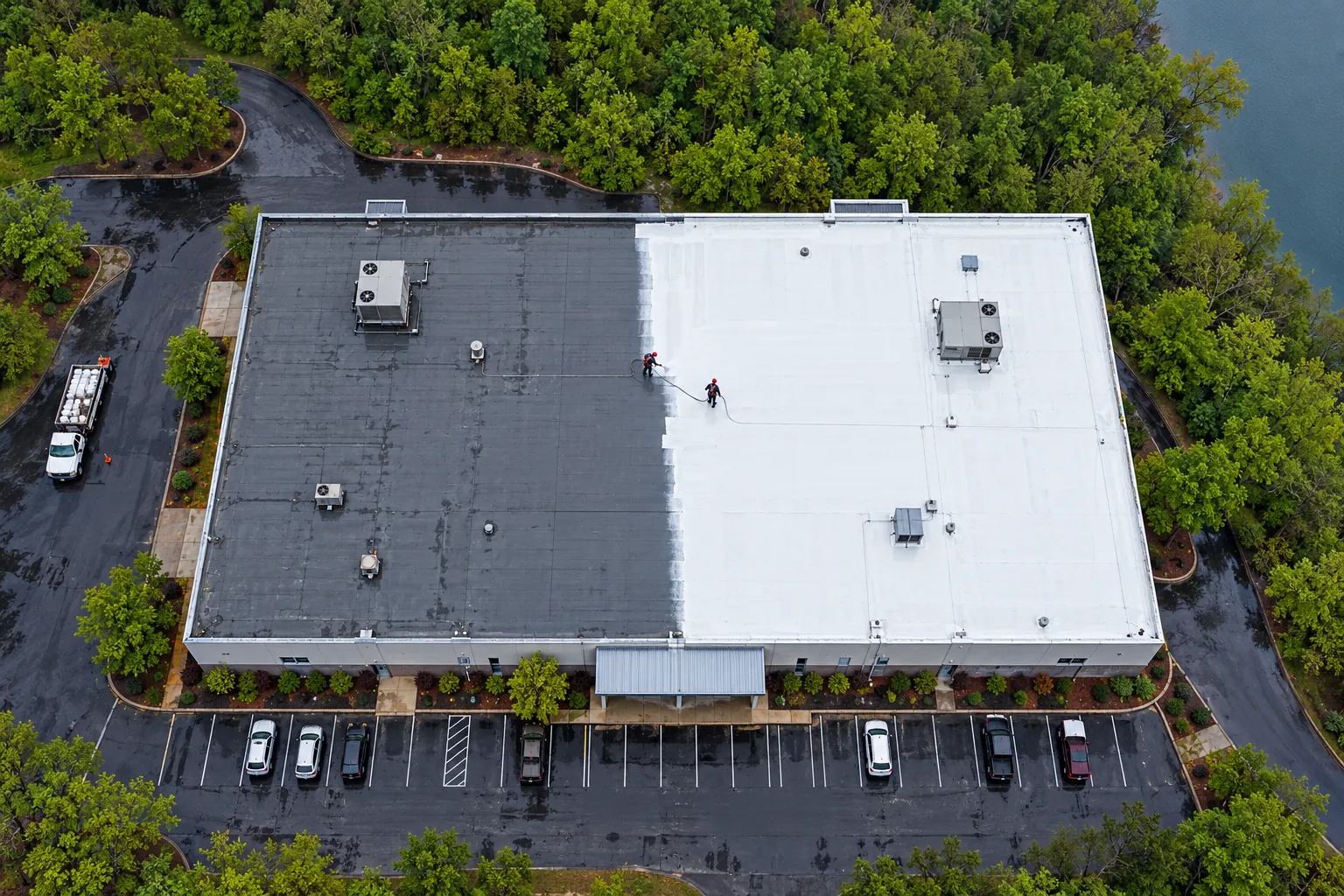
Water dams up on the high side of big units, and silicone holds up where that water sits after a storm.
Silicone roof coating details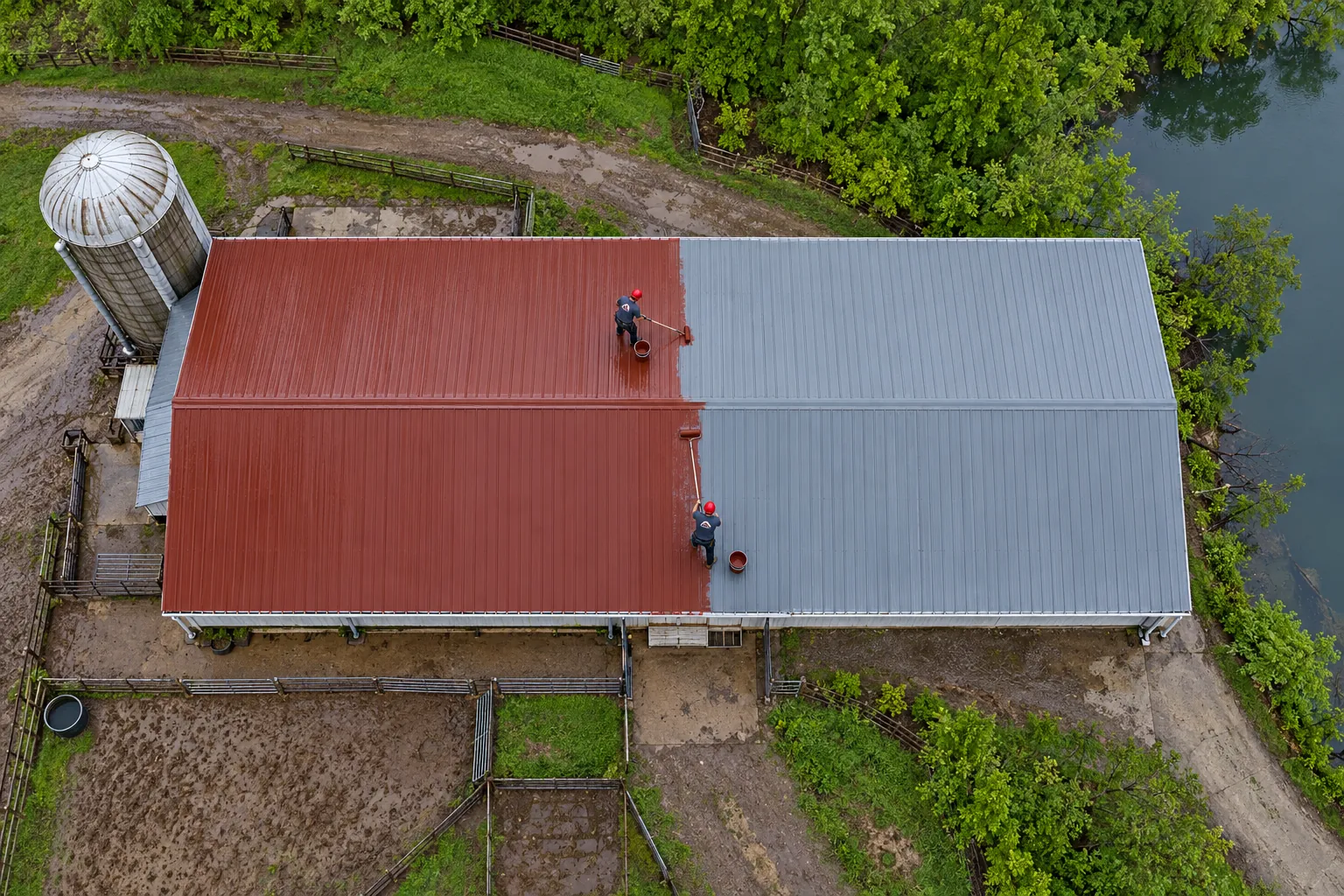
Shops with a steady pitch and few openings shed water quickly, which fits a bright acrylic that is simple to recoat.
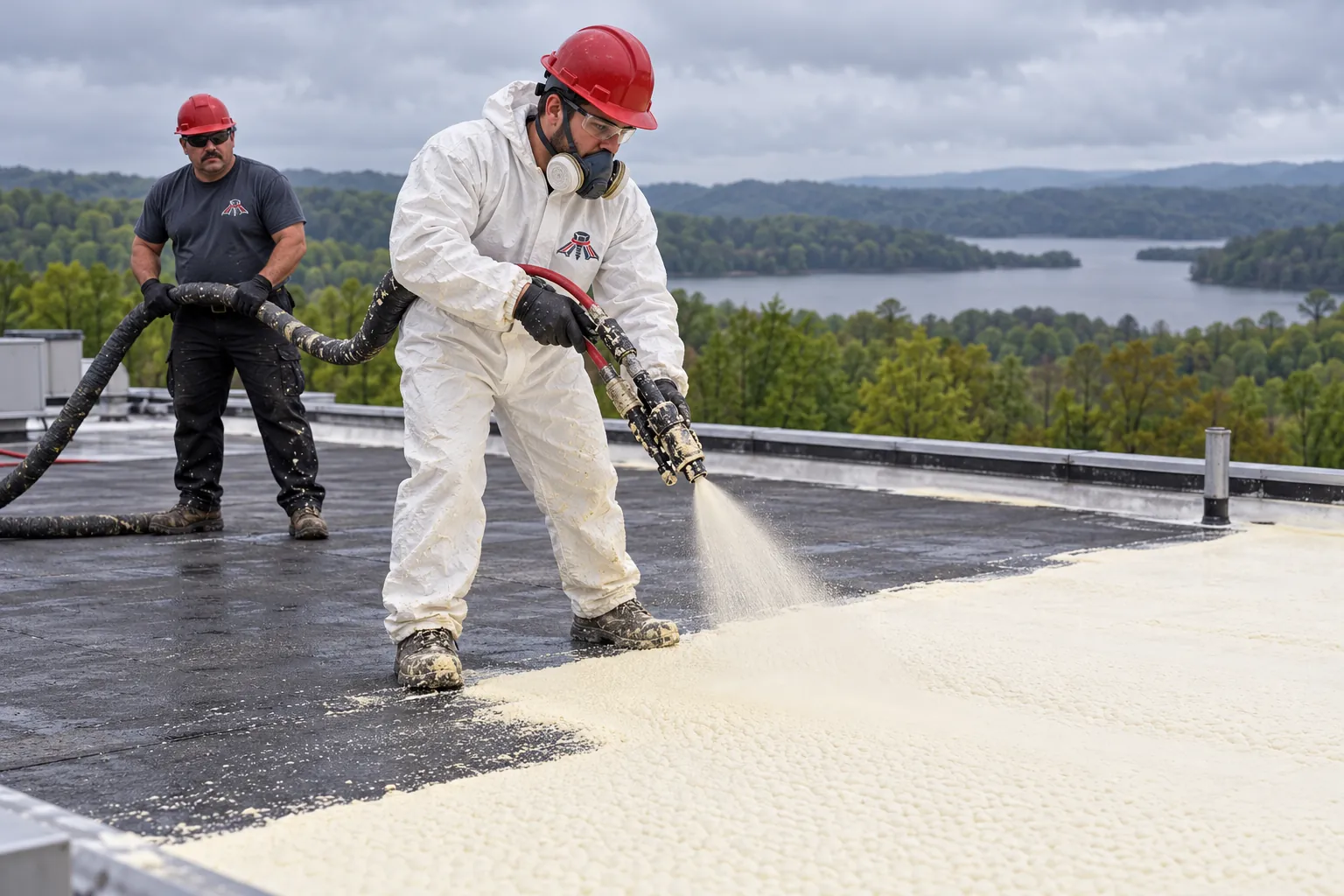
Acrylic roof coating detailsSpray foam wraps around pipes and curbs in one piece and insulates the plant, though air intakes must be shut off during spraying.
Spray foam roofing details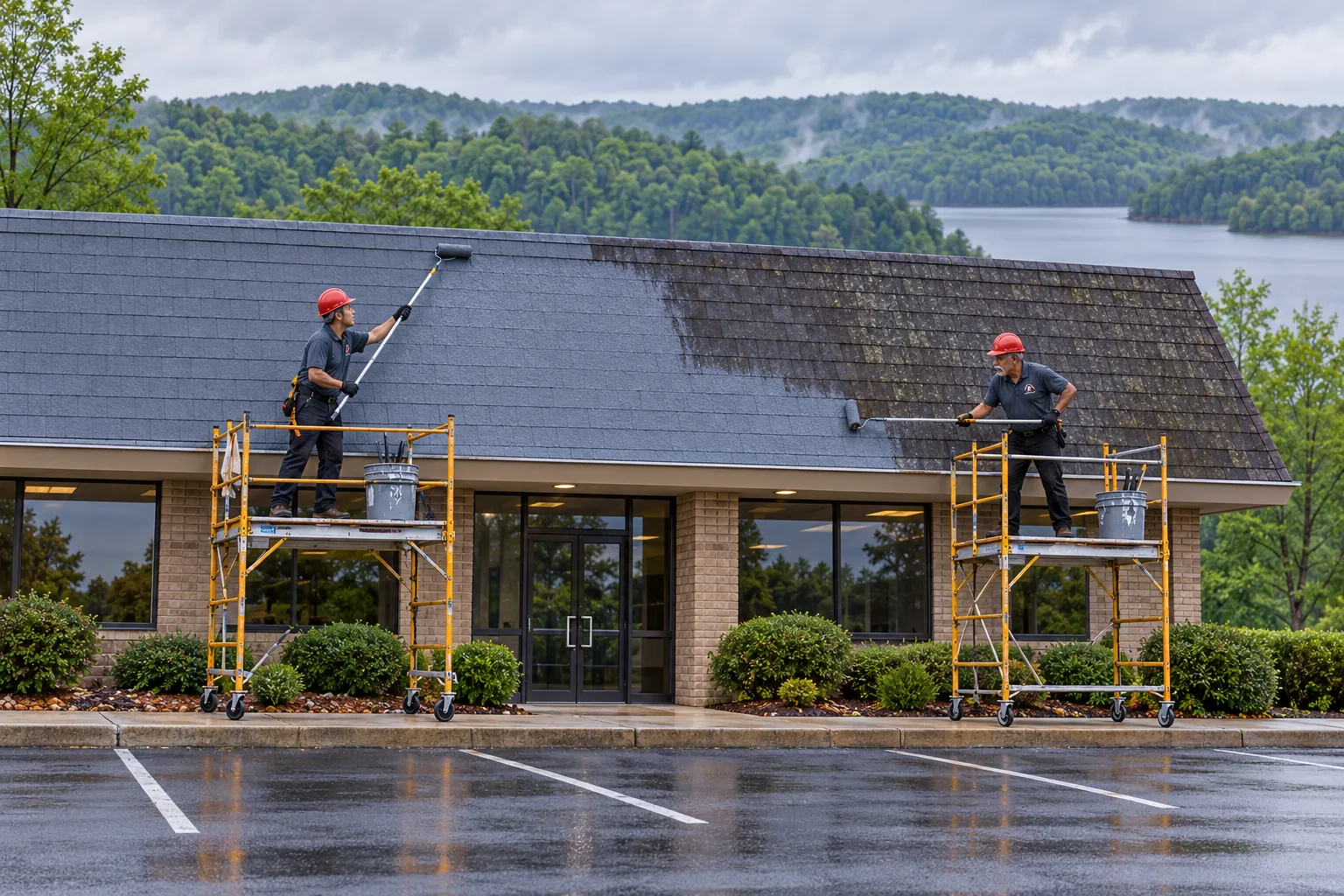
A shingled office attached to a metal plant can be coated with a compatible product when the tabs still lie flat.
Shingle roof coating detailsCall and name the fan, unit, or pipe nearest the drip. The inspection starts at that opening and works outward.
Penetrations get handled first so the field coats tie into finished details.
We list every curb, fan, boot, and conduit run, check each seal, and test rusty steel around the openings with a screwdriver before touching the field.
Exhaust fans and air intakes near each roof section are scheduled off or covered, one section at a time, with the plant manager.
Cracked boots are replaced, flashing plates refastened, and each curb wrapped with polyester fabric set in base coat.
Power washing removes oil mist and dirt from fan exhaust, and bare steel around old flashings is primed against rust.
Field coats run up onto each curb and boot so the detail and the panel finish as one surface, checked for thickness.
Plant or shop outside East Bernstadt? Call us or send us a message about it. These Laurel County area towns are also on our list.
Warehouse and distribution roofs in Laurel County
Small lots where lift and staging room is tight
Main buildings with add-on sheds and canopies
Metal roofs with old coatings or patch layers
Shops coated in spring and fall weather windows
Answers for owners of small plants and shops in northern Laurel County.
Permits Outside London
East Bernstadt is an unincorporated community, and the Laurel County contact sheet lists a local building inspector only for the city of London. Outside the city, the state building inspector on that sheet is the contact for jobs that add curbs, move heavy units, or change framing.
Cutting a new opening and setting a heavier unit on a curb is more than coating, so call the building contact first. Bring the unit weight, curb size, and where it sits on the roof, and have the electrical connection checked before reconnecting.
Equipment On The Roof
Yes, when the curb itself is solid. Fabric set in base coat flexes with small movement around the curb. A loose curb or a fan that shakes the panels gets fastened and isolated first, since steady vibration cracks any seal that sits on it.
Dead vents and capped pipes are best cut down and covered with a new metal patch before coating. Each opening left in place is another seal to maintain. The crew marks unused ones during the inspection so you can decide which come out.
Power And Weather
Jackson Energy, Cumberland Valley Electric, and South Kentucky RECC all serve parts of Laurel County, so the name on your bill tells you whom to ask about business programs. Offerings change, and a reflective coating mostly lowers summer heat coming through the steel.
The National Weather Service office in Jackson covers Laurel County. Matching a dated storm report to new drips around a curb or fan helps your records and shows whether the leak followed wind, hail, or just age on the seal.
Get a ballpark range online, or call and list the equipment on the roof before we walk it.
Leave your name and number and we will call you.
Or call (606) 221-5206