
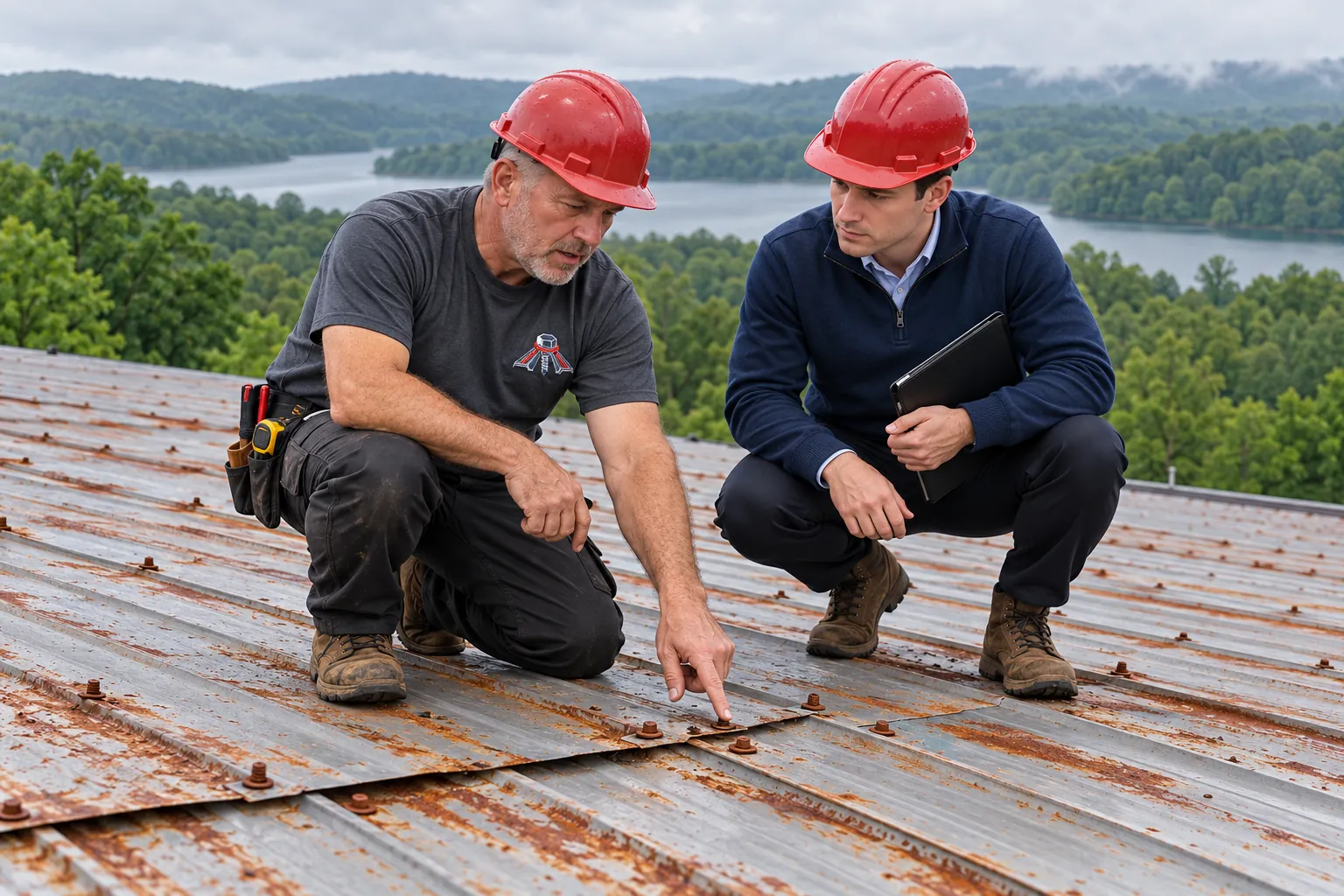
Roofer checking screws and panel laps on a commercial metal roof
FAQ · Somerset, KY

Somerset Metal Roof Coating Questions

Plain answers on rust, screws, laps, coating choices, weather, permits, and cost for commercial metal roofs around Somerset and Lake Cumberland.

Metal Roof Coating Questions From Somerset Owners

Metal roof coating is a liquid-applied membrane rolled or sprayed over steel roof panels to seal fasteners, laps and seams and to reflect sunlight. Somerset Metal Roof Coating coats commercial metal roofs and installs silicone, acrylic, spray foam and shingle roof coatings in Somerset, Pulaski County, Kentucky, and nearby Monticello, Russell Springs and Jamestown.

Metal Roof Coating Basics

What Is a Metal Roof Coating on a Commercial Building?

A metal roof coating is a fluid-applied layer that cures into a flexible, watertight skin over steel panels, fastener heads and laps. Crews apply it in stages. First come rust treatment and primer on bare or corroded steel.

Next, seams, end laps and every screw head get reinforced with mastic or fabric. Then one or more full coats cover the field of the roof. The finished skin bridges the small gaps where most metal roof leaks begin, and a light color reflects more sunlight off the panels.

Why Do Commercial Metal Roofs Start Leaking?

Most metal roof leaks start at the joints, since fasteners, laps and flashings wear out long before the flat panel does. Steel expands on hot afternoons and shrinks overnight. That daily movement works screws loose in their holes and flattens the rubber washers under them.

Common leak points:

  • Exposed fasteners with cracked or flattened washers
  • End laps where one panel overlaps the next down the slope
  • Ridge caps and closure strips that have shifted
  • Skylight panels with failed sealant at the edges
  • Gutters and eave trim, where rust often starts first

Good coating work targets those joints before it covers the open panel areas.

Which Metal Buildings Make Good Coating Candidates?

Steel-roofed commercial, industrial and agricultural buildings with solid panels and secure framing make the best coating candidates. Around Somerset that includes:

  • Warehouses and plants with long exposed-fastener runs
  • Equipment shops, farm supply buildings and barns
  • Self-storage rows with low-pitch R-panel roofs
  • Churches, gyms and offices with standing seam roofs
  • Marina service and boat storage buildings near the lake

A building qualifies when the panels hold their shape underfoot, rust stays on the surface, and purlins underneath show no sag. Panels rusted through at the eave or around a skylight get replaced first, then coated along with the rest of the roof.

Does a Coating Replace the Metal Roof or Add to It?

A coating adds a new waterproof surface to the existing metal roof, so the panels stay in place and keep carrying the load. Nothing is torn off the building. Panels, purlins and insulation stay where they are, and the coating becomes the layer that faces the weather.

That approach keeps the inside of the building dry and working during the job. It also means the coating is only as good as the steel under it. Loose panels get refastened, bent ridge caps get reset, and rust holes get patched with new metal before any coat goes down.

Rust, Fasteners and Seams

How Do You Treat Rust Before Coating a Metal Roof?

Before any coating goes on, rusted areas are cleaned back to firm steel and given a rust-inhibiting primer. Surface rust, the orange bloom that wipes off on a glove, comes off with wire brushes, grinding discs or power washing. Heavier scale that flakes in layers takes more grinding.

Crews push a screwdriver into suspect spots. If it pokes through, that section is perforated and needs a metal patch or a new panel. Coating over active red rust traps moisture against the steel, and the rust keeps spreading under the film until it lifts.

What Is White Rust on Galvanized Roof Panels?

White rust is a powdery white corrosion that forms on galvanized panels when moisture sits on the zinc without drying. It shows up as chalky deposits along panel ribs, at end laps and under piles of leaves or debris. On its own, it means the zinc layer is sacrificing itself to protect the steel.

Before coating, the white residue is scrubbed off and the panel rinsed so primer can bond. New galvanized panels with a slick factory finish also need cleaning or etching, since coatings grip poorly on fresh zinc. A small test patch shows whether the bond holds.

Should Old Roof Screws Be Replaced Before Coating?

Backed-out, stripped or badly rusted screws should be replaced before coating, usually with a slightly larger fastener that bites fresh steel. Screws that are tight with intact washers stay in place.

Crews walk each fastener line and look for:

  • Washers that have cracked, hardened or squeezed out
  • Heads sitting above the panel surface
  • Holes that spin without tightening
  • Rust streaks running downhill from a screw

After that, every fastener head gets a dab of brush-grade sealant or a cap of coating before the field coats go on. On an exposed-fastener roof, that step covers the most common leak path on the building.

How Are Panel Laps and Seams Sealed?

Panel laps and seams are sealed with reinforced seam work, built from a band of base coat, embedded polyester fabric and a second pass of coating over the fabric. Some systems use butyl or seam tape in place of fabric. The reinforcement bridges the joint so it can flex as the panels move.

Horizontal end laps get the most attention, because water runs straight across them on its way to the gutter. Side laps along the ribs, ridge cap edges and transitions at walls follow. On standing seam roofs, crews treat the seams and clips differently, since those panels slide on purpose.

Can Coating Fix Leaks Around Skylights and Gutters?

Coating can seal the edges of skylight panels and the joints in gutters, as long as the parts themselves are still intact. Fiberglass skylight panels yellow and crack with age. A cracked panel gets replaced, then its laps with the steel panels are sealed with fabric and coating.

Gutters on metal buildings rust at seams, end caps and outlets first. Crews clean out debris, treat rust, and seal the seams with reinforced coating. A gutter rusted through along its bottom needs new sections. Ridge caps and rake trim get the same treatment as part of the full system.

Choosing a Coating System

Silicone or Acrylic: Which Coating Works Better on Metal?

Silicone and acrylic both coat metal roofs well, and the better choice comes from the roof's pitch, drainage and recoat plans. Urethane is a third option for high-wear roofs.

FactorSiliconeAcrylicUrethane
Standing waterResists pondingSoftens where water sitsResists ponding
Sun exposureHolds up well to UVHolds up well and stays brightAromatic grades need a UV-stable topcoat
Dirt pickupCollects dirt over timeStays cleanerStays cleaner
Recoating laterOnly silicone bonds to siliconeRecoats with acrylic or siliconeRecoats after cleaning and priming
Foot trafficSlick when wetModerateToughest of the three

Pitched metal roofs shed water fast, which suits acrylic. Low-slope panels with flat spots near gutters lean toward silicone.

When Does a Urethane Coating Make Sense on Metal?

Urethane coatings make sense on metal roofs that take heavy foot traffic, hail or impact around rooftop equipment. Urethanes cure into a harder, tougher film than acrylic or silicone. Many systems pair an aromatic urethane base coat for strength with an aliphatic urethane or other UV-stable topcoat.

Common uses include walkways to rooftop units, panels under exhaust fans, and roofs where maintenance crews climb often. Urethanes carry a stronger odor during application, so air intakes get shut off or covered. They also cost more per coat, which is why many roofs use urethane only on high-wear areas.

Should I Coat My Metal Roof or Add Spray Foam?

Coating alone fits a metal roof that only needs waterproofing, while spray foam fits a roof that also needs insulation or a smoother, better-draining surface.

FactorCoating onlySpray foam plus coating
What it coversFasteners, laps, seams, panel fieldAll of that plus a foam layer
InsulationReflective surface onlyFoam adds R-value across the panels
Condensation drip insideLittle changeWarmer panel underside helps limit it
Ribs and flatsCoated in placeFoam fills flats and buries fasteners
Added weightVery lightLight, though more than coating
DisruptionLowestMore masking and overspray control

Foam suits uninsulated shops, plants and storage buildings where summer heat or dripping condensation bothers the people inside.

Can Spray Foam Go Over Standing Seam or R-Panel Roofs?

Spray foam goes over exposed-fastener R-panel roofs readily and over standing seam roofs with more planning. On R-panel, foam fills the low flats between ribs, buries the fasteners and builds a continuous insulated surface, which then gets a coating.

Standing seam panels float on clips so they can expand and contract. Foam that sticks across those seams locks the panels together, which changes how the roof moves. Crews check the panel gauge, clip system and roof pitch before recommending foam there. On many standing seam roofs, a coating with reinforced seam work is the simpler path.

Can Asphalt Shingle Roofs on Commercial Buildings Be Coated?

Shingle roof coatings work on commercial asphalt shingle roofs that are still flat, attached and holding most of their granules. The buildings that fit best are strip centers, offices and churches whose steep sections still carry intact shingles.

Two limits shape the decision:

  • Manufacturer approval matters, since some shingle makers and coating makers restrict coatings over shingles
  • Curled, cracked or missing tabs mean the shingles are near the end, and coating has nothing firm to grip

When the shingles qualify, crews clean them, secure loose tabs, seal flashings at walls and vents, and apply a coating rated for shingles. Buildings with a metal section and a shingle section get compatible products on both.

Climate and Weather Around Lake Cumberland

How Does Kentucky Weather Wear Out a Metal Roof?

Heat, humidity and freeze-thaw cycles all work on metal roofs in Pulaski, Wayne and Russell counties. Summer sun heats bare steel quickly, and panels cool fast after an evening storm. Each swing moves fasteners in their holes.

Winter adds frost and ice. Water that gets under a lifted end lap freezes and pushes the lap open further. Damp mornings leave condensation on panels, and steel under scratched paint starts to rust. A coating slows that cycle by covering the joints and keeping water off bare steel.

Which Weather Office Should Owners Check After a Storm?

Owners in Somerset and Monticello should check the National Weather Service office in Jackson, while owners in Russell Springs and Jamestown should check the Louisville office. Jackson covers Pulaski and Wayne counties. Louisville covers Russell County and runs the Somerset NOAA Weather Radio transmitter, which broadcasts for all three counties.

Storm reports from the right office help date a hail or wind event for building records and insurance claims. After any severe storm, look up from the ground for lifted ridge caps, bent gutters and loose trim.

Does Hail Damage a Coated Metal Roof?

Large hail dents steel panels and can crack a thin coating, though light dents with an intact film rarely leak. Where the dent lands matters most. A dent at an end lap or fastener line can break the seal around a screw washer.

Signs that need attention:

  • Coating cracked in a star pattern at the dent center
  • Bare steel showing on panel ribs
  • Skylight panels punctured or split
  • Gutters crushed so they hold water

Dented but sealed panels can be coated over. Torn coating gets cleaned, primed where steel shows, and recoated. Thicker coating builds or a urethane base coat add impact resistance on roofs that see repeated hail.

Question About Your Own Roof?

Call and describe the panels, the leaks, and the building. Specific roofs get specific answers after a look.

Prep, Application and Downtime

What Are the Steps in a Metal Roof Coating Job?

A metal roof coating job runs from inspection through a final walk in a set order.

StepWork on the roof
1. Inspect Your RoofCheck panels, fasteners, laps, rust and framing
2. CleanPower wash dirt, chalking and loose paint
3. Treat rustGrind, wire brush and prime corroded steel
4. FastenReplace failed screws, reset ridge caps and trim
5. Seal detailsReinforce laps, seams, skylights and curbs
6. Base coatApply the first full coat across the field
7. TopcoatBuild final thickness and check coverage

Crews measure wet film thickness as they go so each section of panel gets the specified amount. Any spot that needs a second look is marked before the final walk.

How Does Prep Differ on Standing Seam and Exposed-Fastener Roofs?

Exposed-fastener roofs need far more fastener work, while standing seam roofs need more care at seams and clips.

Prep taskExposed-fastener R-panelStanding seam
FastenersCheck, replace and seal every screwFew or none exposed in the field
LapsSeal end laps and side lapsSeal end laps where panels join
SeamsRibs coated with the fieldSeams sealed with flexible products so panels still move
MovementPanels fixed by screwsPanels float on clips
TrimRidge caps and rake trim screwed throughTrim often clipped or concealed

Both types get washed, rust-treated and primed where steel shows. Standing seam roofs also get a clip check through any open seams.

Can My Business Stay Open During a Roof Coating Job?

Coating happens on the outside of the building, so most businesses stay open while crews work overhead. Nothing gets torn off, and the interior stays covered the whole time.

Crews plan around:

  • Rooftop unit air intakes, shut down or covered during nearby spraying
  • Parked cars and trucks, moved away from the eaves during spray work
  • Loading docks and entrances, kept clear with marked staging areas
  • Noise from power washing and screw guns, scheduled around sensitive hours

Odor varies by product. Water-based acrylics carry little smell, while solvent-based products and urethanes need more ventilation planning.

What Weather Do Crews Need to Apply Coating?

Application needs a dry roof, a clear forecast, and air and surface temperatures within the product's limits. Steel holds dew longer than many roof surfaces, so crews wait for panels to dry each morning before they start.

Rules crews follow:

  • Surface temperature stays above the dew point, so no moisture forms under the film
  • Acrylics need warmer weather and time to cure before rain
  • Silicones tolerate cooler days but still need a dry surface
  • Wind limits spraying, since overspray drifts toward cars and neighboring buildings

Spring and fall bring the steadiest coating windows in this part of Kentucky.

Cost, Value and Taxes

What Drives the Cost of Coating a Metal Roof?

Roof size and the amount of repair work before coating drive most of the cost. Two roofs with equal square footage can land far apart once fasteners, rust and laps are counted.

Main cost drivers:

  • Number of exposed fasteners to replace or seal
  • Rust coverage and the grinding and primer it needs
  • Coating type and the number of coats specified
  • Skylight panels, curbs and gutters to detail
  • Access, including lifts, roof height and staging room
  • Spray foam thickness, when foam is part of the system

Pricing comes after a roof inspection, once the crew has walked every fastener line and lap.

Should I Coat, Restore, Re-Panel or Replace My Metal Roof?

The right path comes down to how much of the steel is still solid.

Roof conditionPathWhat happens
Surface rust, leaks at a few screwsCoatClean, prime, seal fasteners, coat
Widespread fastener and lap leaks, panels firmRestoreFull fastener and seam work plus a coating system
Rust-through on scattered panelsRe-panel and coatReplace bad panels, then coat the whole roof
Rust-through across much of the roof or failed purlinsReplaceNew roof system

A screwdriver test at eaves, laps and gutters shows which row fits. Buildings that get attention before rust holes spread mostly stay in the first two rows.

Can a Coated Metal Roof Qualify for Section 179?

Yes, roofs on existing nonresidential buildings can qualify for Section 179 expensing under IRS Publication 946. The IRS lists roofs among qualified improvements to nonresidential real property placed in service after the building itself.

For tax years beginning in 2026:

  • Maximum deduction: $2,560,000
  • Phase-out begins when qualifying property placed in service exceeds $4,090,000
  • Residential rental property is excluded

How the coating is booked, as a roof improvement or as a repair, is a tax call. Ask a CPA how a coating on a warehouse, shop or barn roof should be treated.

Permits, Codes and Utilities

Who Handles Building Permits in Somerset and Nearby Towns?

Commercial building oversight in this area is split between a certified city department, county inspectors and state inspectors.

TownCountyBuilding contact listed
SomersetPulaskiCity of Somerset Building Inspection Department
MonticelloWayneWayne County local building inspector and a state building inspector
Russell SpringsRussellState building inspector, no local inspector listed
JamestownRussellState building inspector, no local inspector listed

The Kentucky Department of Housing, Buildings and Construction publishes these county contact sheets, and names on them change. Check the current sheet before ordering panels or coating for a job that changes framing or adds rooftop equipment.

Does a Metal Roof Coating Need a Permit in Somerset?

Ask the City of Somerset Building Inspection Department before work starts, because the city's adopted code requires a permit to alter or repair a regulated building. The department is state-certified to review plans and inspect commercial buildings inside city limits.

A coating over existing panels is lighter work than a reroof, though replaced panels, new skylight panels, raised curbs or added spray foam change the scope. Bring photos of the roof, the panel type and a list of repairs when you call. The city also posts its building fee schedule.

Which Electric Utility Serves Businesses Around Somerset?

South Kentucky RECC, headquartered in Somerset, serves Pulaski and Wayne counties and part of Russell County. Taylor County RECC also serves part of Russell County. Both are owner-members of East Kentucky Power Cooperative.

Ask your co-op whether any commercial efficiency programs are open, since offerings change and none are promised.

A reflective coating mainly affects cooling. ENERGY STAR notes a white roof reflecting 80% of sunlight can run about 50°F cooler on a summer afternoon than a gray roof reflecting 20%. The Cool Roof Rating Council directory lists rated reflectance and emittance for coating products.

Questions by Town

What Should Somerset Plant Owners Plan Before Coating a Large Metal Roof?

Somerset plant owners should plan shutdown windows for rooftop exhaust fans and air intakes before crews spray near them. Industrial roofs inside city limits fall under the City of Somerset Building Inspection Department, which reviews commercial work.

Plants running more than one shift need a schedule that moves masking and coating section by section. Long exposed-fastener runs on plant roofs take the most prep time, so screw replacement often starts while other sections are being washed. Mark which panels sit over production lines or stored product so their laps get extra attention.

Who Inspects Electrical Work When a Somerset Roof Job Moves Rooftop Units?

Electrical inspections for Somerset jobs go through inspectors contracted by Pulaski County, separate from the city building department. That matters when rooftop units get lifted onto taller curbs, conduit gets moved off the panels, or disconnects need relocating for spray foam.

Conduit lying on metal panels traps water and rubs through the paint, so crews raise it onto supports before coating. Bring an electrician in early, and confirm the county inspection step before any unit is reconnected.

Who Should Monticello Owners Contact About Commercial Roof Work?

Monticello sits in Wayne County, where the state contact sheet lists both a local building inspector and a state building inspector. Call them before a job that replaces panels, adds rooftop curbs or changes framing.

Electrical questions go to the county judge-executive's office or the city office for the work site. Bring photos of rusted eaves, gutter outlets and ridge caps, since those parts show the inspector how much metal is coming off the building. For hail and wind history in Wayne County, use storm reports from NWS Jackson.

What Metal Roof Problems Show Up on Monticello Shops and Farm Buildings?

Metal-roofed shops, equipment sheds and farm buildings around Monticello tend to leak at ridge caps, end laps and screws near the eave. Open bays and doors let wind push under eave trim and lift panel edges.

Before coating, crews:

  • Replace screws that have backed out along the eave purlin
  • Reset ridge caps and swap crushed closure strips
  • Treat rust where hay, mud or debris has sat against panels
  • Seal gaps between wall panels and roof trim

Coated barns and shops keep stored equipment and feed drier. South Kentucky RECC serves Wayne County, so ask that co-op about any business programs.

Who Reviews Commercial Roof Work in Russell Springs?

Russell Springs work goes to the state building inspector listed for Russell County, since the state sheet shows no local building inspector. Contact that office for jobs that replace roof framing, add heavy rooftop equipment or change structure.

Details that speed the call:

  • Panel type, gauge if known, and roof pitch
  • Locations of rusted-through panels
  • Rooftop unit sizes and curb heights
  • Planned spray foam thickness, if any

Plain coating over existing panels adds little weight, though new units or replaced framing change the review.

Which Electric Co-op Serves My Russell Springs Building?

Two electric co-ops serve Russell County, South Kentucky RECC and Taylor County RECC, so the name on your bill tells you which one to ask about business programs. Each co-op sets its own offerings, and none can be assumed.

That split matters on a coating job that moves rooftop units or disconnects. Note the meter location, disconnect switches and any conduit across the panels before crews arrive. A light-colored coating reduces heat gain through hot steel panels, and that change shows up mostly in summer cooling.

Can Marina and Boat Storage Buildings Near Jamestown Be Coated?

Marina service buildings and boat storage roofs near Jamestown can be coated when the panels are still solid. Lake Cumberland State Resort Park, off US 127 south of Jamestown in Russell County, has a marina open year round, and boat storage and service buildings around the lake commonly use long metal roofs.

These roofs see damp air, long panel runs and condensation under the steel. Crews look for:

  • Rust at end laps and eaves facing the water
  • White rust on galvanized panels that stay damp
  • Fastener heads corroded through
  • Gutters packed with leaves from shoreline trees

Spray foam under a coating also warms the panel underside and helps limit drip onto stored boats.

How Should Jamestown Owners Record Storm Damage on a Metal Roof?

Jamestown owners should match roof damage to NWS Louisville storm reports for Russell County, since that office issues warnings there. A dated report ties dents, lifted trim and torn coating to a specific event in your building records.

After a storm:

  • Photograph ridge caps, rake trim and gutters from the ground
  • Look for new rust streaks under fasteners over the following weeks
  • Check skylight panels for splits
  • Record the storm date from the Louisville office

Buildings with open exposure across the water catch more wind at eaves and corners, so check those edges first.

Getting Started

What Should I Check on My Metal Roof Before Calling?

A short, safe look from the ground and inside the building tells a crew where to start. Note:

  • Ceiling stains or drips and the roof area above them
  • Rust streaks under screws or along gutters
  • Lifted ridge caps, loose trim or bent eave flashing
  • Yellowed or cracked skylight panels
  • Puddles that stay on low-slope panels after rain

Photos, the approximate roof age and the panel type help the inspection go quickly. Stay off any roof you are unsure of, since metal panels get slick with dew.

What Happens During a Metal Roof Coating Inspection?

During an inspection, a crew walks the roof, measures it and checks every part a coating has to cover. That includes fastener lines, end laps, ridge caps, skylight panels, gutters and curbs. A screwdriver test at rusty spots shows whether the steel is solid, and a look from inside checks purlins and insulation.

Afterward, Somerset Metal Roof Coating explains what the roof needs, whether that is coating only, panel repairs first, spray foam, or replacement. You choose the next step from there.

Get A Number For Your Metal Roof

Start with a ballpark estimate, or call to set up a roof walk.

Call Us (606) 221-5206