Metal Coating Rolled Close To Neighbors
Screws, laps, and rust are fixed, then coats are rolled where spray drift would reach cars or nearby walls.
Metal roof coating details
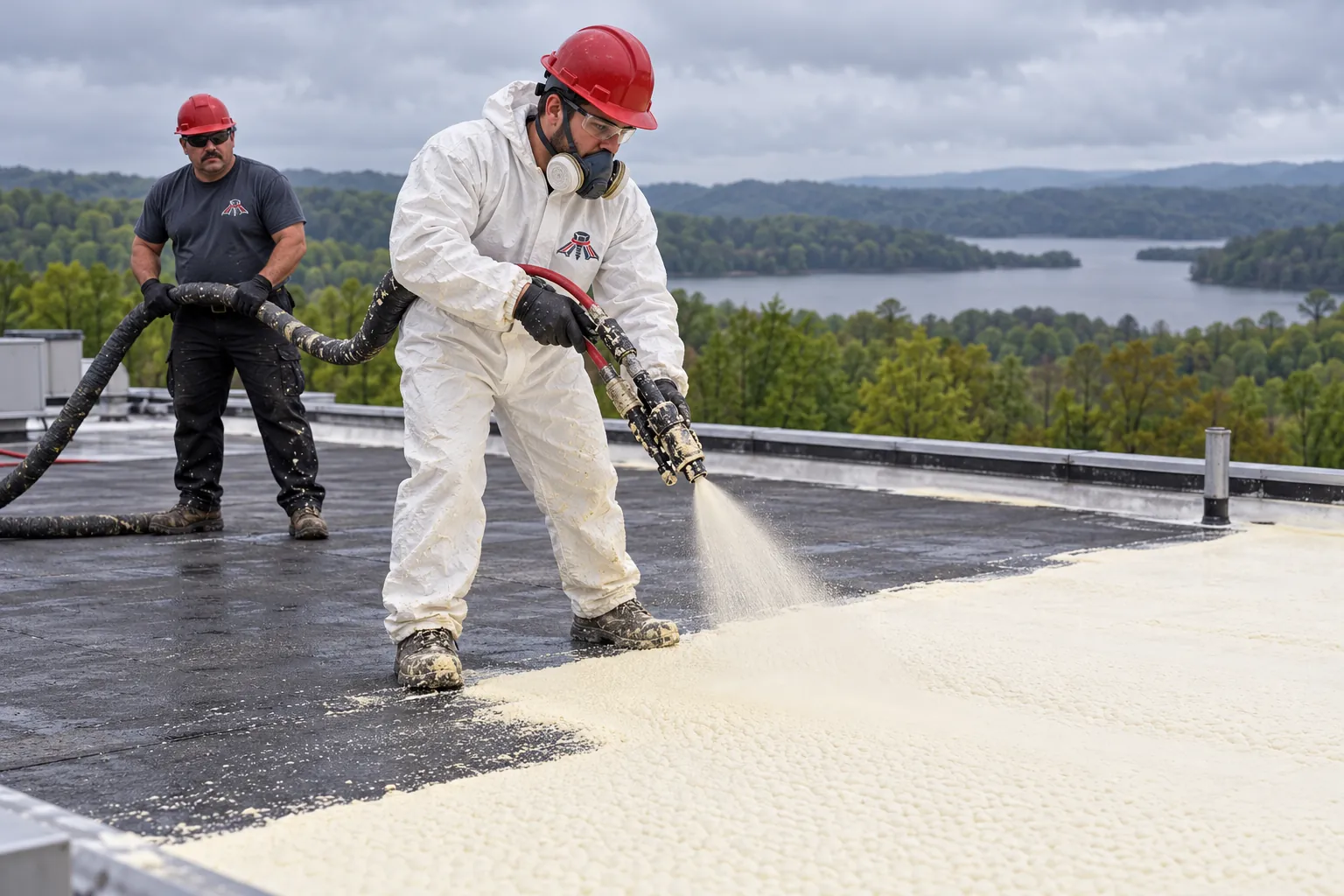
We coat metal roofs on Livingston commercial buildings where the lot is small, planning lift spots, material drops, and overspray control before crews arrive.
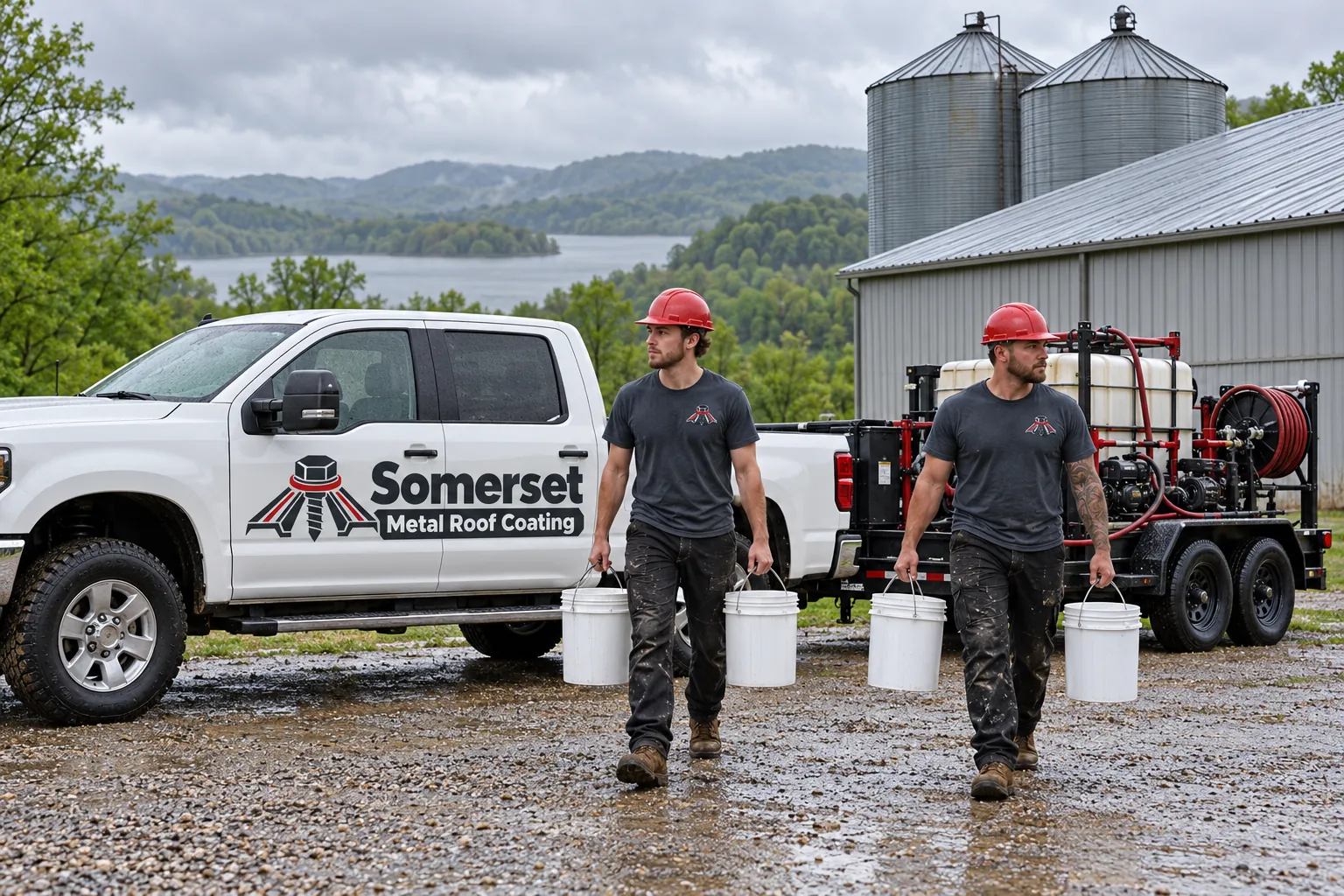
Livingston metal roof coating starts with where the lift and materials will sit.
Buildings on narrow lots leave little room for a lift, pallets of coating, and a truck. Neighbors sit close, the street may carry traffic, and parked cars sit near the eaves.
A staging plan sets the lift spot, the drop zone for buckets and fabric, and the hours trucks block a driveway. Spraying waits for calm air or switches to rolling near neighbors.
Small buildings show the same leaks as big ones, only closer together. Match the inside clue to its roof detail.
A ceiling stain grows near the rear entrance after every rain.
Leaves pack a short gutter run, and water backs up under the eave panels.
Water runs down a vent or flue pipe into the room below.
A rubber boot around the pipe split in the sun and lets rain run along the pipe.
Drops form on the underside of the panels on cold mornings in a heated shop.
Warm inside air hits cold steel with nothing between them, so moisture condenses.
Orange lines run down the outside wall below the roof edge.
Screw heads along the eave rust first, and the runoff carries the stain down the siding.
Four reasons Livingston owners coat a roof on a tight lot instead of replacing it.
Coating needs one lift and a few pallets, far less room than a tear-off crew and dumpster.
Firm steel stays on the building, so spending goes to screws, laps, and coats.
Customers and staff keep using the building while crews work on the roof above them.
A worn coat can be washed and recoated later from the same lift spot.
Each system below has its own staging needs on a small lot. Here is how they fit Livingston buildings.
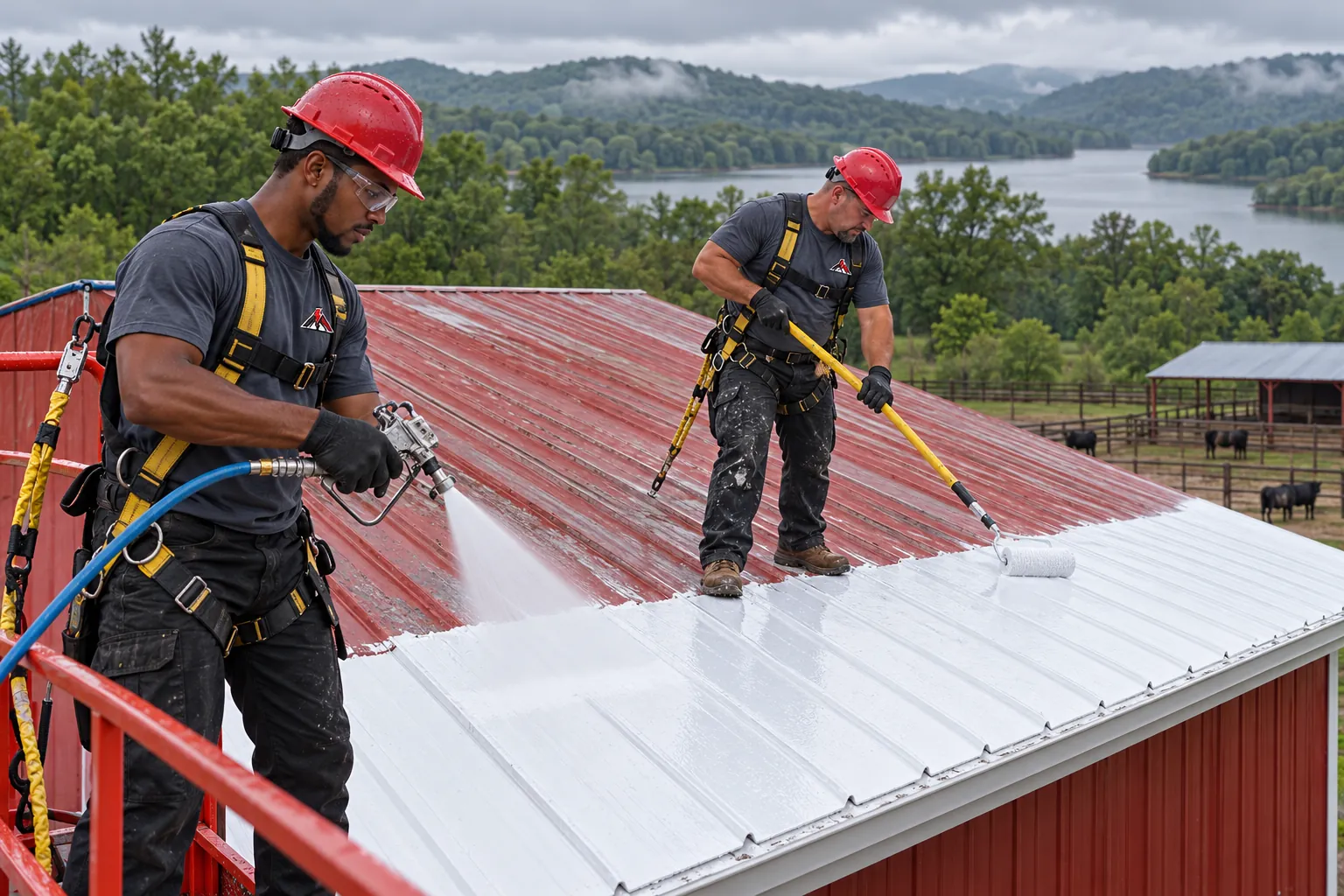
Screws, laps, and rust are fixed, then coats are rolled where spray drift would reach cars or nearby walls.
Metal roof coating details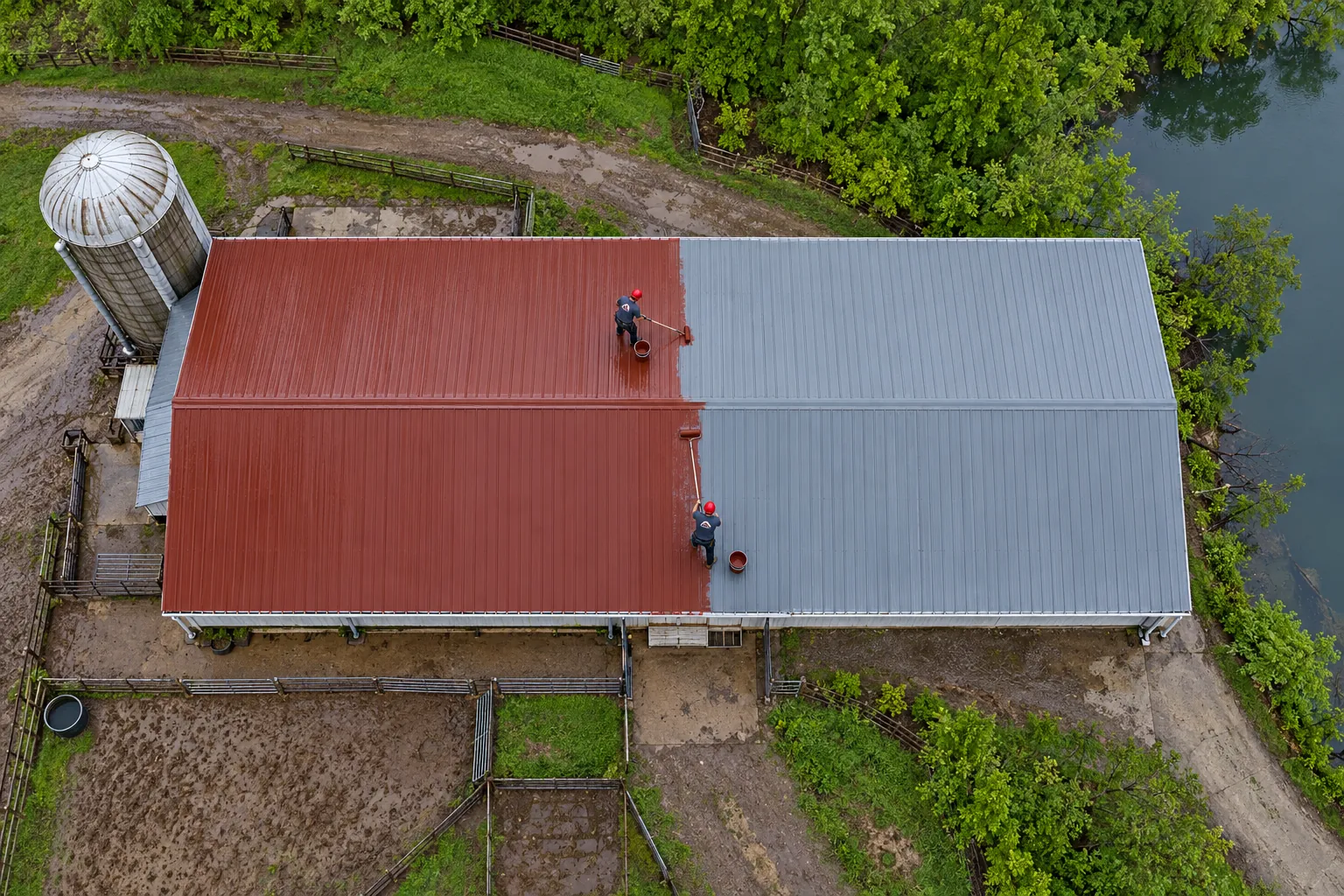
Water-based acrylic comes in pails that hand-carry well when a pallet cannot sit near the building.
Acrylic roof coating details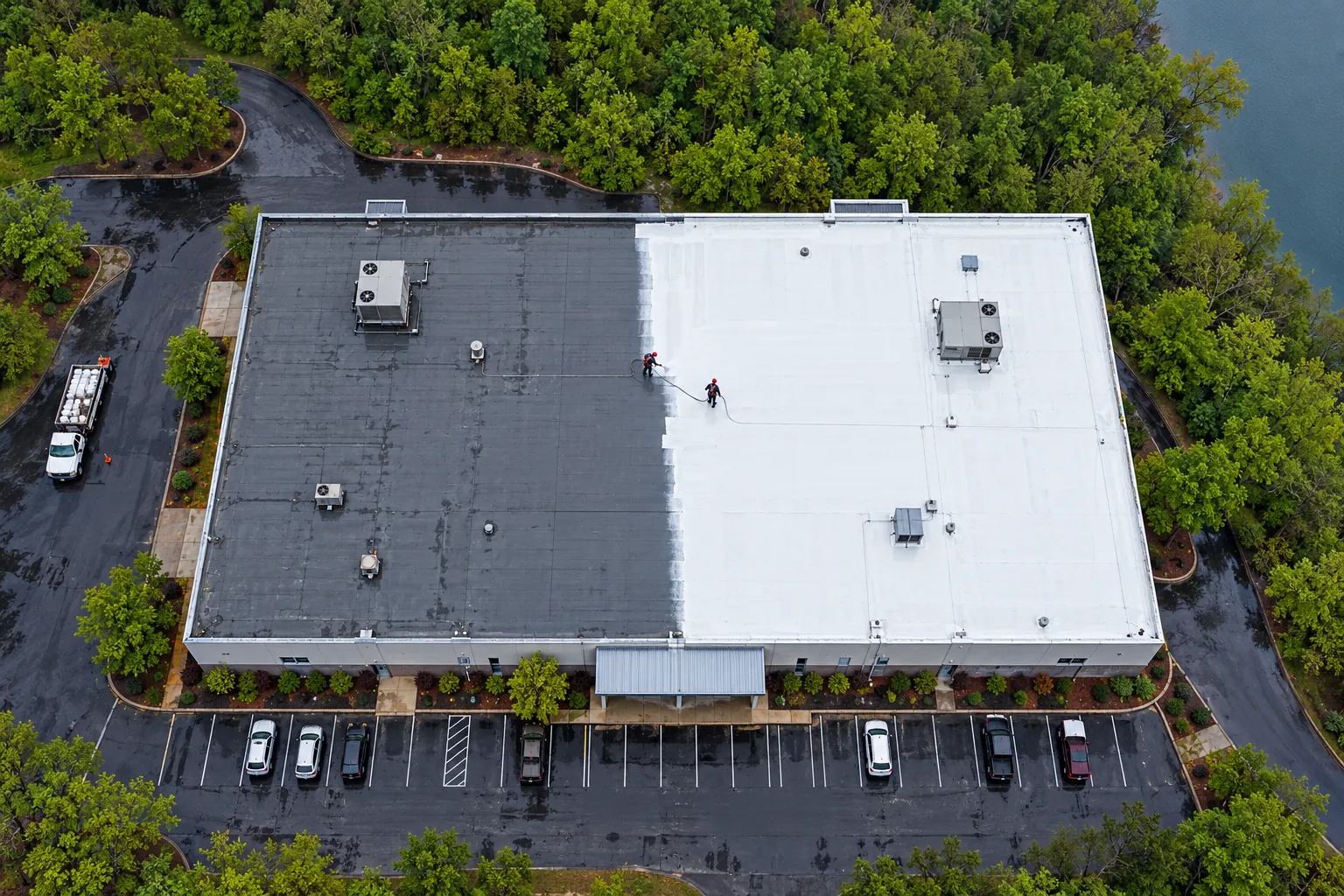
Low back sections that hold water after rain take silicone, applied from the same lift spot.
Silicone roof coating detailsInsulating foam needs calm air and wide masking, so it is scheduled for still days on tight lots.
Spray foam roofing detailsA steep shingled front reached from the street side gets coated when tabs still lie flat.
Shingle roof coating detailsCall and describe the driveway, parking, and neighbors. The roof walk includes picking the lift spot and drop zone.
Staging decisions come early, right after the roof itself is checked.
We walk every screw line, lap, gutter, and pipe boot, test rusty spots with a screwdriver, and look underneath for sweating or wet insulation.
Ground under the lift spot is checked, a drop zone for coating pails and fabric is marked, and truck times are set around driveway and street use.
Plastic and tarps cover nearby cars, siding, and windows below the work edge, and owners move vehicles that sit close.
Rusted screws are replaced, cracked pipe boots get new collars, and end laps are sealed with fabric and base coat.
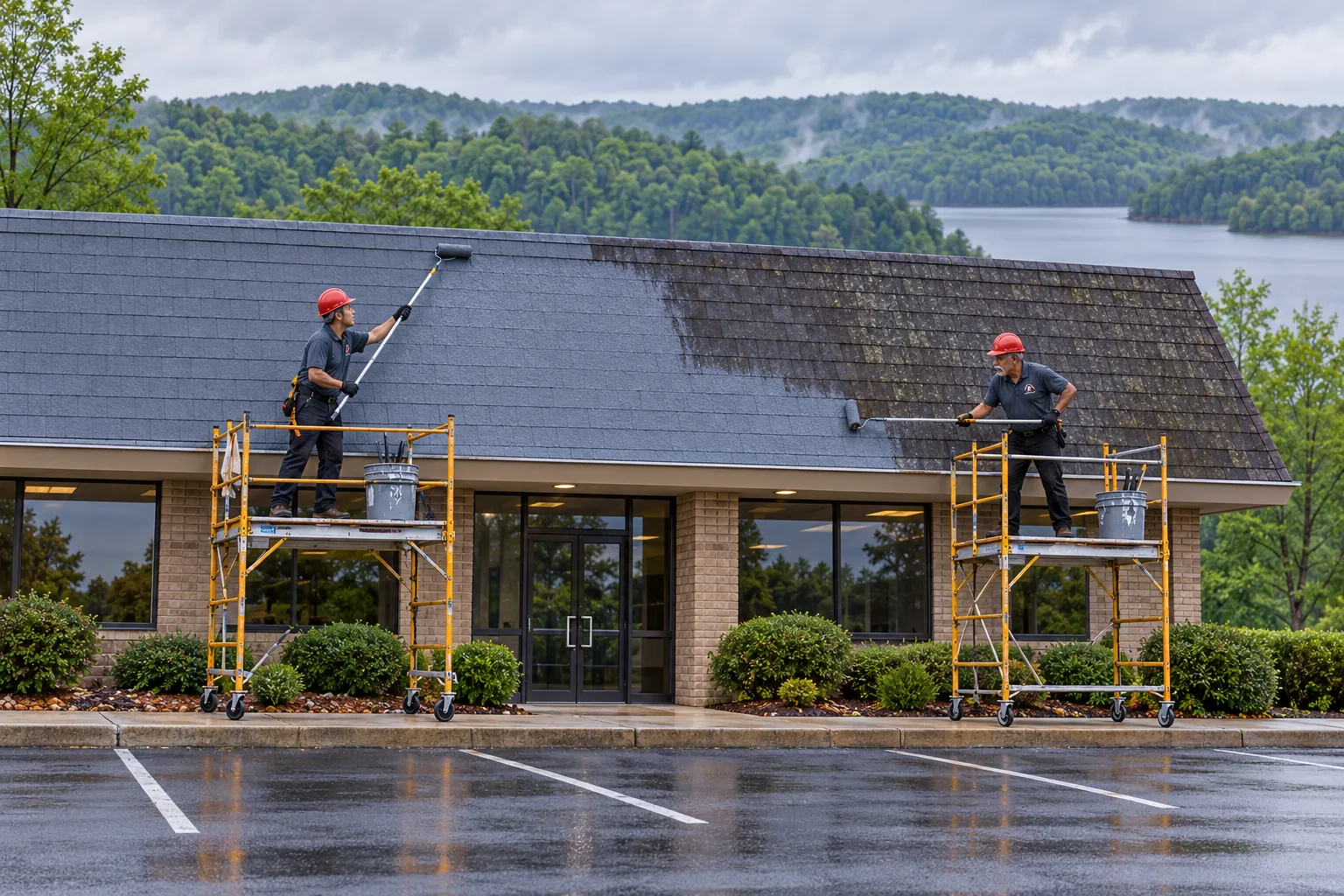
Coats go on by roller near neighbors and by sprayer where air is calm, and the final walk includes cleanup of the staging area.
Need coating outside the towns listed here? Call us or send us a message. These are the places we work for metal roof coating near Livingston.
Small plants with fans, curbs, and pipe penetrations
Warehouse and distribution roofs in Laurel County
Shops coated in spring and fall weather windows
Metal roofs with old coatings or patch layers
Main buildings with add-on sheds and canopies
Answers for owners of commercial buildings on small or crowded lots.
Access And Staging
Some roofs are reached by ladder and roof anchors instead, with materials hoisted in pails. Others use a lift parked on the street with a permit from the city. The roof walk settles which method works before any price is given, so access surprises stay off work day.
Spraying stops when wind pushes toward close buildings or cars, and those edges get rolled instead. Masking covers nearby siding and windows below the work. Water-based products clean up easier if a fine mist does reach a surface during the job.
Rockcastle County Permits
The state contact sheet for Rockcastle County lists no local building inspector and says commercial construction goes to the Kentucky Department of Housing, Buildings and Construction for permits. Call that office before a job that replaces panels, framing, or rooftop equipment.
Ask the state office first, since the contact sheet covers commercial construction in general. Coating over existing panels is lighter work than reroofing, while replaced panels, added foam, or new curbs change the scope. Bring photos, the panel type, and the repair list.
Utilities And Weather
Jackson Energy and Inter-County Energy both list Rockcastle County in their service areas, so your bill shows which one to ask about business programs. Offerings change each year. A reflective coating mostly lowers summer heat passing through hot steel panels.
The National Weather Service office in Jackson covers Rockcastle County. Matching a dated storm report to dents, lifted trim, or a torn pipe boot gives you a record for insurance and helps the crew separate new damage from older wear.
Get a ballpark range online, or call to talk through access and staging first.
Leave your name and number and we will call you.
Or call (606) 221-5206