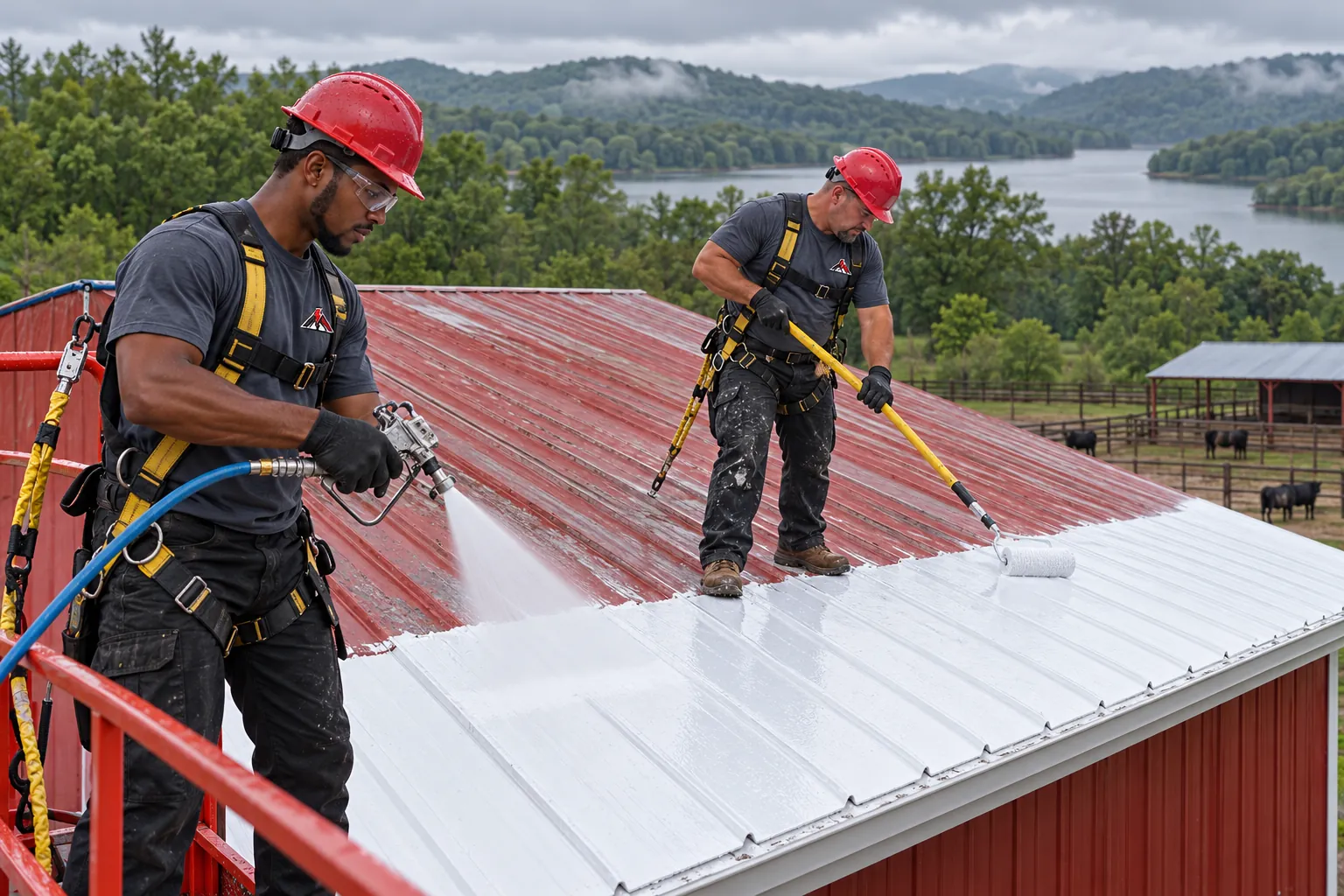
Acrylic Over Exposed-Fastener Panels
R-panel roofs get new screws, sealed heads, and fabric at the end laps, then acrylic across the slopes.
Metal Roof Coating details
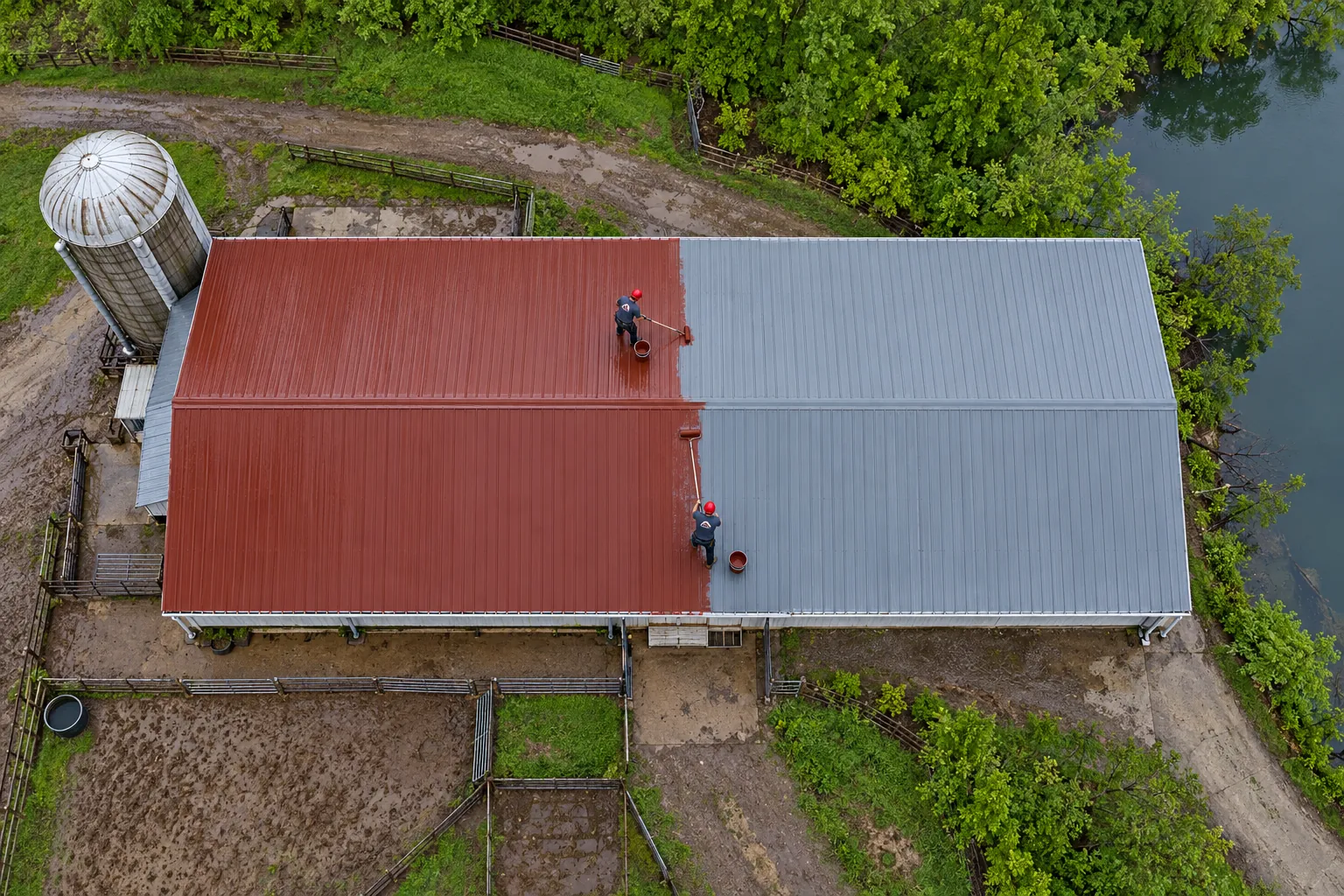
Acrylic roof coating in Somerset suits pitched metal that sheds water fast, with skylights, gutters, and laps detailed before a bright, water-based coat goes on.
Acrylic does best where water runs off quickly. Compare it with silicone and with re-paneling before settling on a system.
A pitched roof with a few low corners can take acrylic on the slopes and silicone where water collects.
Fast-draining roofs still leak at their details. These pairs trace indoor signs to the skylight, gutter, and lap problems that acrylic work fixes.
A damp circle forms on the floor under a skylight after every storm.
Fiberglass panels crack with age, and the sealant at their laps with the steel gives out.
Water sheets down the wall at a corner instead of reaching the downspout.
Outlets and end caps rust through first, so the gutter leaks before it ever fills.
Steel overhead drips on damp mornings even with dry weather the day before.
Morning dew and rain creep through side laps along the ribs where old sealant dried out.
Facing near the ridge stays wet after windy storms.
Ridge caps and rake trim shift, opening a gap the wind drives rain through.
Pitched metal around Somerset gets acrylic on the field, with these options for the details and problem areas.
R-panel roofs get new screws, sealed heads, and fabric at the end laps, then acrylic across the slopes.
Metal Roof Coating details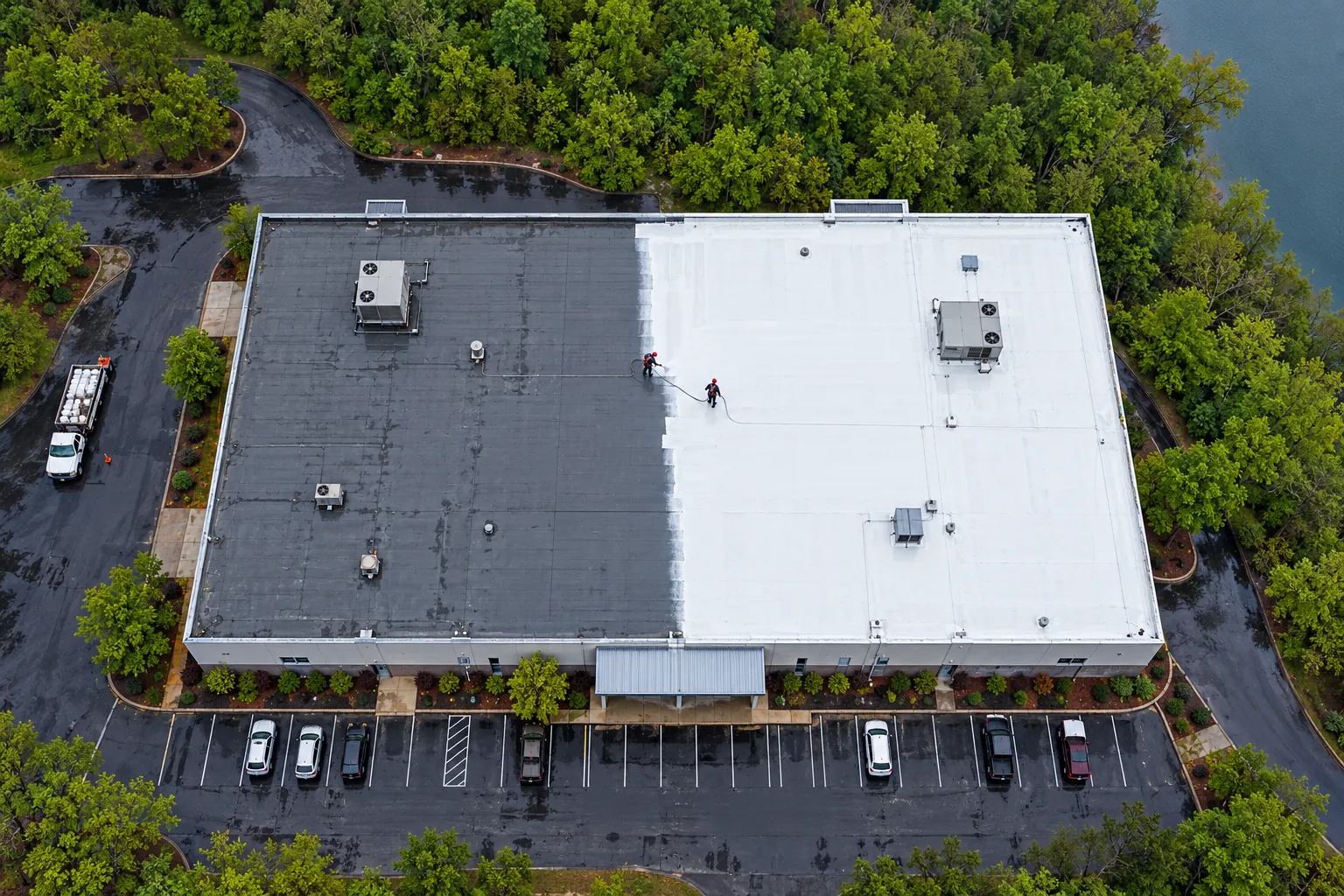
Valleys and low corners that hold water take silicone, while the slopes stay acrylic.
Silicone Roof Coating detailsCracked fiberglass panels get replaced, then their laps with the steel are sealed with fabric and coating.
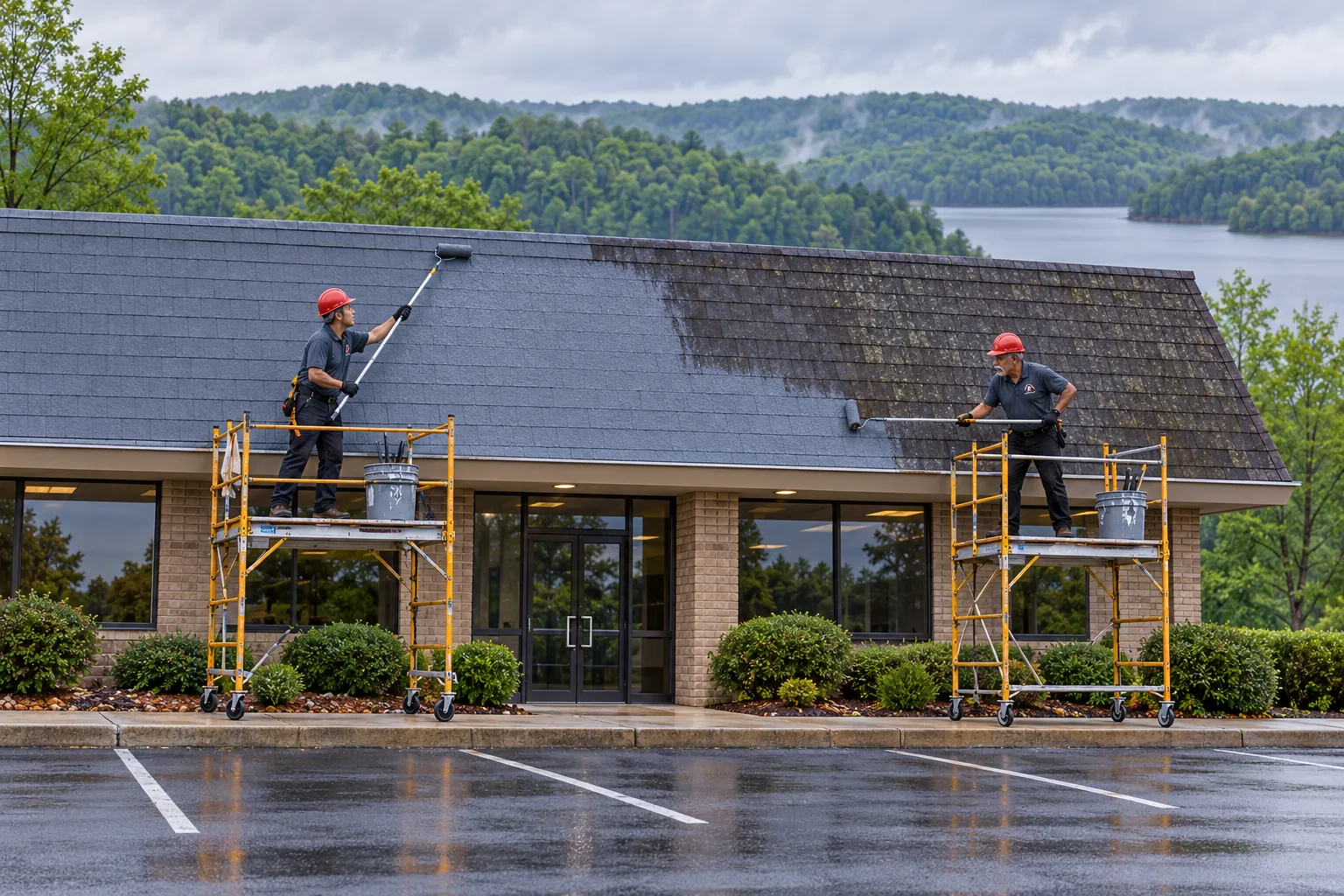
Mixed buildings with a shingled office section get a shingle-rated product there, compatible with the acrylic on the steel.
Shingle Roof Coating detailsWhat acrylic delivers on a pitched metal roof once the details are done.
Acrylic keeps the panels white longer because it picks up less dirt than silicone.
Water-based acrylic carries little smell, so offices and shops below stay comfortable.
Coating keeps the existing steel, so the budget covers details and coats instead of new panels.
Later coats can be acrylic or silicone after a wash of the old surface.
Request an estimate and note which skylights or gutters leak. Those details get checked first on the roof walk.
Acrylic work waits for the right weather, then follows this order.
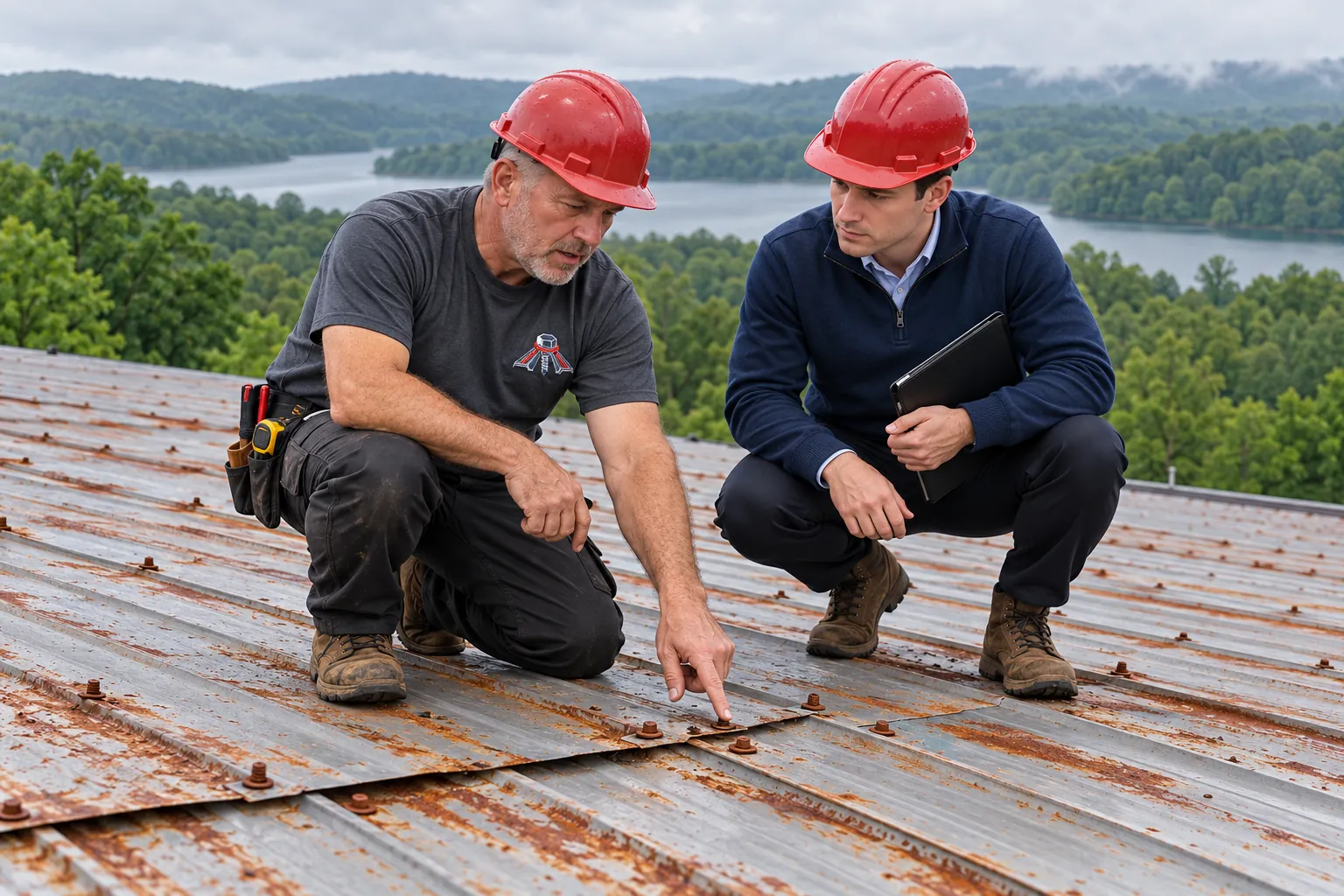
We check every skylight panel, gutter seam, ridge cap, and lap, test rusty spots with a screwdriver, and note which slopes hold dew longest in the morning.
Washing removes dirt and chalky paint. Rust is ground back and primed, and the panels dry fully before the next step starts on any section.
Cracked skylight panels are replaced, gutter seams and outlets get fabric and coating, and rusted-through gutter sections come out for new ones.
Acrylic needs warm air, a steel surface above the dew point, and enough dry hours to cure before rain, so coating days are picked from the forecast.
Base coat and topcoat go across each slope at the specified thickness, and the final walk checks laps, skylights, and gutters once more.
Pitched metal buildings sometimes need more than acrylic. These three cover the work acrylic leaves to other systems.
Metal roof coating handles the screw and rust work that every pitched panel roof needs first.
See metal roof coating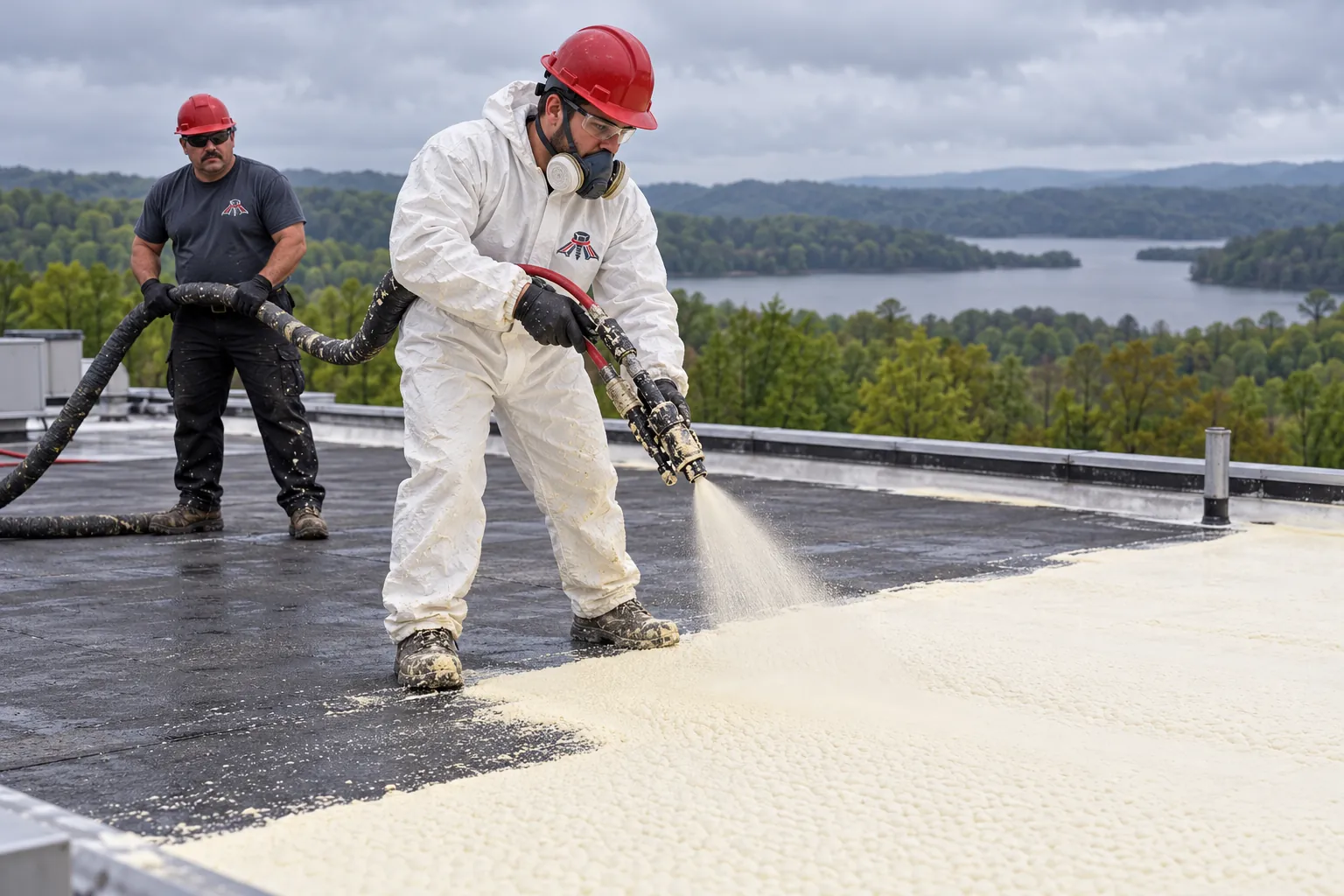
Spray foam fits pitched shops that sweat or overheat, adding insulation under the coating.
See spray foam roofingSilicone covers low-slope additions where water stays too long for acrylic.
See silicone roof coatingWeather, skylights, gutters, and prep on pitched metal.
Kentucky Weather
Heat, humidity, and freeze-thaw cycles all work on steel in this area. Summer sun heats bare panels fast, storms cool them suddenly, and each swing moves screws in their holes. In winter, water under a lifted end lap freezes and pries it open further, and dew rusts scratched paint.
A dry roof, a clear forecast, and air and surface temperatures within the product limits. Steel holds dew longer than many roof surfaces, so work starts once panels dry. The surface has to stay above the dew point, and spring and fall bring the steadiest windows in this part of Kentucky.
Skylights And Gutters
Coating seals the edges of skylight panels as long as the panels themselves are intact. Yellowed, cracked fiberglass gets replaced first, then its laps with the steel are sealed with fabric and coating. Ridge caps and rake trim get the same treatment as part of the full system.
Debris comes out, rust gets treated, and seams, end caps, and outlets are sealed with reinforced coating. A gutter rusted through along its bottom needs new sections before any coating. Seams and outlets rust first, so those spots get the closest look during the inspection.
Prep By Roof Type
Yes. Exposed-fastener R-panel roofs need every screw checked, replaced where failed, and sealed, plus end and side laps. Standing seam roofs have few exposed fasteners, and their seams get flexible products so panels can still slide on their clips. Both get washed, rust-treated, and primed.
On R-panel roofs, ridge caps and rake trim are screwed through the panels, so those screws get the same check as the field. Standing seam trim is often clipped or concealed, and the crew also checks the clips through any open seams before coating.
Get a ballpark range online, or call to pick a coating window for your building.
Leave your name and number and we will call you.
Or call (606) 221-5206