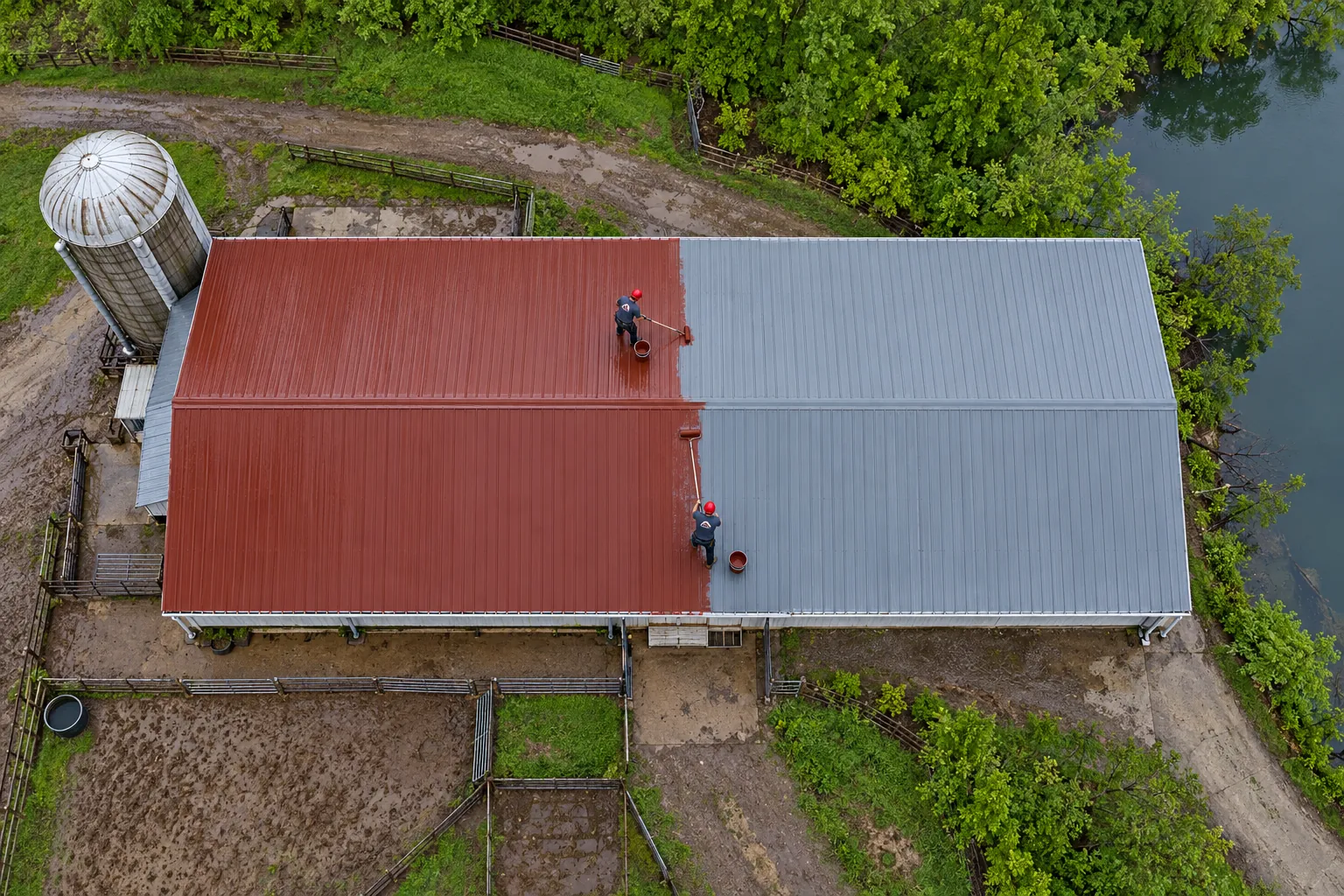
Acrylic On Pitched Panels
Panels with real pitch drain fast, so a bright water-based acrylic fits and recoats later with acrylic or silicone.
Acrylic Roof Coating details
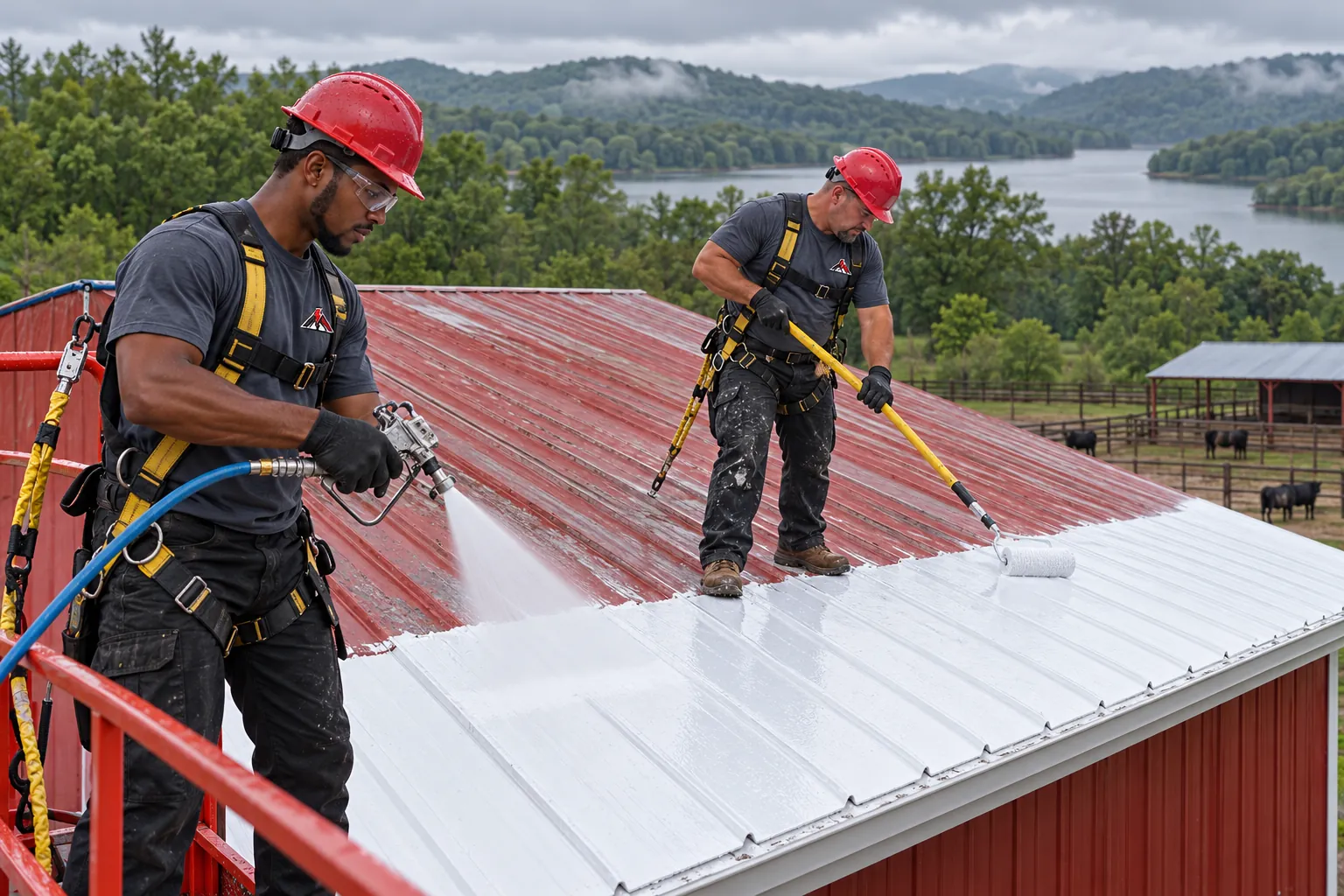
Commercial metal roof coating in Somerset starts with new screws, sealed end laps, and rust primed back to firm steel, then full coats across the panels.
Exposed-fastener panels that stay firm underfoot are the roofs this coating covers. Compare it with the two other paths an R-panel roof can take.
Purlins that sag, or rust holes across most of the roof, point to the third column, and we tell you so after the walk.
Most metal roof leaks begin at joints, since screws, laps, and flashings wear out long before the flat panel does. These pairs link inside symptoms to those joints.
Drops fall in a neat pattern that lines up with the purlins overhead.
Panels grow on hot afternoons and shrink overnight, which works screws loose and squashes the rubber washer under each head.
A wide stain runs side to side across the building, one panel length up from the eave.
Water heading downslope crosses the horizontal lap where two panels meet, and a lifted lap lets it in.
Rust-colored streaks run down the inside face of wall panels below the gutter line.
Gutters on metal buildings rust first at seams, end caps, and outlets, then spill water behind the trim.
With the lights off, small points of daylight show through the roof near the eaves.
A screwdriver pushes through steel that rusted from below, where condensation sat against the panel.
An R-panel roof can take more than one coating system. The pitch, the standing water, and the foot traffic decide which one goes on your panels.
Panels with real pitch drain fast, so a bright water-based acrylic fits and recoats later with acrylic or silicone.
Acrylic Roof Coating details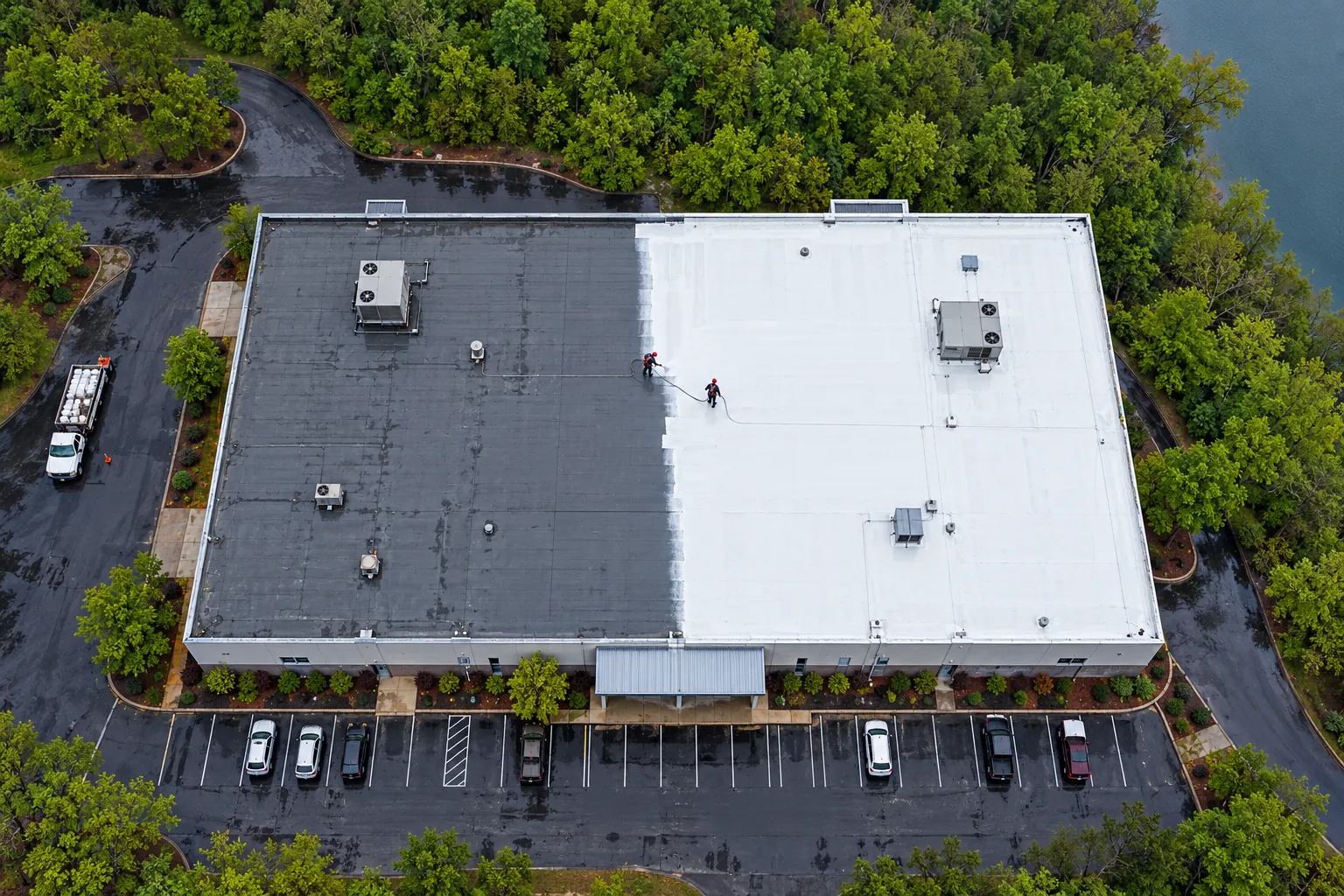
Flat spots near the gutter that hold rain call for silicone, which takes standing water better than acrylic.
Silicone Roof Coating detailsPaths to rooftop units take heavy boots, so a tougher urethane base goes on those strips under the topcoat.
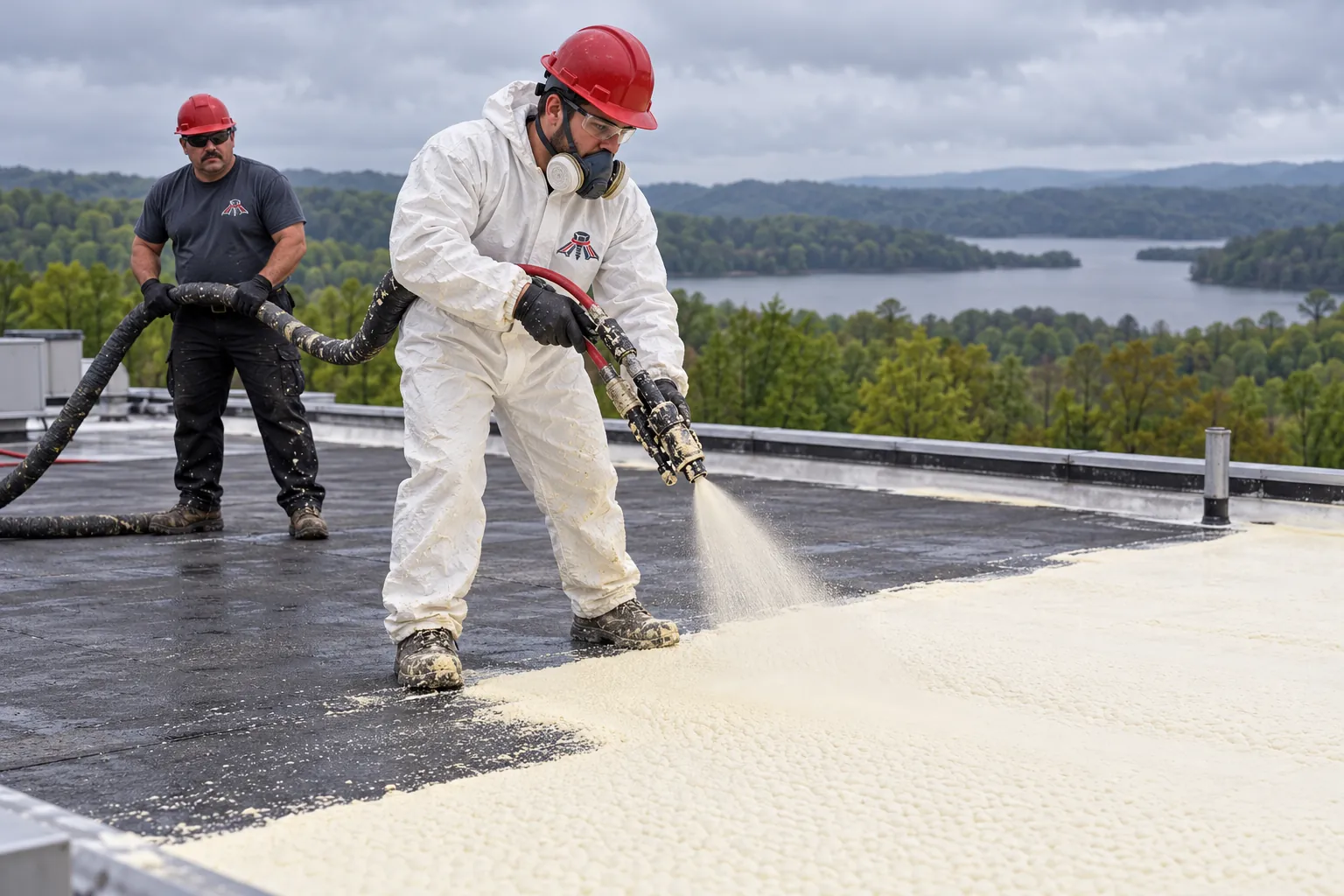
Uninsulated shops that drip or bake get spray foam across the flats first, then a coating over the foam.
Spray Foam Roofing detailsFour gains owners of exposed-fastener buildings see once the screws and laps are sealed and the field is coated.
Firm panels and purlins stay, so spending goes to fasteners, lap fabric, and coats.
Nothing gets torn off, so production lines and storage under the roof keep running.
Only rusted-through panels leave the building, and the rest stays in service.
A worn coating gets washed and recoated with a product that bonds to it.
Start a ballpark range for your roof, then mention the rust streaks on the call so the inspection starts at those fastener lines.
Every section of panel goes through the same five steps in the same order.
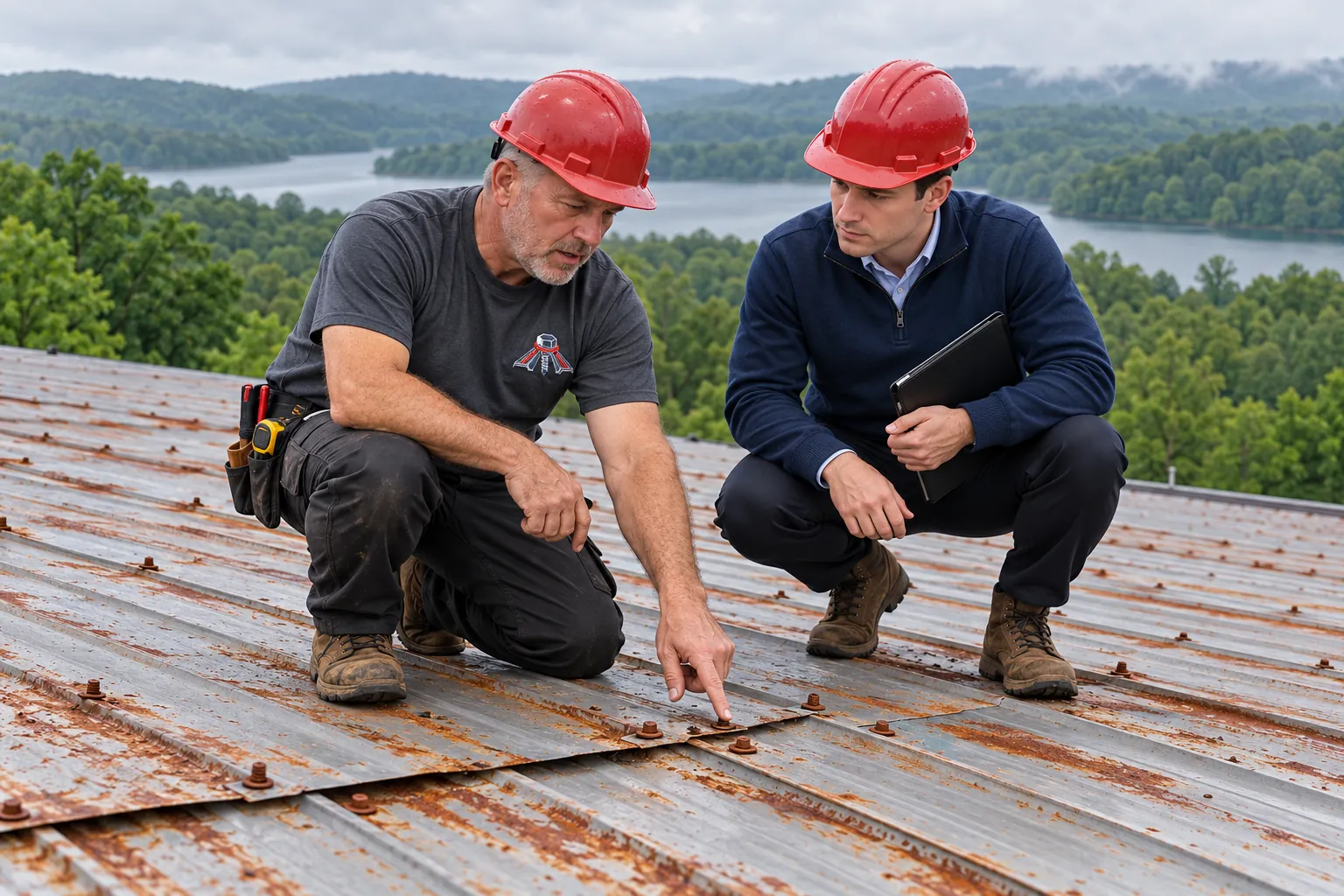
We check panels, every fastener line, end laps, rust, and the framing from inside, and we push a screwdriver into suspect spots to find perforated steel.
Power washing strips dirt, chalking, and loose paint. Grinders and wire brushes take rust back to firm steel, and a rust-inhibiting primer goes on after.
Screws with cracked washers, heads riding high, or holes that spin get replaced with a slightly larger fastener that bites fresh steel, and ridge caps get reset.
Each horizontal end lap gets a band of base coat, embedded polyester fabric, and a second pass. Brush-grade sealant caps every screw head on the roof.
Full coats cover the field while the crew measures wet film thickness section by section. Anything that needs a second look is marked before the final walk.
Some metal buildings in Somerset need a second system on part of the roof, or a different one entirely.
Choose silicone where a low-slope section holds water near the gutters after every storm.
See silicone roof coatingSpray foam makes sense when the building also needs insulation or the panels sweat onto stock below.
See spray foam roofing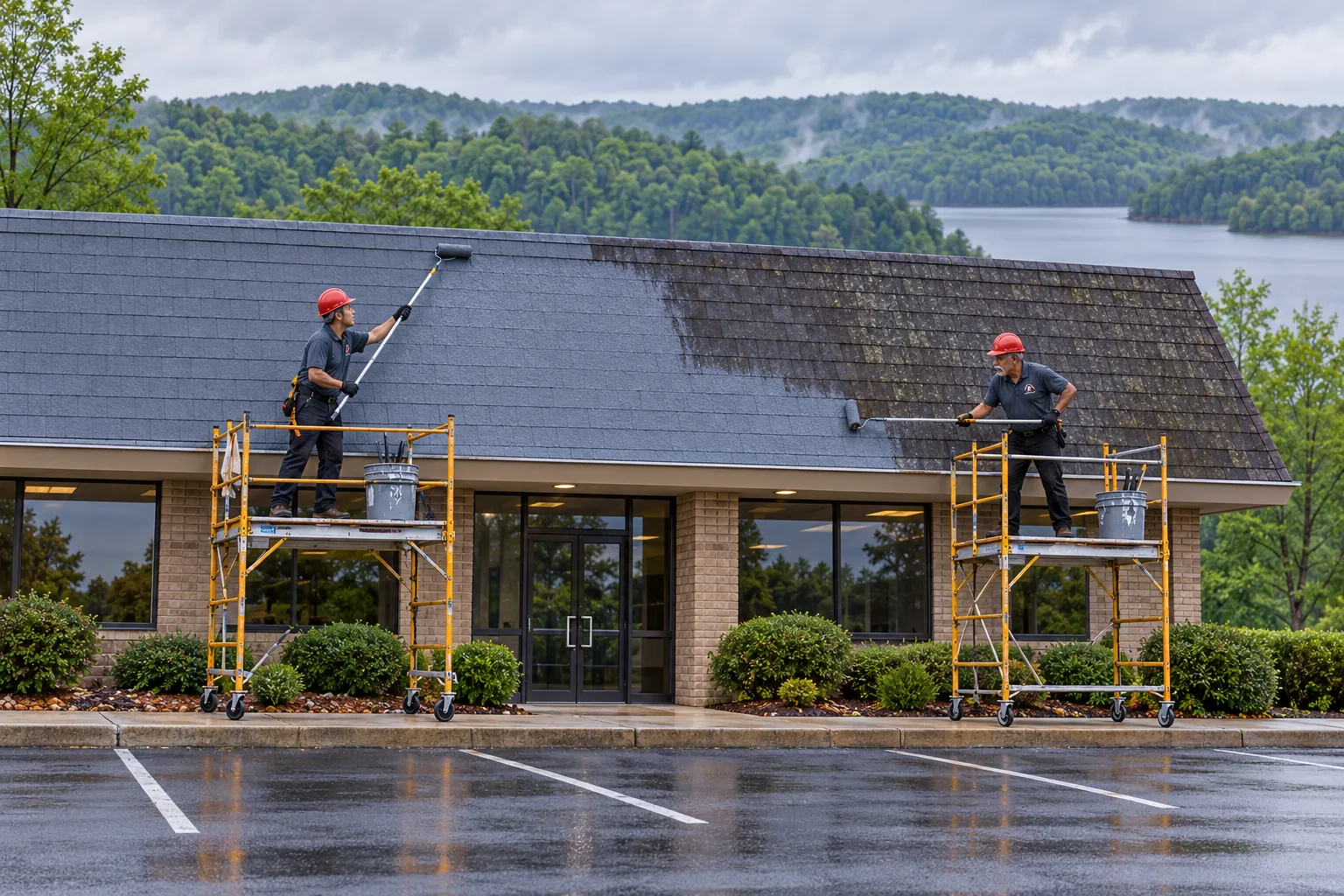
Shingle coating covers the office or storefront section that sits beside the metal shop on many properties.
See shingle roof coatingLeaks, rust, screws, job order, and permits on exposed-fastener roofs.
Leaks And Screws
Joints wear out long before the flat steel does. Panels expand on hot afternoons and contract after dark, and that daily movement loosens screws and flattens their washers. End laps, ridge caps, skylight edges, and gutters fail next, so coating work targets those joints before covering the open panel field.
Screws that are stripped, backed out, or badly rusted come out, and a slightly larger fastener goes into fresh steel. Tight screws with good washers stay. Crews look for cracked washers, heads above the panel, holes that spin, and rust streaks below a screw, then seal every head.
Rust And Job Order
Rusted areas get cleaned back to firm steel and primed with a rust-inhibiting primer. Light orange bloom comes off with wire brushes or washing, and flaking scale takes grinding. Where a screwdriver pokes through, that spot gets a metal patch or a new panel, since coating over active rust lets it keep spreading.
Inspection comes first, then washing, rust treatment, and fastener replacement. Laps, seams, skylights, and curbs get reinforced next, followed by a base coat across the field and a topcoat that builds final thickness. Wet film gets measured as each section goes down, and marked spots get a final look.
Somerset Permits
Ask the City of Somerset Building Inspection Department before work starts. The city's adopted code requires a permit to alter or repair a regulated building, and the department is state-certified to review plans and inspect commercial work inside city limits. Bring roof photos, the panel type, and a repair list.
Plain coating over existing panels is lighter work than a reroof. Replaced panels, new skylight panels, raised curbs, or added spray foam change the scope, so list them when you call. The city also posts its building fee schedule, which helps plan the paperwork alongside the roof work.
See a ballpark range now, or call and tell us how many leaks you are chasing.
Leave your name and number and we will call you.
Or call (606) 221-5206