Silicone Over Old Silicone
An existing silicone roof gets silicone again, since other coatings grip poorly on it, after a wash and test patch.
Silicone roof coating details
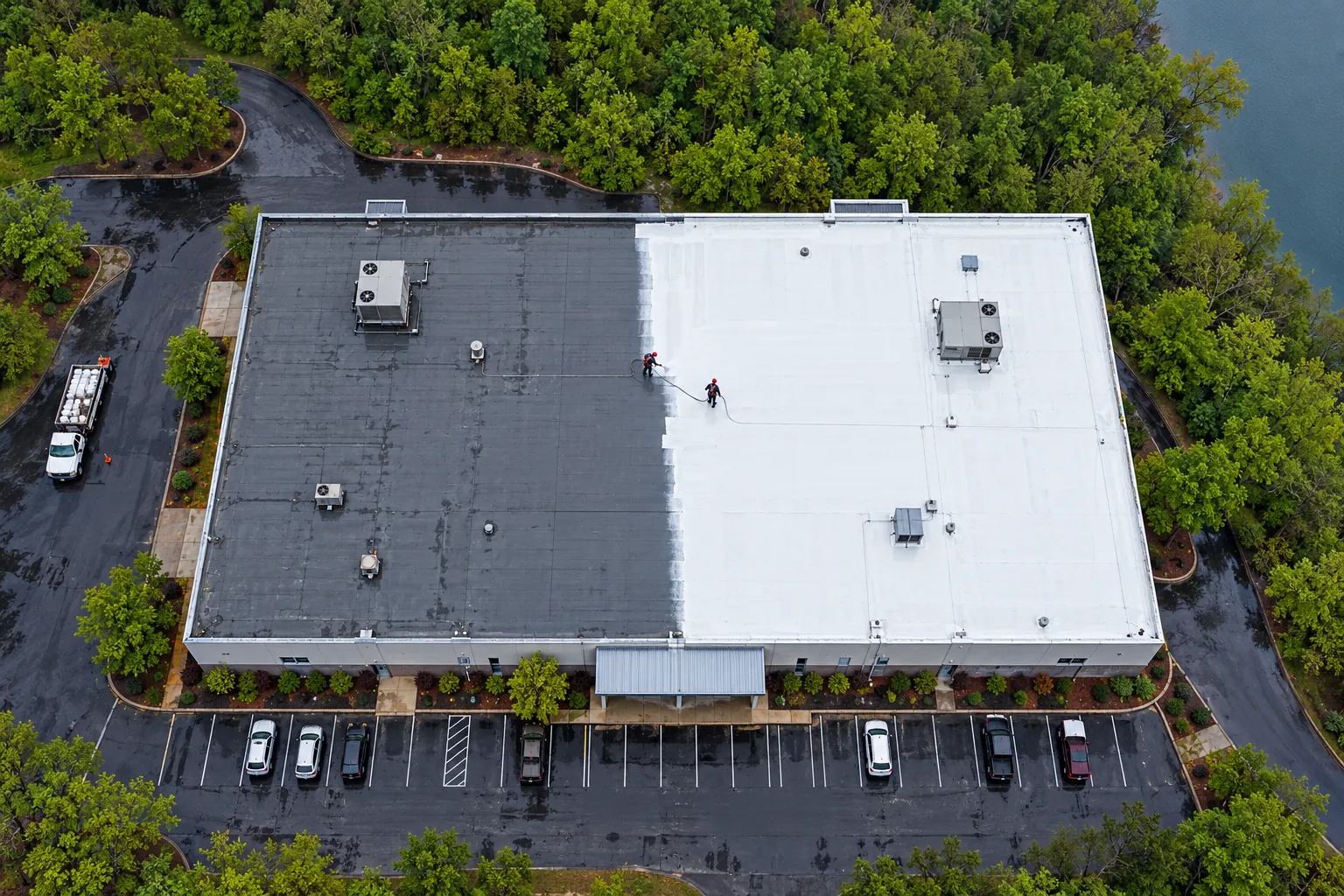
We coat Science Hill metal roofs that already carry an old coating or patch layers, starting with a test that shows what the new coat will grip.
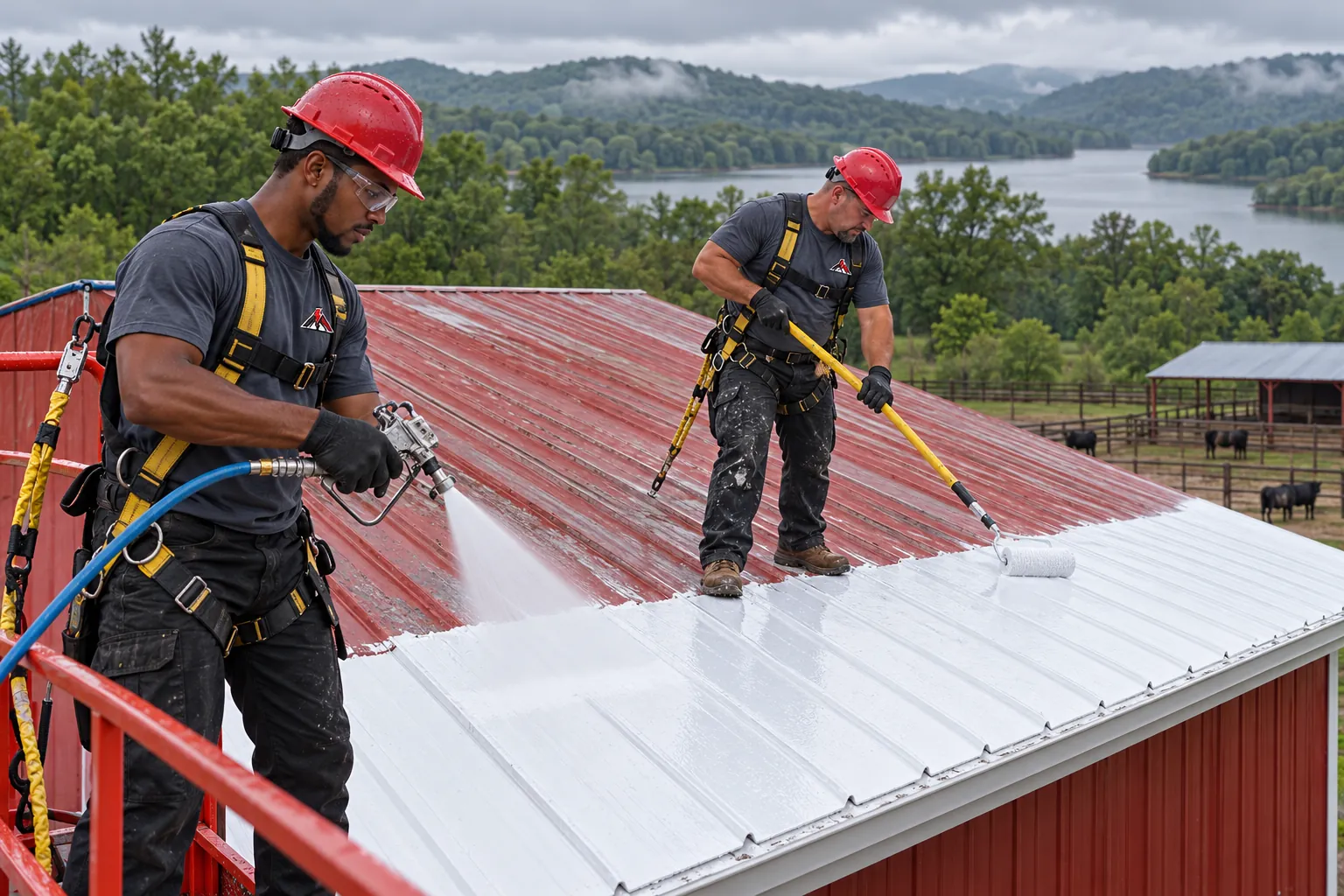
Science Hill metal roof coating often goes over work someone did years ago.
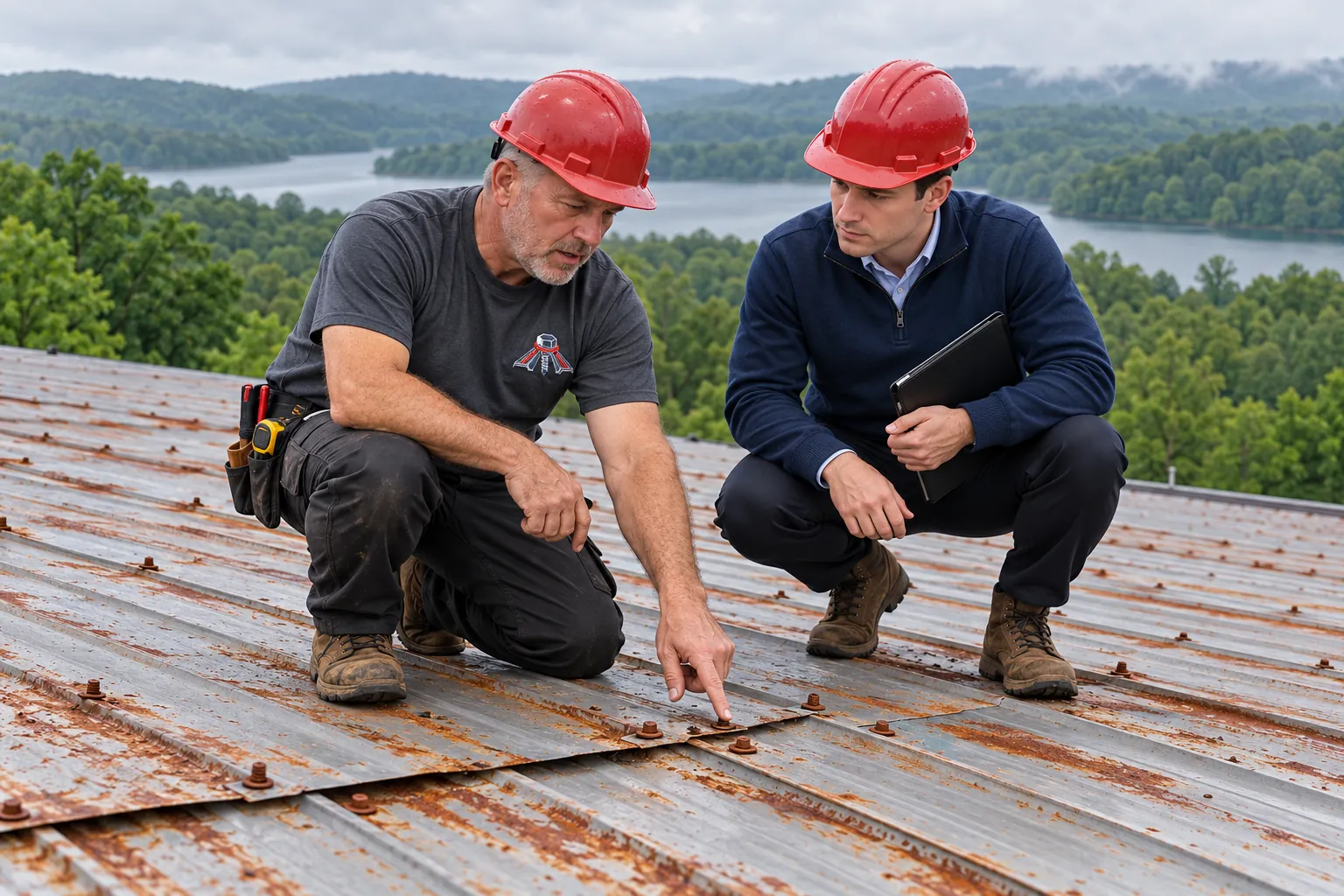
Older metal roofs here often show a past coating, black tar dabbed on leaking screws, or patches of mastic at the laps. Each of those surfaces takes a new coat differently, and some take none at all.
The first job is naming what is up there. Silicone only bonds to silicone, acrylic accepts acrylic or silicone after cleaning, and asphalt patches usually come off or get a primer made for them.
A coating that is failing tells on itself inside the building. These pairs link each symptom to what the old layer is doing.
Drips returned a few years after the roof was coated, in the same places as before.
Film was rolled across laps without fabric, so it split once the panels moved.
Stains show up in a pattern that follows the screw rows overhead.
Black tar dabbed on backed-out screws cracked, and water now runs beneath it.
Small orange flakes collect on shelves or equipment under one bay.
An old coat lifted in sheets, and the steel underneath kept rusting where it trapped water.
The building runs warmer in summer than it did after the first coating.
Dirt pickup and chalking turned a white coating gray, so it reflects far less sun.
Four reasons Science Hill owners recoat a worn roof once the old layer has been tested.
Sections where the old film still grips tight get cleaned and recoated instead of stripped.
Shops and storage keep running while crews scrape, test, and coat on the roof.
Only failed layers come off, and the steel and sound coating beneath stay in place.
Using a product that bonds to the existing layer keeps the next recoat simple too.
The right product on a previously coated roof depends on the layer already there. These are the systems we match to it.
An existing silicone roof gets silicone again, since other coatings grip poorly on it, after a wash and test patch.
Silicone roof coating details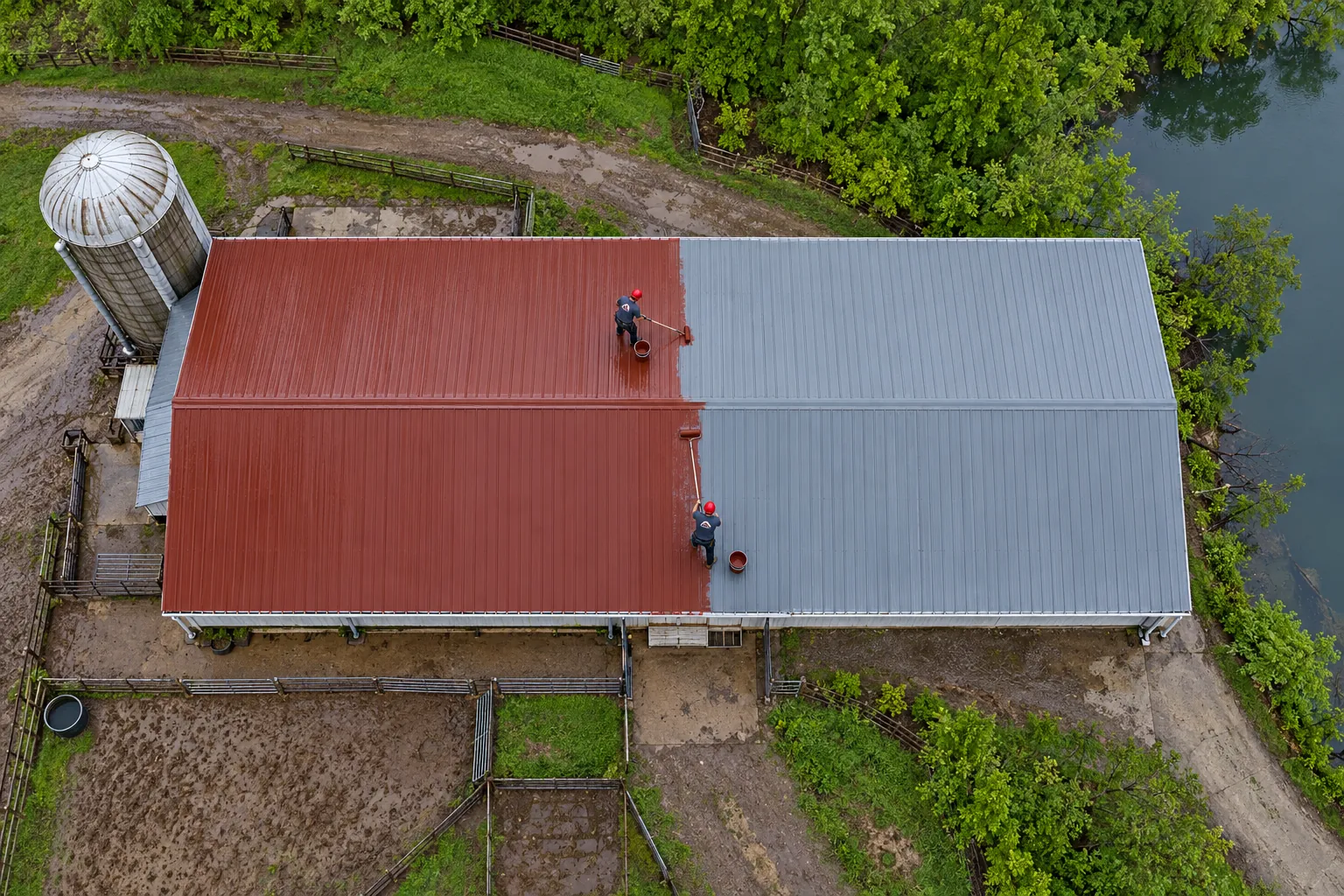
A chalky acrylic coat is washed, checked for bond, and recoated with acrylic or silicone.
Acrylic roof coating detailsWhere old film peels across most of the roof, it comes off and the bare steel gets primer, screws, laps, and new coats.
Metal roof coating details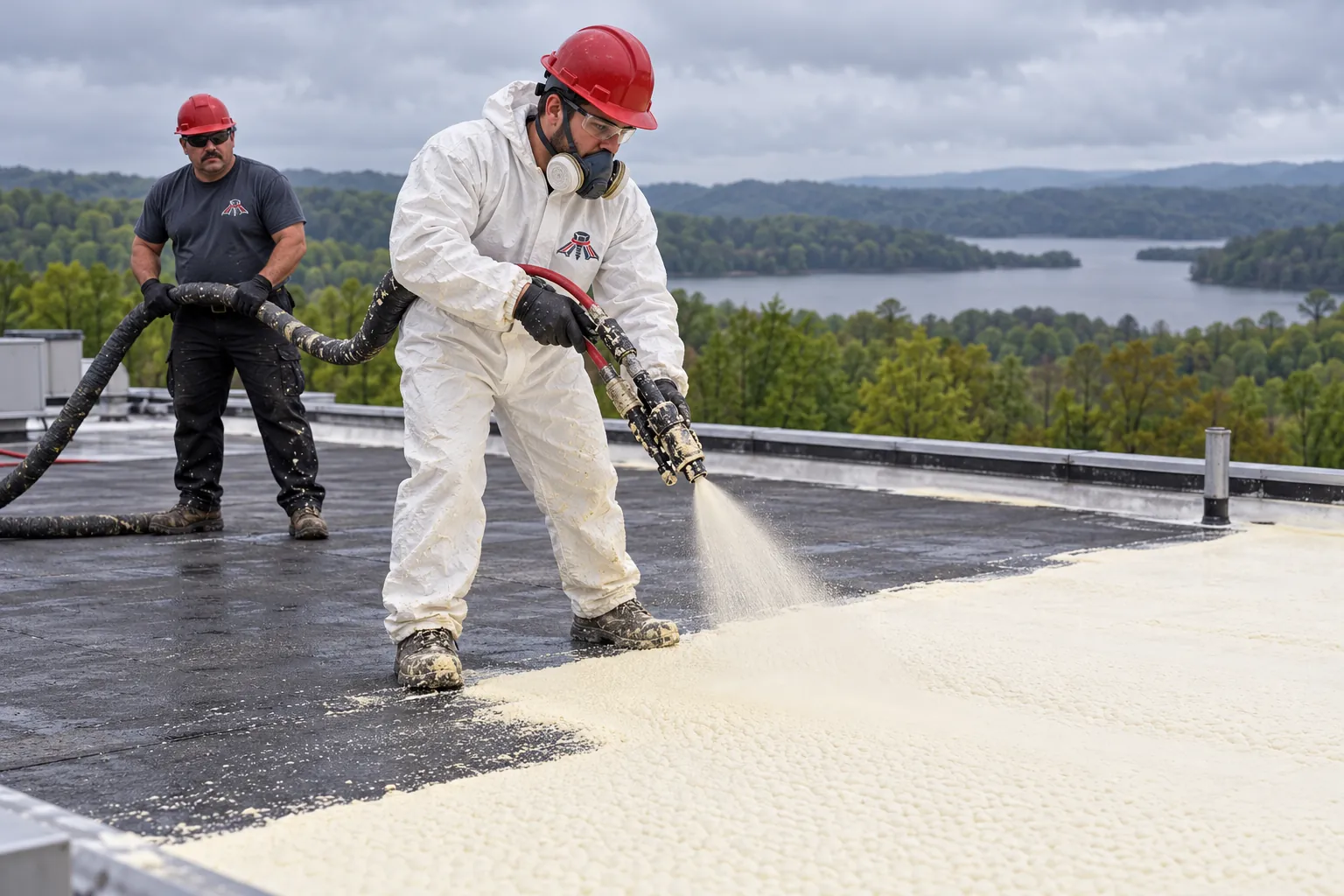
Foam can cover a patched roof once loose layers are removed and the surface passes an adhesion test.
Spray foam roofing details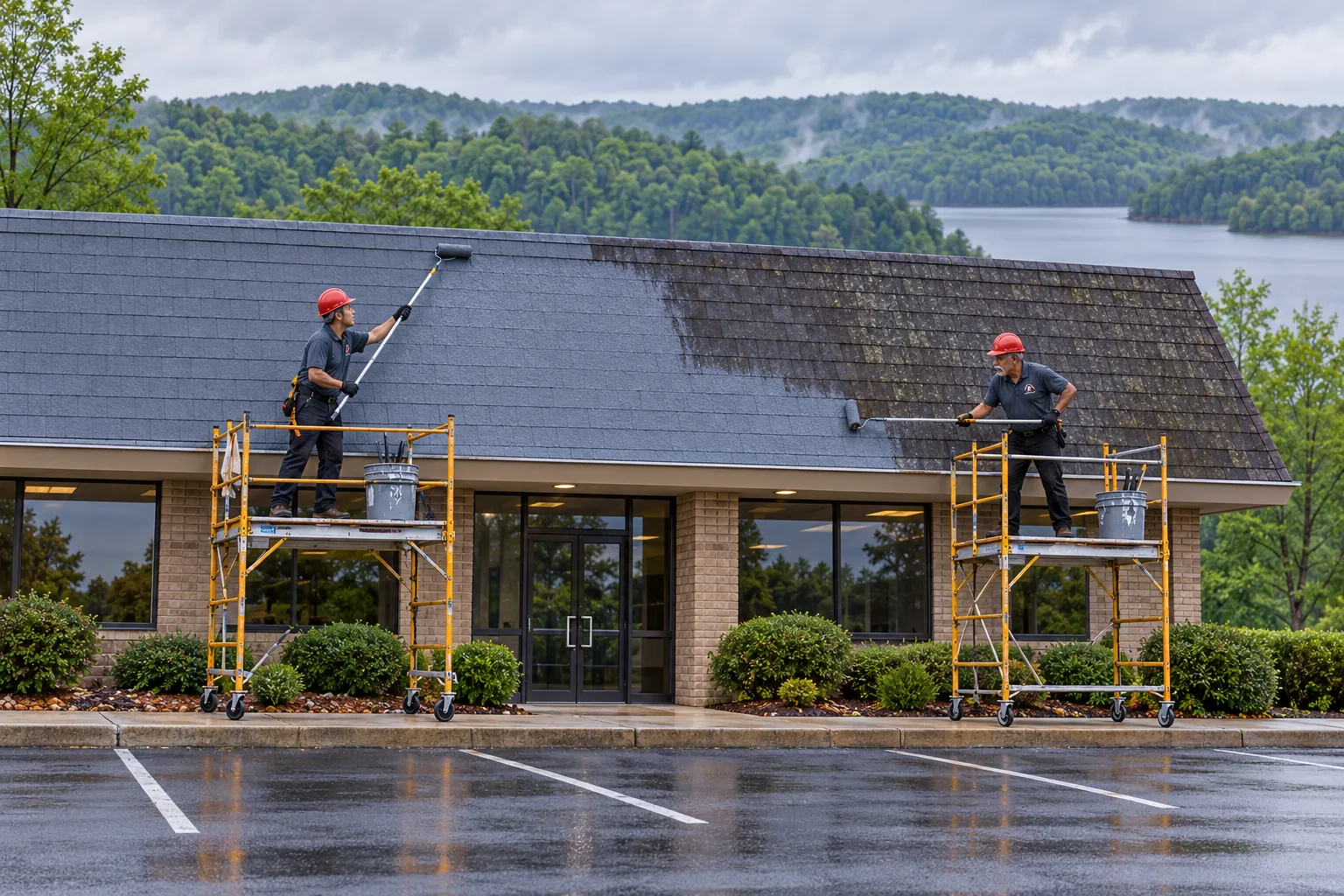
Shingle sections carrying old roof cement get those patches checked before any shingle coating goes down.
Shingle roof coating detailsStart a ballpark estimate and mention any past coating or patch work you know about. The inspection begins with a test patch.
Work on a previously coated roof adds testing before any new coating.
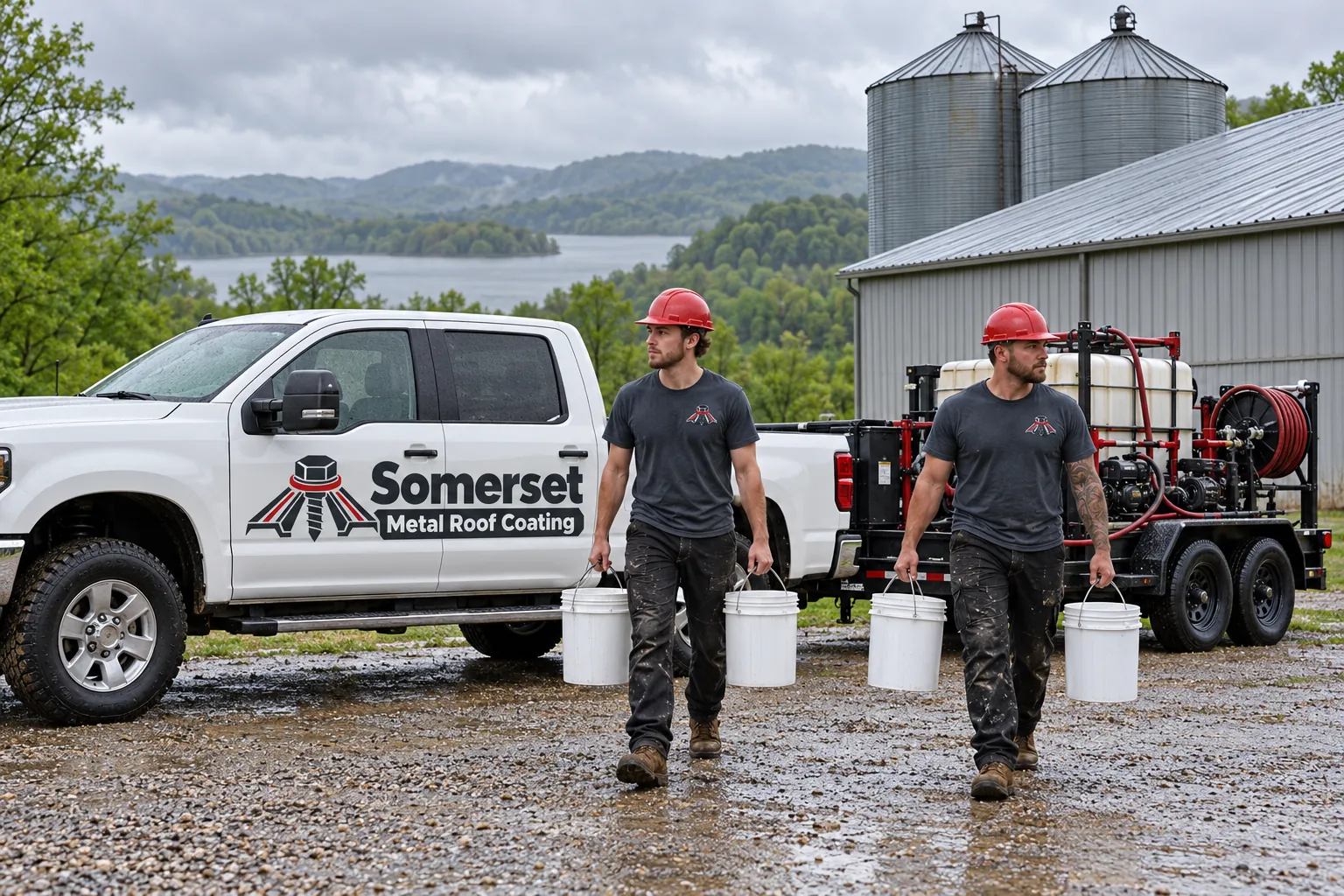
We walk every panel run, scrape small spots to name the old coating, and note tar patches, peeling sheets, and rust showing through.
Small patches of the planned coating go on cleaned areas, cure, and get pulled to show whether the new layer grips the old one.
Peeling coating and cracked tar come off with scrapers and washing, and rust underneath is ground back and primed.
Loose fasteners are replaced, and end laps that split under the old film get fabric and base coat this time.
Full coats of the product that passed the test go across the field, with thickness checked as the crew works.
We serve the towns below for metal roof coating. Somewhere else? Call us or send us a message about your building.
Shops coated in spring and fall weather windows
Plants, warehouses, and storage rows in the home city
Multi-tenant shop and storage rows
Church halls, school gyms, and community buildings
Small lots where lift and staging room is tight
Answers for owners whose metal roof was coated or patched before.
Old Coatings
Silicone feels rubbery and water beads on it even when dirty, while acrylic often chalks and leaves white residue on a glove. A small scrape and a test patch settle it. That matters because silicone accepts only more silicone, while acrylic takes either product.
Cracked tar and roof cement around screws and pipes usually comes off, since most coatings bond poorly to asphalt and it bleeds through light colors. The screw under it is checked and replaced if loose, then sealed with a product that matches the new coating.
Testing And Prep
A small area is cleaned the way the full roof would be, coated with the planned product, and left to cure. A strip is then pulled back by hand. A clean bond means that prep and product work, and a weak pull changes the plan.
Only failed layers. Film that grips tight, without blisters or loose edges, gets washed and recoated. Sheets that peel, lift at laps, or trap rust come off. Many roofs end up with a mix, stripped in some sections and recoated over sound film in others.
Local Contacts
Science Hill is a city in northern Pulaski County. The state contact sheet for Pulaski County lists local building inspectors and a state building inspector, so call to confirm which one covers your address before replacing panels or framing.
The National Weather Service office in Jackson covers Pulaski County. A dated storm report helps tell new hail or wind damage apart from old coating failure, which matters for insurance and for deciding which sections need stripping before the next coat.
Get a ballpark range online, or call to tell us what was done to the roof before.
Leave your name and number and we will call you.
Or call (606) 221-5206